Gold slipped after touching 4,100 while silver held near $58.4, a pause that matters because it shows how far the precious-metals rally has outrun the macro backdrop and how quickly crowded trades can unwind when the dollar steadies and yields stop falling.
Gold Pullback Signals Crowded Precious-Metals Trade
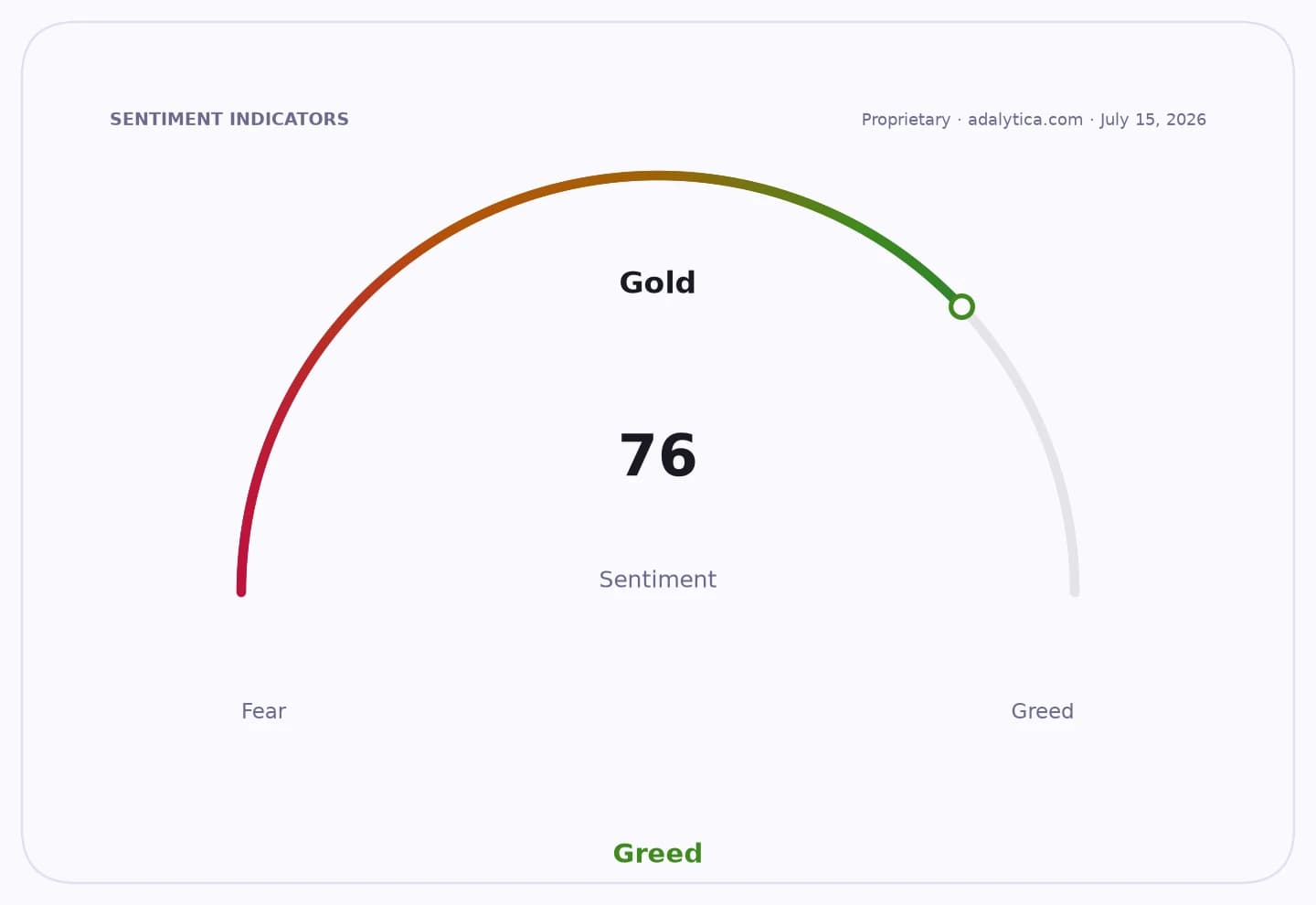
The bigger story is not a failed bull market. It is a market digesting a powerful, sentiment-driven surge that still has structural support. Gold and silver have been bid on the same forces that have defined this year’s trade in hard assets: persistent inflation anxiety, a softer dollar bias, and investors looking for stores of value as policy credibility gets questioned. But once a rally becomes this extended, the next move is often driven less by fundamentals than by positioning.
Sentiment IndicatorsⓘProprietary · adalytica.com · July 15, 2026
This is a snapshot — live sentiment, awareness and momentum for 130+ markets update continuously in the dashboard.Open AlphaPulse
That is why the latest move matters for investors. Gold futures are still trading well above the 50-day moving average, but the recent slide below the highs and the pullback from the upper Bollinger Band suggest the trade is overbought by any conventional technical measure. Silver, meanwhile, remains exceptionally stretched even after the retreat, with prices near $58.56 after a violent run that pushed it deep into speculative territory. Those are the conditions where momentum can stay powerful — until it suddenly cannot.
The macro setup is mixed rather than broken. The U.S. 10-year Treasury yield is hovering around 4.6%, near recent levels, which tells you the bond market is not yet delivering a fresh tailwind for non-yielding metals. At the same time, U.S. consumer prices remain elevated, with CPI still far above the pre-pandemic base, leaving the inflation hedge narrative intact. That combination is dangerous for the metal bulls: inflation is high enough to keep demand for protection alive, but rates are not collapsing enough to force a new leg higher.
The dollar is the other crucial piece. Adalytica’s U.S. Dollar Trade Signals show fear and fading awareness, with the 30-day change sharply negative. That should be supportive for gold on a longer horizon. But in the near term, gold’s latest drop after the 4,100 mark says traders are taking profits rather than building fresh conviction. When the dollar stops weakening in a straight line, precious metals often lose altitude fast because so much of the trade is already crowded.
Investors should read this as an inflection point, not a verdict. Gold’s strategic case remains strong if real rates roll over, fiscal stress intensifies, or central banks keep diversifying reserves away from the dollar. Silver may still offer the sharper upside because it carries both monetary and industrial appeal, especially if the market starts pricing stronger demand from electrification, solar, and broader infrastructure spending. But silver also cuts the other way: it is the more volatile expression of the trade and the first to crack when speculative froth comes out.
The market is underestimating how much of the recent advance in precious metals has been fuelled by momentum and fear rather than fresh fundamental repricing. That means the best opportunities may not be in chasing metals after a parabolic run, but in owning the beneficiaries of the same macro regime: miners with operating leverage, royalty companies with cleaner cash flow, and select hard-asset hedges that can absorb a pullback without breaking the thesis.
For now, the message is simple: the precious-metals supertrend is intact, but gold near 4,100 and silver near $58 look like the kind of levels where disciplined investors trim, wait, and reload on weakness rather than chase strength. If the dollar resumes its slide or yields break lower, the next breakout could be even more explosive.
| Entity | Gains | Losses |
|---|---|---|
| Gold bulls | ▲Long-term hedge intact | ▼Near-term profit-taking |
| Silver bulls | ▲Industrial scarcity story | ▼Highest volatility |
| Dollar bears | ▲Hard-asset tailwind | ▼Noisy corrective bounce |
| Miners/royalty firms | ▲Higher metal prices | ▼Margin pressure if metals fade |




