Gold is still doing what investors want it to do in uncertain times: holding its shine even as oil eases and Treasury yields hover near levels that normally make non-yielding assets less attractive. That combination matters because it says the market is not simply chasing momentum — it is still paying up for protection against inflation, geopolitical shocks and policy risk.
Gold Holds Near Records as Oil Pulls Back
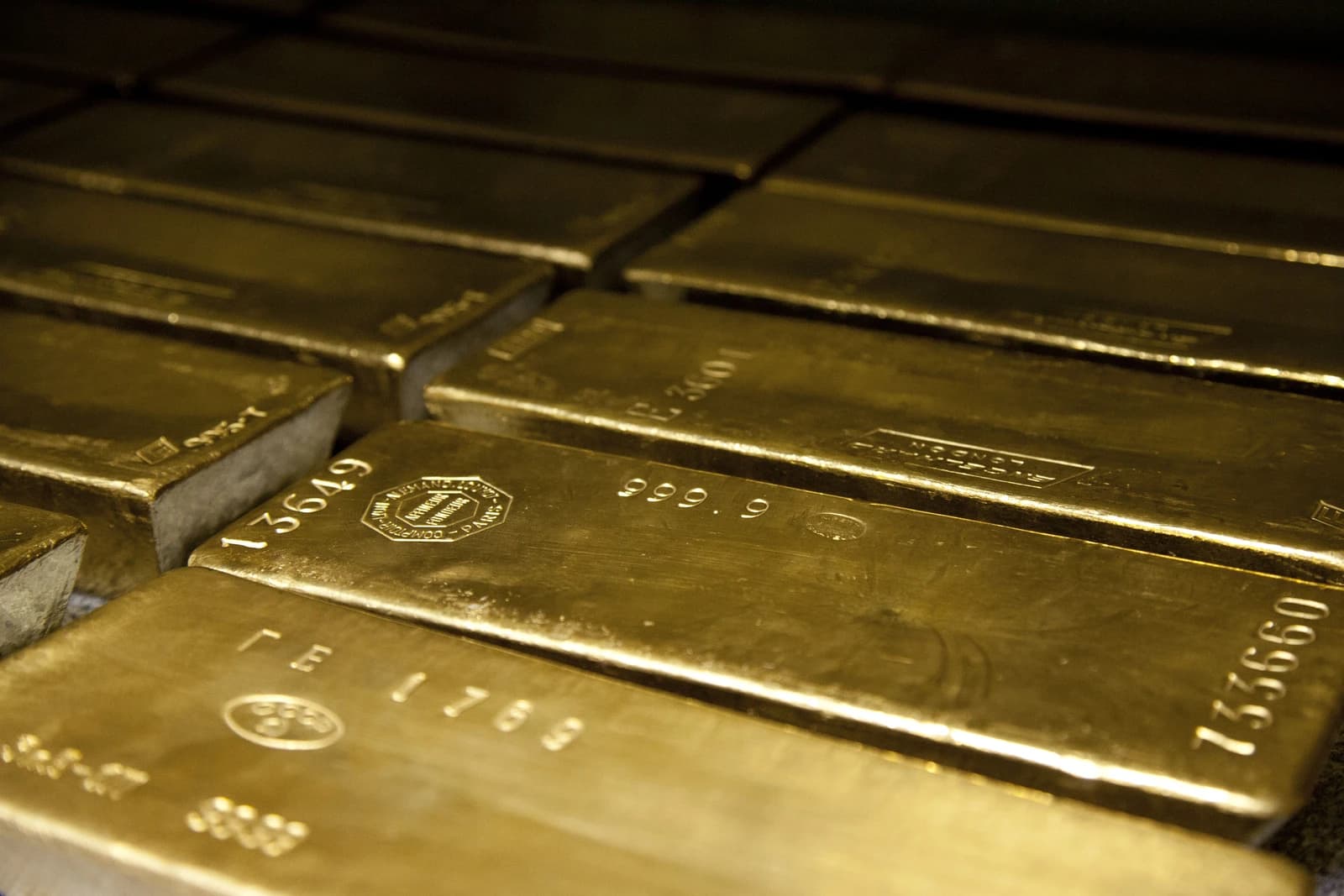
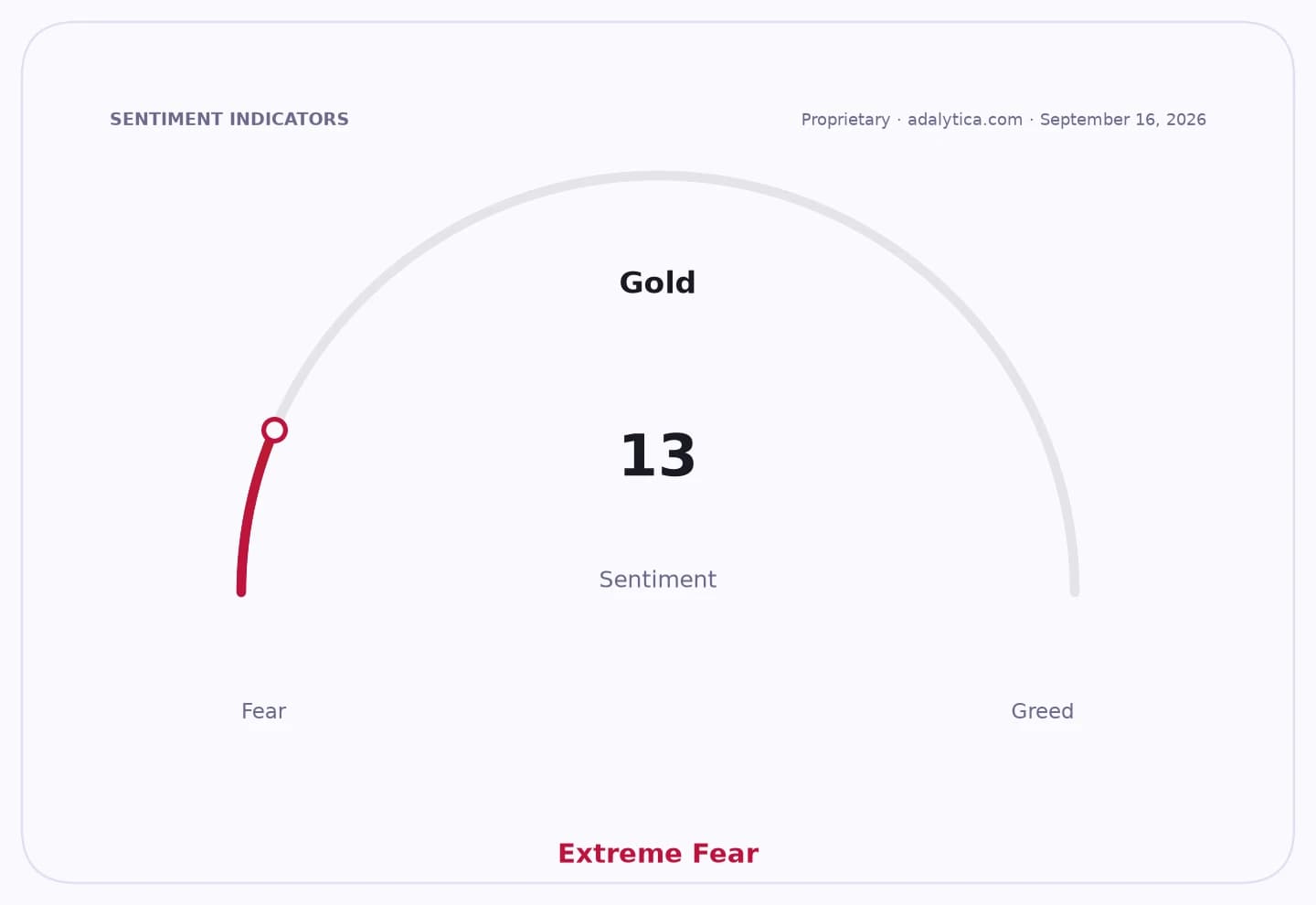
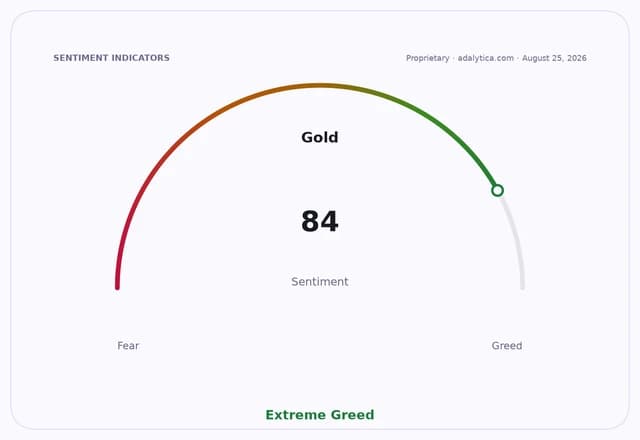
The bigger story is that gold’s advance has become a broad macro trade, not just a panic bid. The SPDR Gold Trust finished at 426.02 on Aug. 25 after touching 426.69 the day before, keeping it near record territory and well above its 50-day moving average of 384.62. Conventional technical readings remain stretched, with RSI around 77, which suggests the metal is overbought in the short run even as the longer-term trend remains powerful. Adalytica’s Gold Fear & Greed Index sits at 84, in “Greed,” after jumping 17 points over the past week and 61 points over the past month — a sign that investor enthusiasm has become extreme.
Sentiment IndicatorsⓘProprietary · adalytica.com · August 25, 2026
This is a snapshot — live sentiment, awareness and momentum for 130+ markets update continuously in the dashboard.Open AlphaPulse
Oil, by contrast, is cooling after an explosive run. USO slid to 127.86 on Aug. 25 from 134.64 on Aug. 21, even after a sharp earlier rebound that had pushed the fund well above its 200-day moving average. West Texas Intermediate was forecast at 86.737 a barrel for Aug. 19, slightly higher than the latest level, underscoring that the market is still elevated but no longer moving in a straight line. Energy shares have reflected that shift too: XLE eased to 62.57 after peaking at 63.64 on Aug. 21, with RSI still elevated at 78.8.
Why does that matter for investors? Because the gold-oil-yield mix is telling you how the market is positioning for the next phase of the cycle. Rising oil can feed inflation expectations and support gold, but it can also lift bond yields and pressure risk assets. The 10-year Treasury yield at 4.74% is high enough to keep the opportunity cost of owning gold in the conversation, yet gold has continued to attract buyers anyway. That usually happens when investors believe the normal playbook is not enough — when they want both inflation defense and geopolitical insurance.
There is also a dollar angle here. Adalytica’s U.S. dollar trade signals show “Extreme Fear” at 2, with awareness near maximum. A softer dollar tends to support commodities priced in greenbacks, and that backdrop helps explain why both gold and oil have been volatile together rather than moving cleanly in opposite directions.
For long-term investors, the lesson is not to chase every tick. Gold can stay richly valued for a while when fear, inflation concerns and policy uncertainty overlap, but it is rarely a simple straight-line trade. Energy, meanwhile, still has the support of supply risk and geopolitical tension, even if the latest pullback shows how fast sentiment can turn. If you are building a diversified portfolio for the next three to 10 years, both markets are worth watching — and gold, in particular, still looks like a legitimate hedge, not just a hot trade.
| Entity | Gains | Losses |
|---|---|---|
| Gold investors | ▲Safe-haven demand | ▼Short-term overbought risk |
| Oil buyers | ▲Higher-energy-price exposure | ▼Recent price pullback |
| Energy stocks | ▲Crude-price support | ▼Cooling momentum |
| Bondholders | ▲Higher yield income | ▼Inflation and geopolitics risk |