Gold and silver prices have come under fresh pressure, with MCX gold falling 2.4% last week to about 147,000 rupees per 10 grams and silver sliding 6.4% to around 211,000 rupees per kilogram, as currency moves and global macro forces reshape the near-term outlook for precious metals.
Gold and silver fall on rupee strength and higher yields
The immediate driver in India has been the rupee’s strength against the dollar, which reduced the cost of imported bullion and amplified the selloff in local prices. Over five trading days, the rupee firmed to 94.8 per dollar from 96.8, a move that directly lowers landed gold costs for domestic buyers and dealers. Silver fell even more sharply because it is not only a store of value but also an industrial metal; when growth fears rise, demand expectations weaken faster than they do for gold.
Sentiment IndicatorsⓘProprietary · adalytica.com · October 23, 2026
This is a snapshot — live sentiment, awareness and momentum for 130+ markets update continuously in the dashboard.Open AlphaPulse
Broader macro conditions are reinforcing the move. Benchmark U.S. 10-year Treasury yields are hovering around 5.13%, while crude oil has surged to more than $110 a barrel in the latest forecast, tightening financial conditions and stoking concern that central banks will keep policy restrictive for longer. In gold markets, those forces matter because higher yields and a firmer dollar raise the opportunity cost of holding non-yielding assets. In India, the currency effect is particularly important because import pricing is the dominant transmission channel.
The decline has also been visible in listed gold and silver proxies. GLD has dropped to $366.30, well below its 50-day moving average of $394.50 and its 200-day average of $414.21, while RSI readings have cooled to 37.3, indicating momentum has weakened but is not yet deeply oversold. Silver ETF SLV has fallen more sharply, to $48.74 from recent highs, with RSI at 28.1 and price below both its 50-day and 200-day averages. The miners are feeling the strain too: GDX has slipped to $80.65, extending a retreat that has left it under its 50-day average of $92.87.
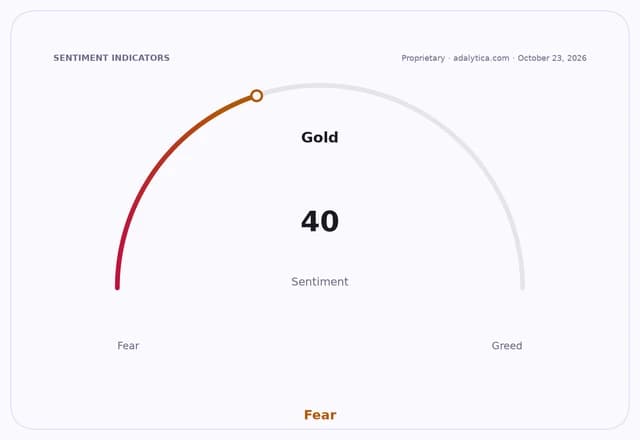
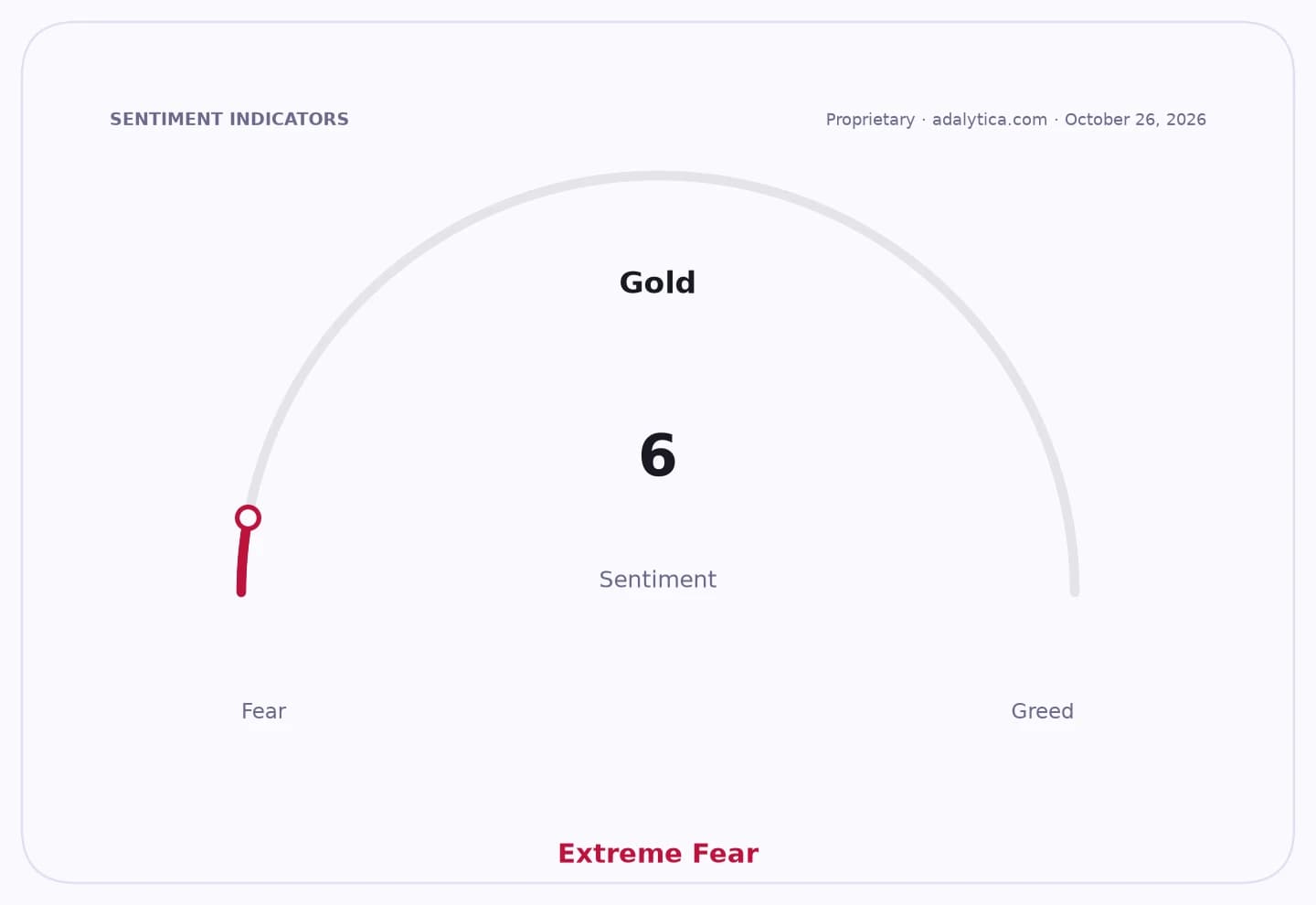
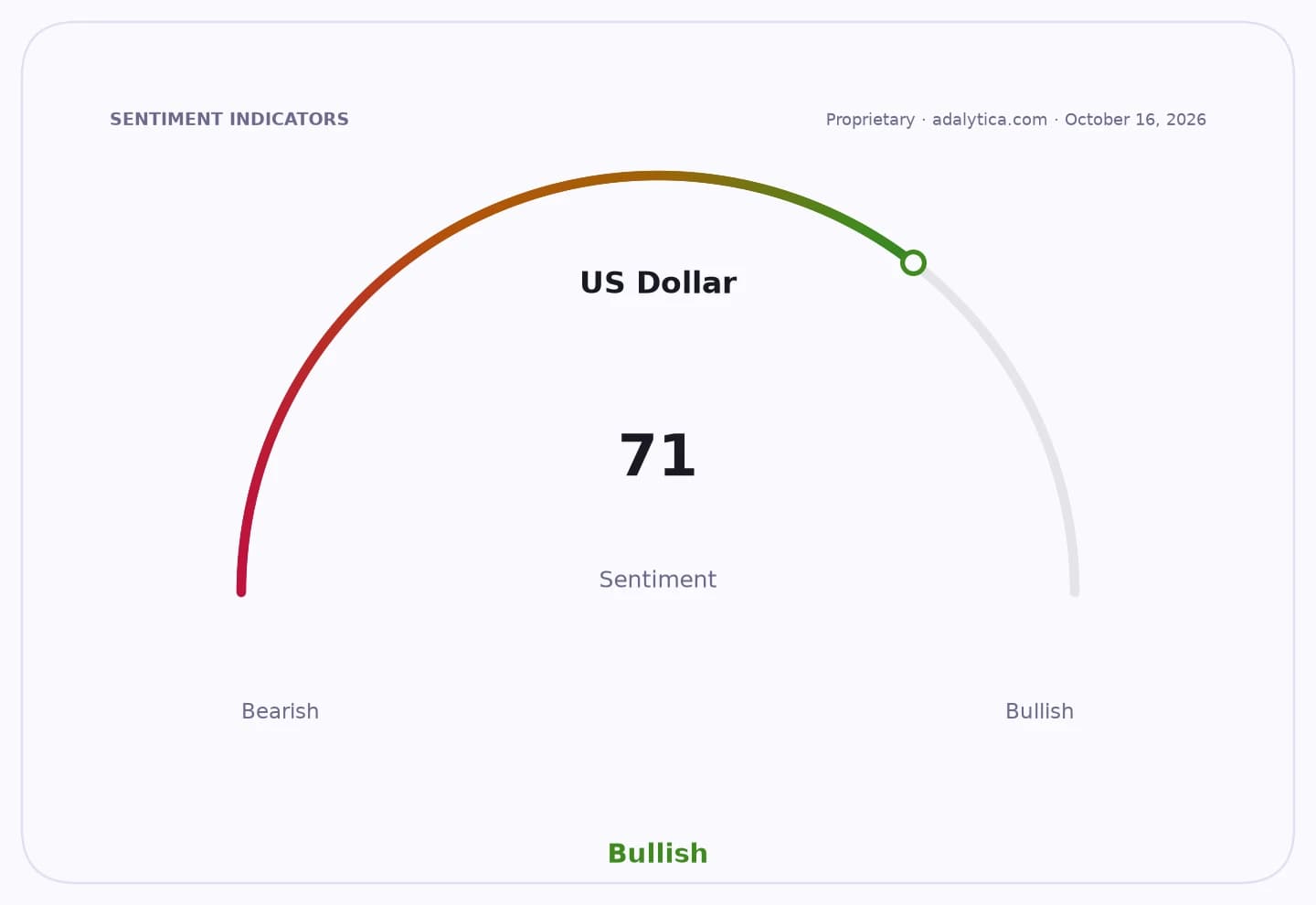
Adalytica’s Gold Fear & Greed Index shows sentiment at 40, neutral, but awareness at 7, described as extreme fear, underscoring how quickly traders have turned defensive. The U.S. dollar signal is similarly weak, with awareness at 1, suggesting markets are treating the greenback as an increasingly important swing factor for bullion direction.
For investors, the key question is whether this is a temporary correction or the start of a deeper repricing. The bull case is that lower prices could revive jewelry demand and attract bargain hunters ahead of seasonal buying, including Dhanteras. The bear case is that if U.S. rates stay elevated, the dollar firms and energy costs remain high, bullion could stay under pressure even after the recent pullback. Silver is the more vulnerable metal in that scenario because weakening industrial demand would compound the macro headwind.
The next move will likely be determined by incoming U.S. and Chinese data, the Federal Reserve’s rate path and crude oil prices. If growth data softens and yields ease, gold could stabilize quickly. If not, the current decline may prove to be only the first leg of a broader reset in precious metals pricing.
| Entity | Gains | Losses |
|---|---|---|
| Jewelry buyers | ▲Lower entry prices | ▼Waiting for a bottom |
| Gold sellers | ▲Short-term liquidity | ▼Pricing power |
| Silver investors | ▲Potential dip-buy opportunity | ▼Near-term momentum |
| Miners and bullion ETFs | ▲Volatility trading opportunities | ▼Asset prices and margins |