Google is no longer treating data-center power constraints as a theory problem. It has launched an experimental satellite carrying its own AI chips to test whether future compute can be moved into orbit, a bet that could reshape where the next decade of AI infrastructure gets built.
Google tests AI chips in orbit

That matters because the AI boom is colliding with a hard ceiling on Earth: electricity, cooling and land. Google says the Project Suncatcher experiment will stress-test its tensor processing units against radiation, temperature swings and vibration, while also probing whether near-continuous solar power in low Earth orbit can support large-scale computation. The prize is obvious — if even part of AI workloads can be shifted off-planet, the industry could relieve one of its biggest bottlenecks and unlock a new layer of capacity.
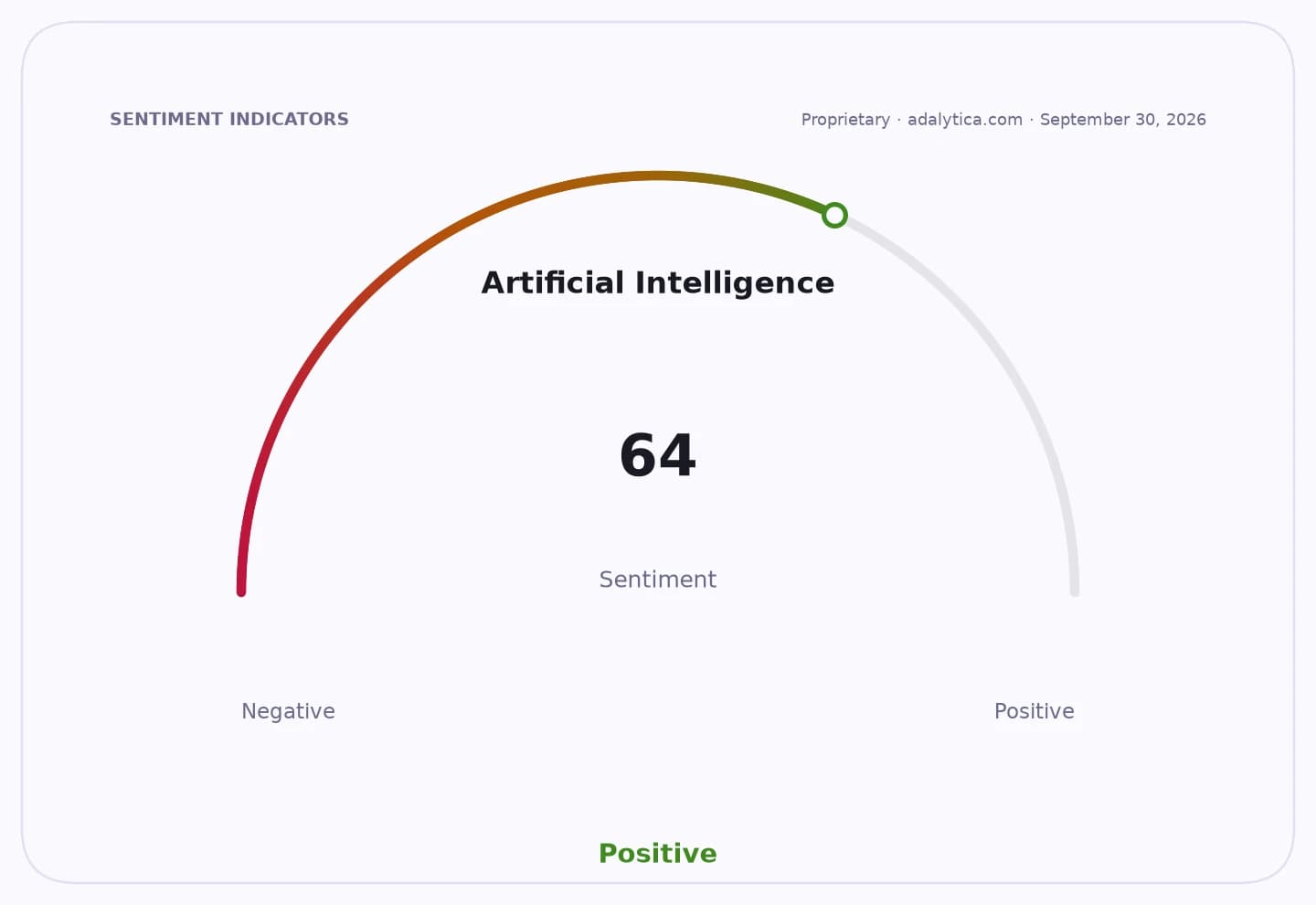
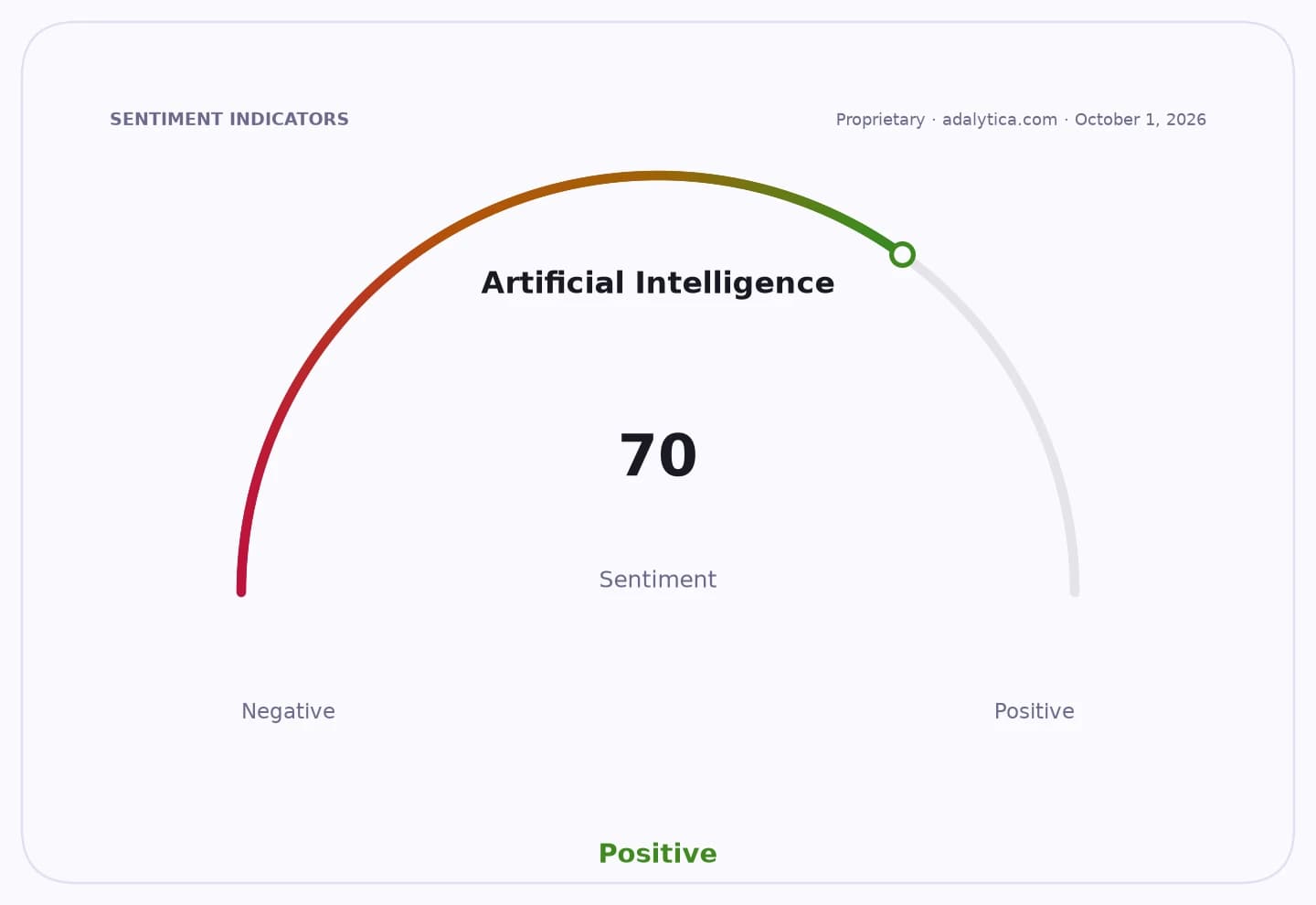
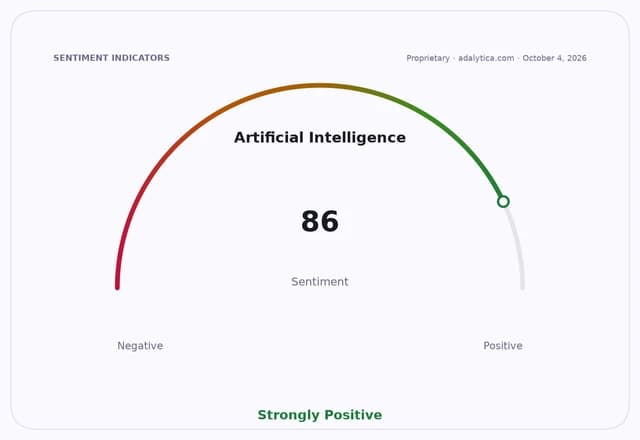
Sentiment IndicatorsⓘProprietary · adalytica.com · October 4, 2026
This is a snapshot — live sentiment, awareness and momentum for 130+ markets update continuously in the dashboard.Open AlphaPulse

The economics are stark. Data centers already consume an estimated 1.5% to 2.5% of global electricity output, and that share could double by 2030 as model training and inference demand keep rising. That makes power availability not just an operating cost, but a strategic constraint on growth. For Google, the move is also about preserving control over the AI stack: custom TPU chips are central to its cloud and model ambitions, and putting them into extreme environments now helps it position for a future in which compute is as much an infrastructure story as a software one.
For investors, the market is still underestimating the second-order winners from the AI capex supercycle. Google’s orbital test reinforces the idea that the AI build-out is no longer just about semiconductors and cloud subscriptions; it is about energy systems, thermal management, launch capacity, networking and specialized hardware that can survive harsher conditions than any server room on Earth. If the experiment advances, beneficiaries could extend beyond Google to the broader ecosystem of chip suppliers, satellite communications, launch providers and power-infrastructure players that help make AI compute denser, cheaper and more resilient.
The setup also underscores why the large-cap AI trade remains powerful even after a huge run. Alphabet, Nvidia and AMD continue to sit at the center of a capital-intensive race where the winners are the companies able to own more of the compute stack, not fewer pieces of it. Nvidia remains the default GPU beneficiary of AI demand, while AMD’s recent surge shows investors are still paying up for alternative accelerators and data-center compute exposure. Google’s move suggests the market is only beginning to price in how far the infrastructure layer could stretch as AI workloads outgrow conventional facilities.
This is still an early-stage experiment, not a commercial data center in orbit. But that is exactly why it matters. The companies that start testing orbital compute now will be the ones best positioned if space-based infrastructure becomes a viable extension of Earth’s data-center grid. For investors, the message is simple: the AI trade is broadening, and the next asymmetric upside may come from the picks-and-shovels behind the next frontier of compute.
| Entity | Gains | Losses |
|---|---|---|
| Google (Alphabet) | ▲Future compute flexibility | ▼Earth-bound infrastructure limits |
| Nvidia and AMD | ▲Broader AI capex demand | ▼None if orbital compute stays niche |
| Energy and data-center suppliers | ▲More infrastructure spending | ▼Power-constrained legacy facilities |
| Launch and satellite firms | ▲New orbital-compute market | ▼Traditional-only data-center builders |