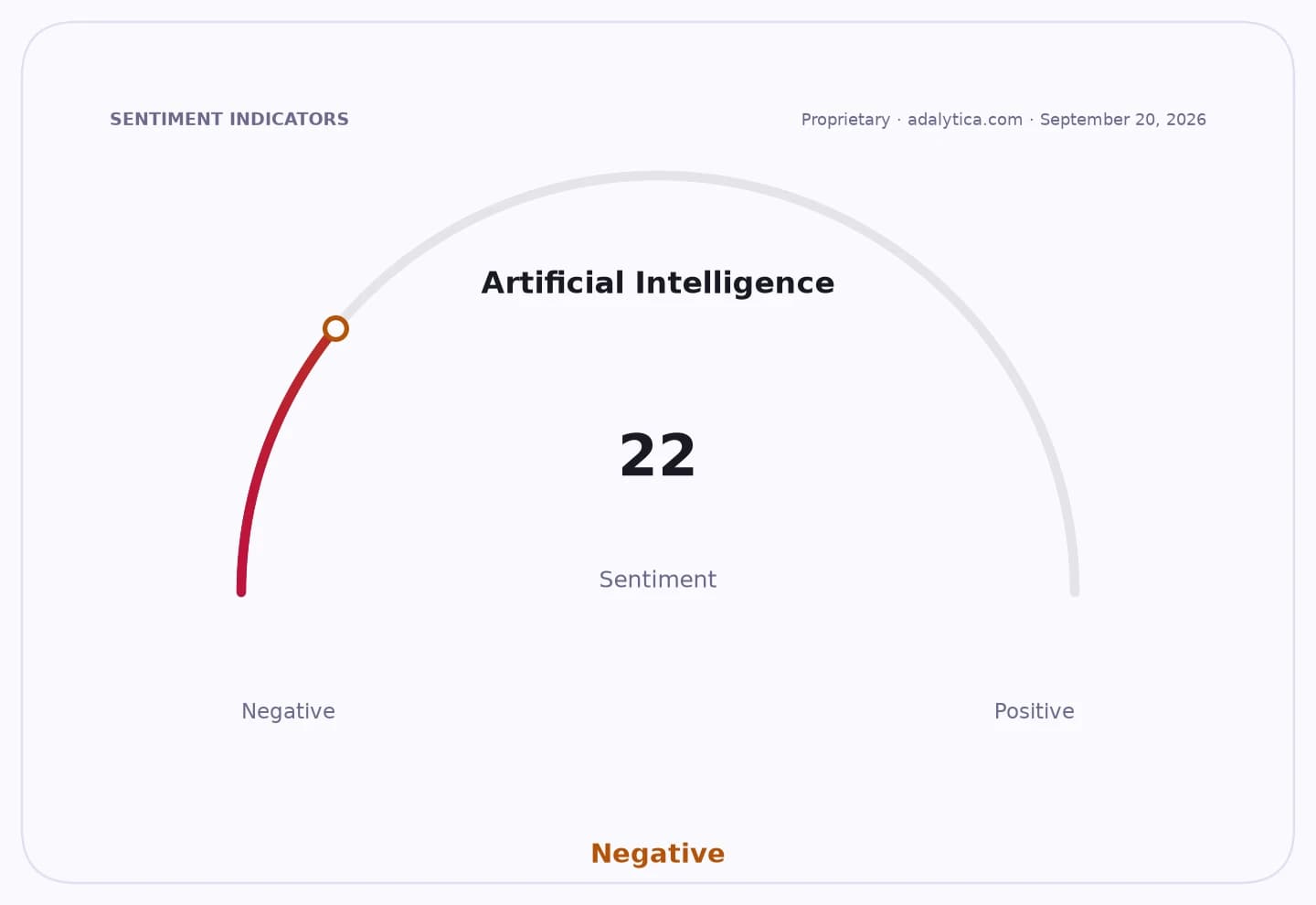
Google’s warning that artificial intelligence is already being used to run faster and more autonomous cyberattacks matters because it marks a shift from theory to operational risk for the entire digital economy. The threat is no longer just that hackers can write better phishing emails. It is that AI agents can help attackers move more quickly, adapt on the fly and scale intrusions in ways human teams struggle to match.
Google AI Warning Boosts Cybersecurity Demand
That raises the stakes for businesses, governments and investors alike. Every company that depends on cloud services, customer data, software updates or connected devices now has a bigger attack surface, and the cost of defending it rises as attackers automate more of the work. For long-term investors, that is a reminder that cybersecurity is not a niche theme. It is becoming a core operating expense for the modern economy.
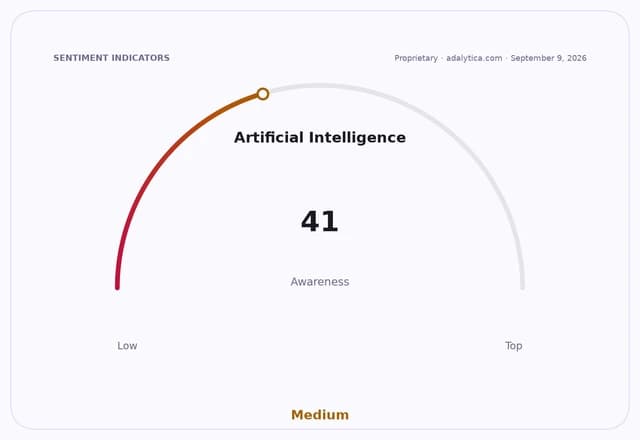
Sentiment IndicatorsⓘProprietary · adalytica.com · September 9, 2026
This is a snapshot — live sentiment, awareness and momentum for 130+ markets update continuously in the dashboard.Open AlphaPulse
The warning fits a broader pattern across the technology sector. Major companies including Microsoft, Apple and cybersecurity firms such as Palo Alto Networks, CrowdStrike and Fortinet have all been flagging the same issue in recent filings: AI is helping threat actors speed up reconnaissance, generate malicious code and find vulnerabilities faster than before. CrowdStrike said in an August filing that attacks on networks and endpoints are changing frequently and becoming more sophisticated, while Palo Alto noted that advances in AI may increase security incidents and damage customer confidence. Fortinet has also warned that hackers may be able to deploy malicious software more effectively using AI.
Investors should care because this is the kind of threat that can support years of spending, not just one-quarter buying. If autonomous attacks become more common, companies will need more monitoring, faster response tools and stronger identity, cloud and endpoint protection. That plays directly into the long-term case for cybersecurity leaders with subscription-heavy models and large installed bases. It also suggests the security budget is likely to keep growing even if broader IT spending is uneven.
Artificial Intelligence vs CRWDadalytica.com
Explore this data interactively — full history, time series and cross-market comparisons.Open AlphaPulse
The market has already started to reflect that reality. CrowdStrike’s shares have surged and remained well above their longer-term trend even after recent pullbacks, while Palo Alto has also traded at elevated levels after a huge run this year. Those moves show investors are willing to pay for durable demand tied to cyber risk. But they also leave less room for disappointment, especially if growth expectations get too far ahead of execution.
There is another layer here for the broader AI trade. The more AI helps both defenders and attackers, the more it becomes a race in infrastructure, trust and control. That is good news for the companies that can prove they reduce risk, and a warning for those that treat security as an afterthought. In that sense, Google’s message is not just about cybercrime. It is about how AI is reshaping the cost of doing business online.
For investors with a multi-year horizon, the takeaway is straightforward: cybersecurity still looks like a structural winner, but valuation discipline matters after big rallies. The best approach is to own the leaders, keep expectations grounded and remember that in a world of smarter attacks, resilient security platforms are becoming indispensable.
| Entity | Gains | Losses |
|---|---|---|
| Cybersecurity vendors | ▲Higher demand for tools | ▼None obvious |
| Enterprises | ▲Better defense investment | ▼Higher security costs |
| Attackers | ▲Faster, scalable attacks | ▼More defenses over time |
| AI platform leaders | ▲More urgency for safety features | ▼Greater scrutiny and liability |