The government has formally opened the door to more flexible dollar-denominated credit for companies, a move that could ease a tightening financing squeeze, support exporters and small businesses, and help sustain economic activity without forcing a sharper break in the country’s dollarized corporate balance sheets.
Government opens more flexible dollar credit
The policy matters because credit remains one of the main transmission channels from monetary stability to growth. By allowing firms, especially micro, small and medium-sized enterprises, to access dollar funding under more flexible conditions, authorities are trying to channel liquidity toward the productive sector at a time when consumer lending is slowing, interest rates remain high and business investment is still cautious.
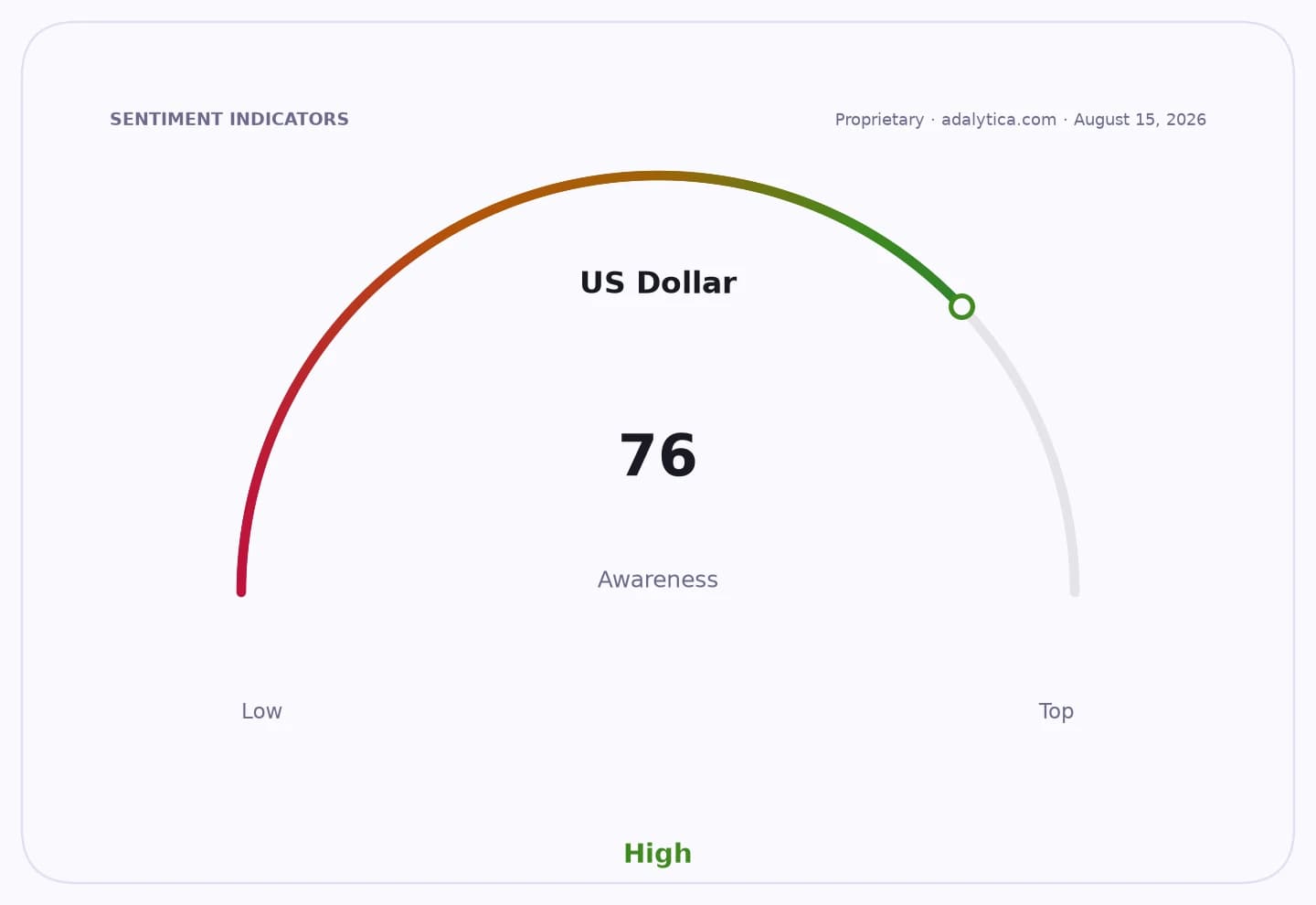
Sentiment IndicatorsⓘProprietary · adalytica.com · August 15, 2026
This is a snapshot — live sentiment, awareness and momentum for 130+ markets update continuously in the dashboard.Open AlphaPulse
The measure is also designed to support exports, which are one of the few sources of hard-currency inflows that can reinforce external accounts. A dedicated credit fund for export financing can help firms bridge working-capital gaps, fund shipments and reduce the need for expensive short-term borrowing. For an economy that still depends on foreign-exchange earnings to stabilize reserves and confidence, that is more than a banking tweak; it is a macro policy tool.
For investors, the key question is whether easier dollar credit can boost activity without reintroducing currency-risk fragility. Companies with revenue in dollars stand to benefit if they can borrow in the same currency and match liabilities with cash flow. Importers or firms earning pesos, by contrast, could remain exposed if dollar funding becomes too widely used without a corresponding hedge. The government’s challenge is to widen credit access while avoiding a new round of balance-sheet mismatches.
The backdrop is encouraging but fragile. Rating firms have already kept a stable outlook on the country, suggesting that policy credibility has improved enough to support more targeted credit expansion. At the same time, the banking system is sitting on record deposits, which gives lenders more room to extend financing if regulations and demand line up. But slower consumer credit growth shows households are still feeling the strain of tighter financial conditions, so the burden of any near-term acceleration will fall largely on corporate borrowing.
The move also has implications for banks and asset managers. Lenders gain a larger pool of eligible borrowers and potentially better utilization of deposits, while corporate borrowers get access to funding that may be cheaper or more available than local-currency alternatives. The risk is that credit quality weakens if the policy is pushed beyond firms with natural dollar income, especially if growth does not rebound quickly enough to justify the new lending.
Market reaction will hinge on execution. If the rules encourage export-oriented firms and productive SMEs to borrow and invest, the policy could support industrial activity, trade and bank loan growth over coming quarters. If it mainly shifts liabilities onto weaker balance sheets, investors may see it as a temporary liquidity fix rather than a durable growth catalyst. For now, the government is betting that greater flexibility in dollar credit can turn abundant deposits into lending and lending into growth.
| Entity | Gains | Losses |
|---|---|---|
| Exporters | ▲More dollar funding | ▼Less working-capital pressure |
| MSMEs | ▲Easier credit access | ▼Still face rate and FX risk |
| Banks | ▲Loan growth opportunity | ▼Higher credit-risk exposure |
| Peso borrowers | ▲Potentially less inflation pass-through | ▼More FX mismatch risk |