Soybean and corn futures fell more than 2% as a weaker oil market and easing risk appetite hit grains, with wheat also lower, underscoring how quickly energy prices and macro sentiment can wash through agricultural commodities.
Grains Fall as Oil Weakness Pressures Biofuel Economics
The move matters because crude oil is a key input for transport and fertilizer costs, while also feeding into biofuel economics that help support crop demand. When oil drops, the relative value of corn and soybeans for ethanol and biodiesel weakens, and traders often pull back across the grain complex at the same time.
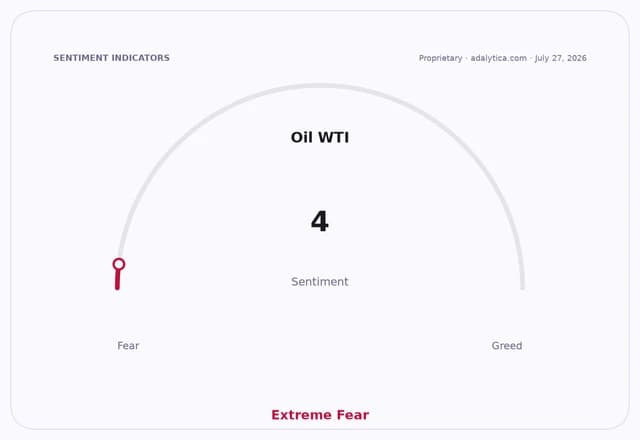
Sentiment IndicatorsⓘProprietary · adalytica.com · July 27, 2026
This is a snapshot — live sentiment, awareness and momentum for 130+ markets update continuously in the dashboard.Open AlphaPulse

WTI crude was last near $84.98 a barrel in the latest forecast, after a sharp swing lower over the past week, according to Adalytica’s oil trade signals. Its oil gauge showed “Extreme Fear” sentiment even as awareness remained “Extreme Greed,” a sign of heightened attention and volatile positioning in energy markets.
The grain weakness also comes against a backdrop of uneven fundamentals. European harvests have been hit by extreme heat, Ukraine’s export channels remain under pressure, and UK grain futures have climbed to two-year highs on tighter supply, but U.S.-traded contracts are still reacting to broader commodity liquidation and the oil-led drag.
DCOILWTICO vs PPIACO — macro contextadalytica.com
Explore this data interactively — full history, time series and cross-market comparisons.Open AlphaPulse
Chicago soybean futures were last at 1,218.75 cents a bushel, while corn ended at 474 cents and wheat at 670.75 cents, with technical readings showing soybeans retreating from recent highs and wheat cooling after a sharp July rally. Corn has also been volatile, and the latest selling reflects traders taking profit after a run-up that left the market vulnerable to a downturn in outside commodities.
For investors, the drop is a warning sign for agricultural names that depend on higher crop values, including grain merchants, processors and farm-equipment suppliers. It can also help lower input costs for livestock producers and food manufacturers, but persistent export disruptions and weather damage keep the broader grain market exposed to abrupt price spikes.
The next catalyst is likely to be fresh weather updates, export flow data from the Black Sea and South America, and any move in oil that shifts biofuel economics again. If energy stays soft, grains could remain under pressure even as supply risks keep a floor under the market.
| Entity | Gains | Losses |
|---|---|---|
| Livestock producers | ▲Lower feed costs | ▼Crops cheaper for growers |
| Food manufacturers | ▲Softer raw material costs | ▼Higher input volatility |
| Grain sellers/farmers | ▲— | ▼Lower crop prices |
| Oil bulls | ▲— | ▼Weaker biofuel support |