Energy is back at the center of Greece’s inflation problem, and Alpha Bank says the country’s heavy reliance on oil leaves it more vulnerable than most of the euro zone as geopolitical tensions push fuel costs higher.
Greece Inflation Rises on Higher Energy Costs
The bank’s Economic Research unit said average Greek inflation rose to 4% in the March-September period, up from 3% in the first two months of the year, after Brent crude jumped from about $72 a barrel to above $100 in March and natural gas prices more than doubled to over 60 euros per megawatt hour. The move is hitting household heating and transport costs directly, even as broader second-round effects remain limited for now.
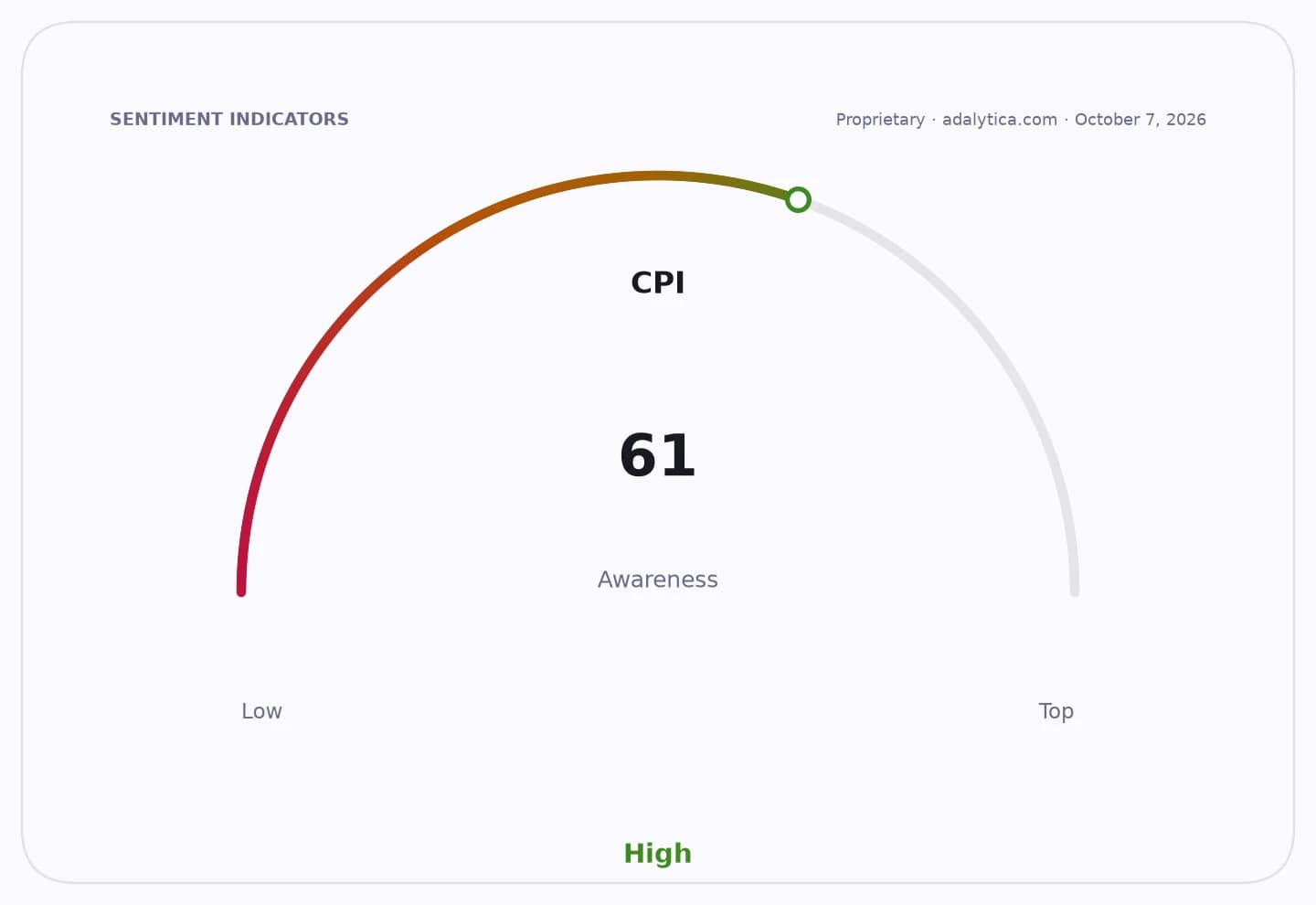
Sentiment IndicatorsⓘProprietary · adalytica.com · October 7, 2026
This is a snapshot — live sentiment, awareness and momentum for 130+ markets update continuously in the dashboard.Open AlphaPulse
That matters because Greece is one of the European Union’s most oil-dependent economies. Oil and petroleum products account for about 53% of final energy consumption, the second-highest share in the bloc after Cyprus and well above the EU average of 37%, leaving consumers and businesses exposed when global energy prices spike.
The pressure is already visible in prices for specific fuels. Alpha Bank said home heating fuel prices rose more than 48% on average in the six months through August, while diesel climbed 24% over the same period. Energy inflation in Greece increased 16.7% in the March-September period, compared with 11.2% across the euro zone.
For investors, the story cuts both ways. Higher energy costs risk eroding disposable income, squeezing margins in transport, retail and agriculture, and complicating the outlook for domestic demand. At the same time, Greece’s improving power mix is slowly reducing structural exposure: renewables supplied 52% of electricity in the first seven months of the year, up from 35% in 2019, while coal and related fuels fell to 5% from 22%.
Alpha Bank also pointed to a meaningful external-side gain. Greece’s electricity balance turned positive in 2024 for the first time since 2000, then widened to 3 terawatt hours in 2025 and 5.5 TWh in the first seven months of 2026, helping narrow the trade deficit. That gives policymakers some offset as they lean on fuel subsidies, cash support and grid investment to cushion the shock.
The immediate risk is that another leg up in oil or gas would push inflation higher again before the clean-energy transition has fully reduced dependence on imported fossil fuels. The next catalysts are the direction of Middle East energy flows and whether elevated fuel prices start feeding into broader goods and services inflation.
| Entity | Gains | Losses |
|---|---|---|
| Greek renewable power producers | ▲Higher generation share | ▼Limited |
| Greek consumers and businesses | ▲Fuel subsidies, support measures | ▼Higher heating and transport costs |
| Greek trade balance | ▲Electricity export gains | ▼Oil import bill |
| Oil and gas importers | ▲None | ▼Higher input costs |