A planned 2.8% gross pension increase in 2027 will again trail inflation in Greece, underscoring how retirees’ incomes continue to be squeezed even as nominal benefits rise.
Greece pension increase to trail inflation in 2027

The adjustment, set to be paid in December 2026 with January 2027 pensions, would add just 14 euros to 42 euros a month to main pensions, depending on the benefit level, while supplementary pensions would not rise. For a retiree on a 500-euro pension, the increase amounts to 14 euros before taxes and deductions; at 1,500 euros, the gain is 42 euros. With official inflation at 3.8% in August, the raise will do little to restore purchasing power.
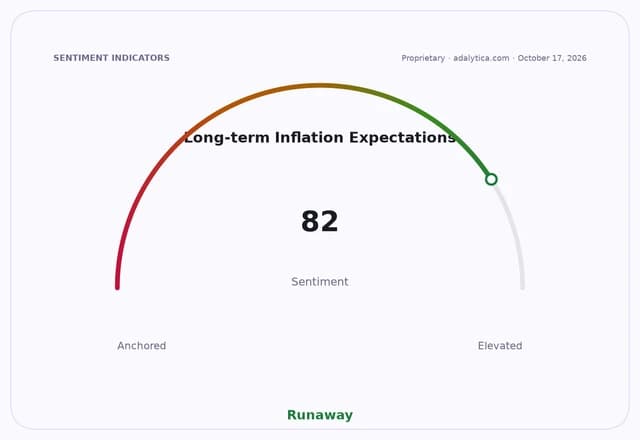
Sentiment IndicatorsⓘProprietary · adalytica.com · October 17, 2026
This is a snapshot — live sentiment, awareness and momentum for 130+ markets update continuously in the dashboard.Open AlphaPulse
That gap matters economically because pension payments are a major source of household income in a country with a large retiree population, and weak indexation feeds directly into consumption pressure. The current formula, which effectively splits consumer-price inflation and GDP growth, caps the final increase below the pace of living costs. In practice, that means food, energy and services continue to absorb a larger share of fixed incomes, even after annual nominal adjustments.
The problem is not just one year’s shortfall. Greek pensions were frozen until 2022 under bailout-era restrictions, then rose 16.4% cumulatively from 2023 to 2026, still less than the 19.8% increase in inflation over the same period. The government also says the 2.8% increase will apply to about 670,000 retirees with a so-called personal difference, highlighting how broad the erosion remains. Retiree groups argue the formula should be changed so increases fully cover inflation losses and recover part of the income lost over the past 17 years.

For investors, the story is less about the size of the pension rise than about the persistence of inflation risk in household budgets. If retirees keep losing real income, spending on discretionary goods and services remains constrained, which can weigh on domestic demand and keep pressure on policymakers to revisit the indexation formula. The rise in taxes on nominal gains, because brackets are not adjusted for inflation, further reduces net income and reinforces that drag.
The wider narrative is that inflation is still doing the heavy lifting in determining living standards, even as governments present annual pension increases as relief. Nominal gains may look meaningful on paper, but in real terms they leave retirees little better off. Unless Greece changes the way it indexes pensions, the annual increases will keep functioning as a partial offset, not a restoration, of lost purchasing power.
| Entity | Gains | Losses |
|---|---|---|
| Greek pensioners | ▲Slight nominal increase | ▼Real purchasing power |
| Greek government | ▲Fiscal control | ▼Political goodwill with retirees |
| Retailers and domestic service providers | ▲Some income support | ▼Weak pensioner spending power |
| Retiree associations | ▲Argument for reform | ▼Current indexation rules |