Greek consumers are cutting back on coffee bought out and turning to home brews as higher prices make one of the country’s most routine purchases feel increasingly discretionary.
Greek coffee prices push consumers to brew at home
A freddo espresso now costs about 2.50 euros on average, while a freddo cappuccino runs to 2.80 euros, prices that are forcing households to reconsider how often they buy coffee outside the home. The shift matters because coffee is not a luxury item in Greece but a daily habit, and even small increases quickly ripple through household budgets in a market already under pressure from broader living costs.
For cafes and coffee chains, the squeeze is two-sided: customers are becoming more price-sensitive just as operators face higher running costs. That combination threatens volumes and margins at the same time, especially in a category where purchases are frequent and substitution is easy. A consumer who skips one or two takeaway coffees a day can save a meaningful amount over a month, and that arithmetic is now changing behavior.
The pressure is also feeding into the wider coffee market. International arabica and robusta futures have been volatile on supply worries from major producing countries including Brazil and Colombia, while weather disruptions and currency moves have kept traders cautious. Those upstream cost pressures are filtering down to European retail pricing, even as some domestic prices show only modest dips ahead of the new harvest.
Starbucks, which has been posting stronger sales, illustrates the broader industry tension. Higher menu prices can support revenue in the short term, but labor and coffee costs continue to weigh on profitability and make it harder to protect traffic. For investors in coffee retailers, the key question is whether consumers accept the higher ticket or trade down to at-home consumption and cheaper formats.
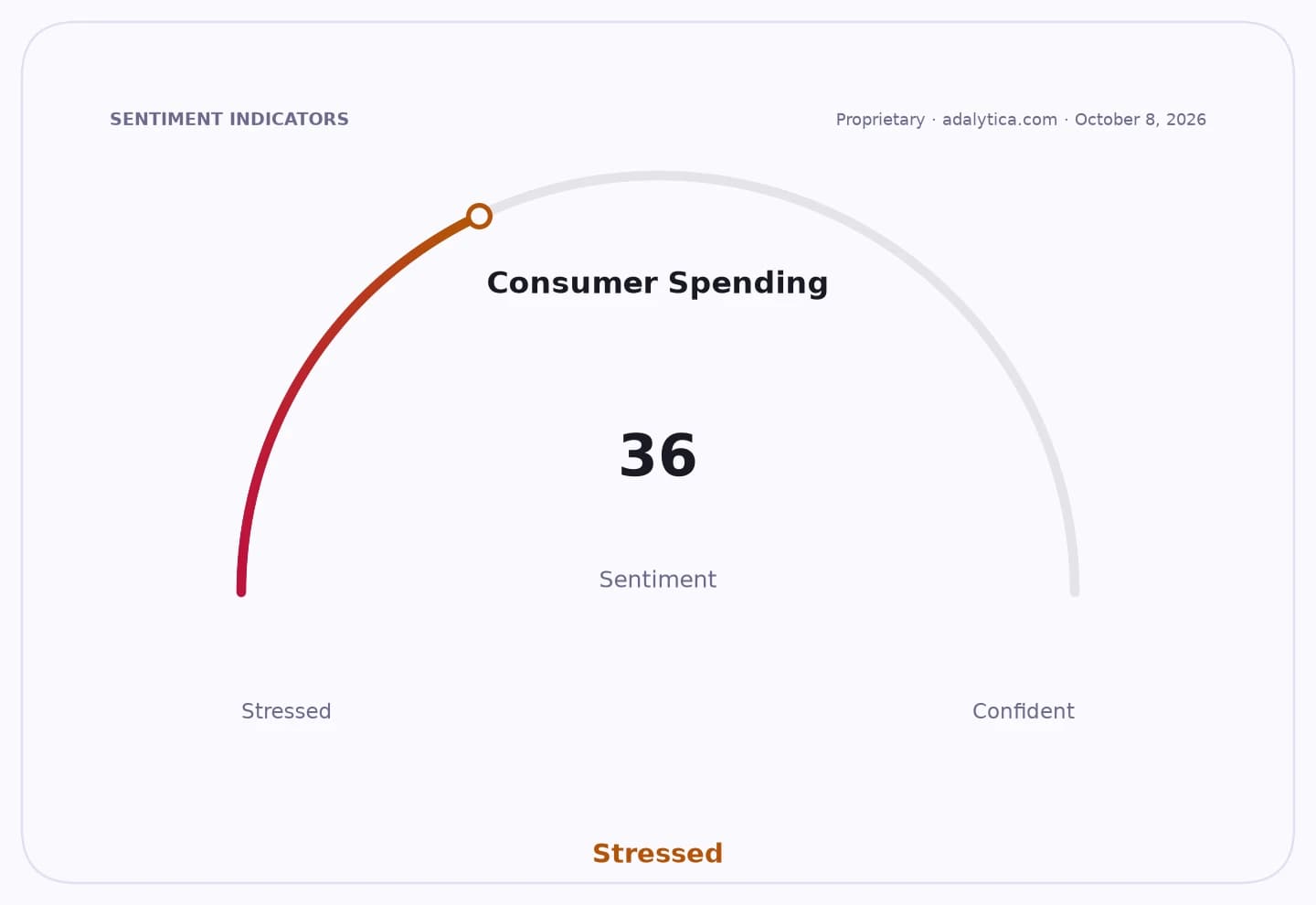
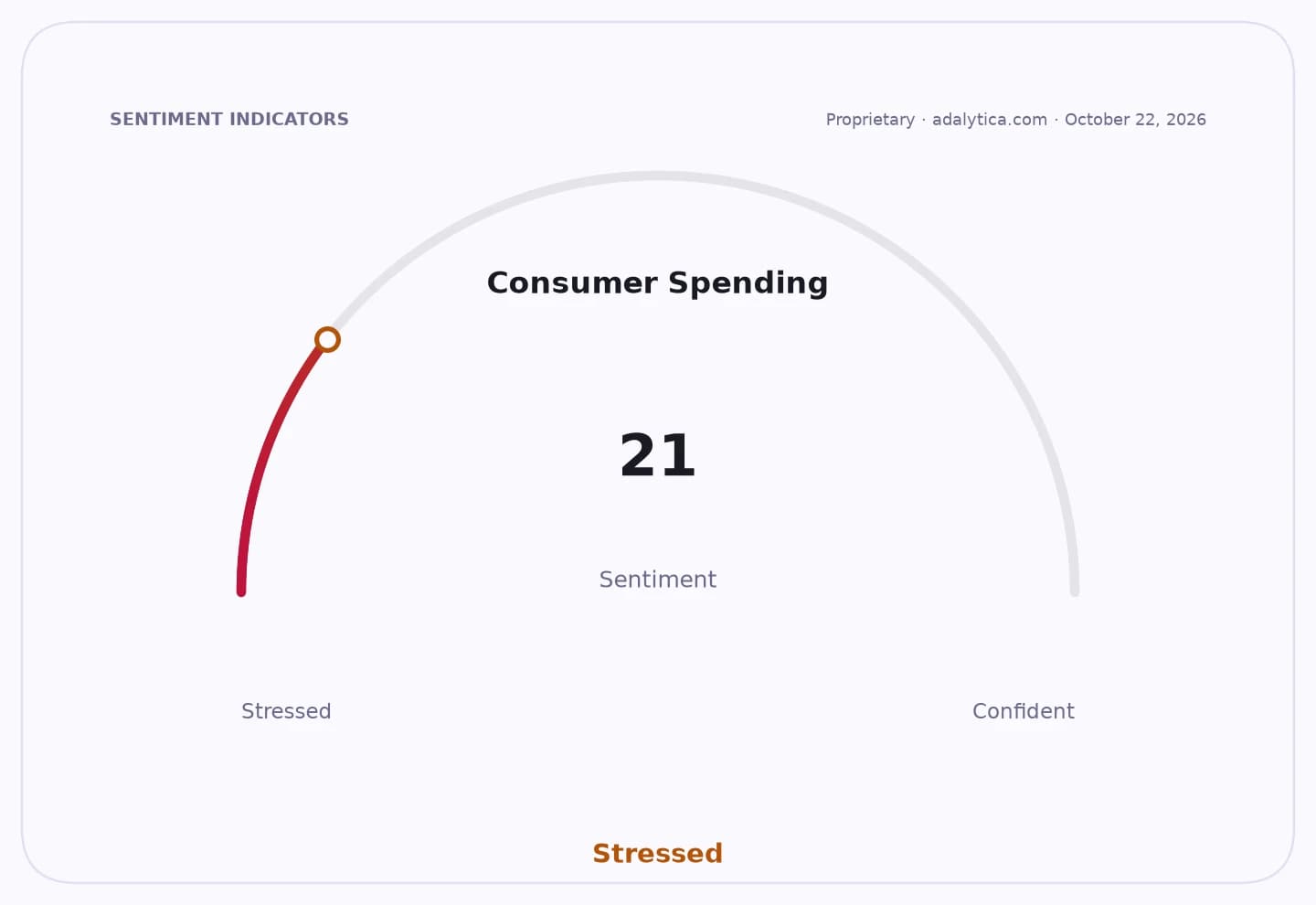
Market indicators point to a fragile backdrop for demand. Adalytica’s Consumer Spending Sentiment gauge shows “Fear” at 21, with awareness at “Extreme Fear,” while CPI sentiment remains at “Extreme Fear,” underscoring how quickly shoppers can pull back when everyday essentials get more expensive.
The immediate outlook hinges on whether supply conditions ease enough to slow coffee inflation. If they do not, Greece’s habit of coffee on the go may continue to shift toward supermarket purchases and home preparation, pressuring cafes while benefiting retailers selling packaged coffee and equipment.
| Entity | Gains | Losses |
|---|---|---|
| Supermarkets | ▲More at-home coffee sales | ▼Less foot traffic elsewhere |
| Cafes and takeaway chains | ▲Higher prices per cup | ▼Lower customer frequency |
| Coffee retailers | ▲Demand for packaged coffee | ▼On-premise beverage volumes |
| Consumers | ▲More control over spending | ▼Everyday budget pressure |