Guangzhou’s decision to let developers defer land payments in exchange for selling completed homes is a sign that China’s property slowdown has moved beyond a simple pricing problem and into a cash-flow problem for builders, local governments and banks.
Guangzhou defers land payments to boost completed-home sales
The policy is designed to clear a stubborn inventory overhang by steering developers away from slower pre-sale funding models and toward finished units that can be delivered to buyers immediately. That matters because China’s housing sector remains one of the biggest drags on domestic demand, with apartment sales still weak and new construction showing little sustained recovery despite repeated easing steps.
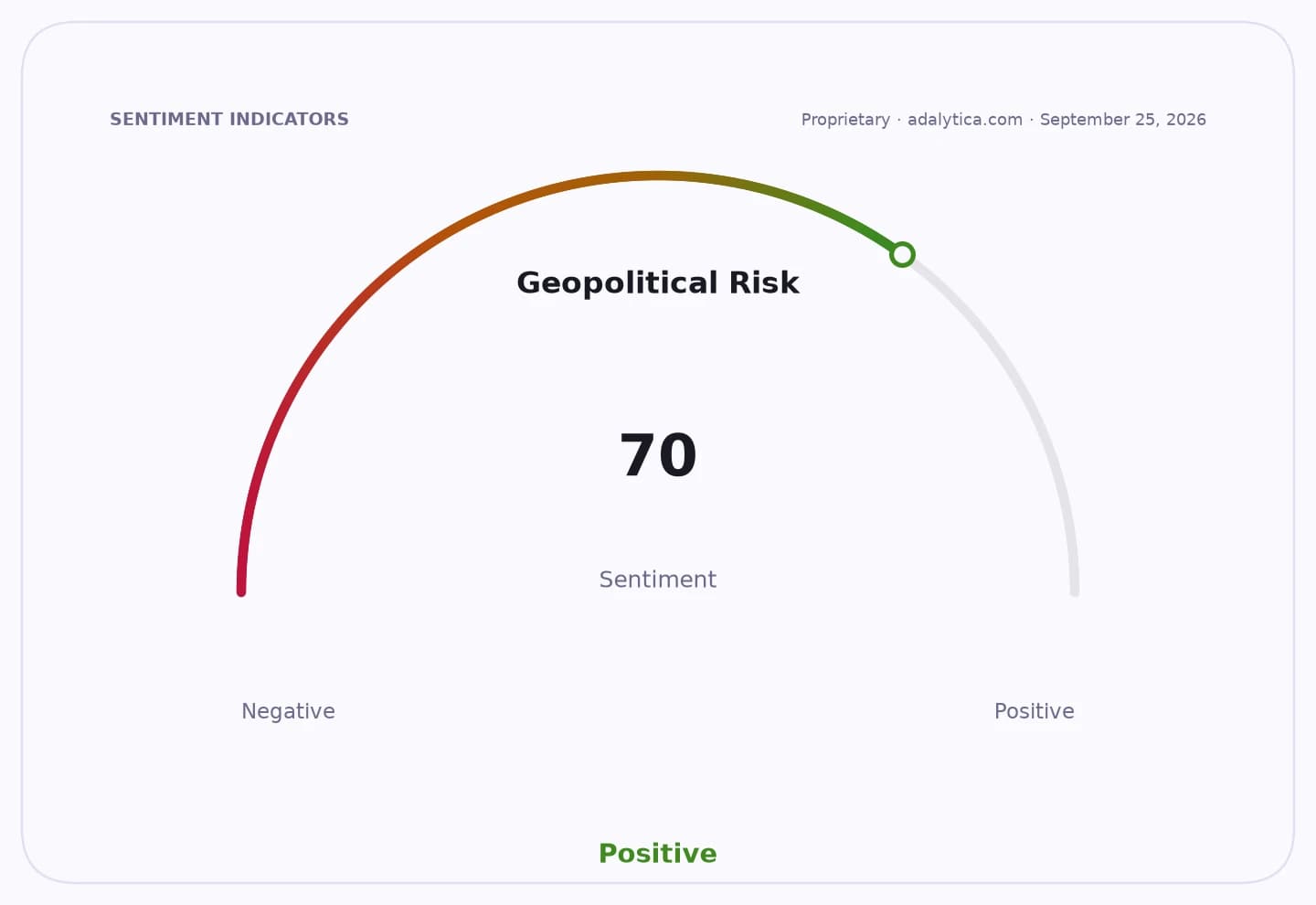
Sentiment IndicatorsⓘProprietary · adalytica.com · July 29, 2026
This is a snapshot — live sentiment, awareness and momentum for 130+ markets update continuously in the dashboard.Open AlphaPulse
Official housing data point to a market that is still struggling to find a floor. New home prices in 70 cities continue to be soft, while housing starts have remained under pressure. A recent reading on new home construction starts was 1,427, down from 1,609 a year earlier, underscoring how far developers remain from a broad turnaround. Analysts have long said the key problem is not just lack of financing, but weak buyer confidence after years of unfinished projects and developer defaults.
For Guangzhou, deferring land payments is a practical attempt to keep transactions moving without forcing developers to choose between preserving cash and meeting obligations to local authorities. Land sales are a crucial source of revenue for municipalities, so the move also reflects the fiscal strain facing China’s local governments as property-related income shrinks. In effect, the city is trading near-term cash collection for the chance of more home sales, better project completion rates and a slower buildup of distressed inventory.
The policy may offer relief to developers with completed inventory ready for sale, but it also highlights how constrained the sector has become. Builders are still carrying heavy debt loads, margins are thin and access to credit remains uneven. A shift toward completed-home sales could help the strongest operators improve cash conversion, but weaker developers may still struggle to benefit if buyers remain cautious and lenders stay selective.
Investors have already begun to test the idea that China property may be stabilizing, but the broader market has not yet confirmed a durable recovery. The FXI China ETF has rebounded to 36.12, above its 50-day moving average of 34.19, while KWEB also firmed to 27.80, but both remain well below their 200-day averages, reflecting skepticism that policy support alone can restore earnings growth. The latest moves suggest traders are willing to buy tactical relief, not a full-cycle re-rating.
The deeper significance is that Guangzhou is effectively acknowledging the old model of endless land auctions and pre-sales is no longer reliable enough to support local finances or housing demand. If other cities follow, the policy could become part of a broader restructuring of China’s property market toward completion and delivery rather than leverage and expansion. That would be constructive for homebuyers and some developers, but less favorable for land sellers, local fiscal revenue and the banks exposed to the sector’s still-fragile balance sheet.
What investors will watch next is whether the measure produces real sales volumes or merely shifts payment timing. A meaningful pickup in completed-home transactions would support builders’ cash flow and could gradually stabilize sentiment. If it fails, the move will read more as another sign that China’s housing reset is still underway rather than nearing an end.
| Entity | Gains | Losses |
|---|---|---|
| Guangzhou city government | ▲Short-term sales support | ▼Immediate land cash collection |
| Developers with finished inventory | ▲Better cash flow | ▼Higher execution pressure |
| Homebuyers | ▲More completed units | ▼Limited price relief |
| Local fiscal revenue | ▲Potential long-term stabilization | ▼Near-term budget strain |