Hanoi is moving to cut the time it takes to approve and launch social housing projects by at least half, a policy shift that could materially increase the city’s housing supply and ease one of Vietnam’s most persistent affordability constraints.
Hanoi speeds social housing approvals
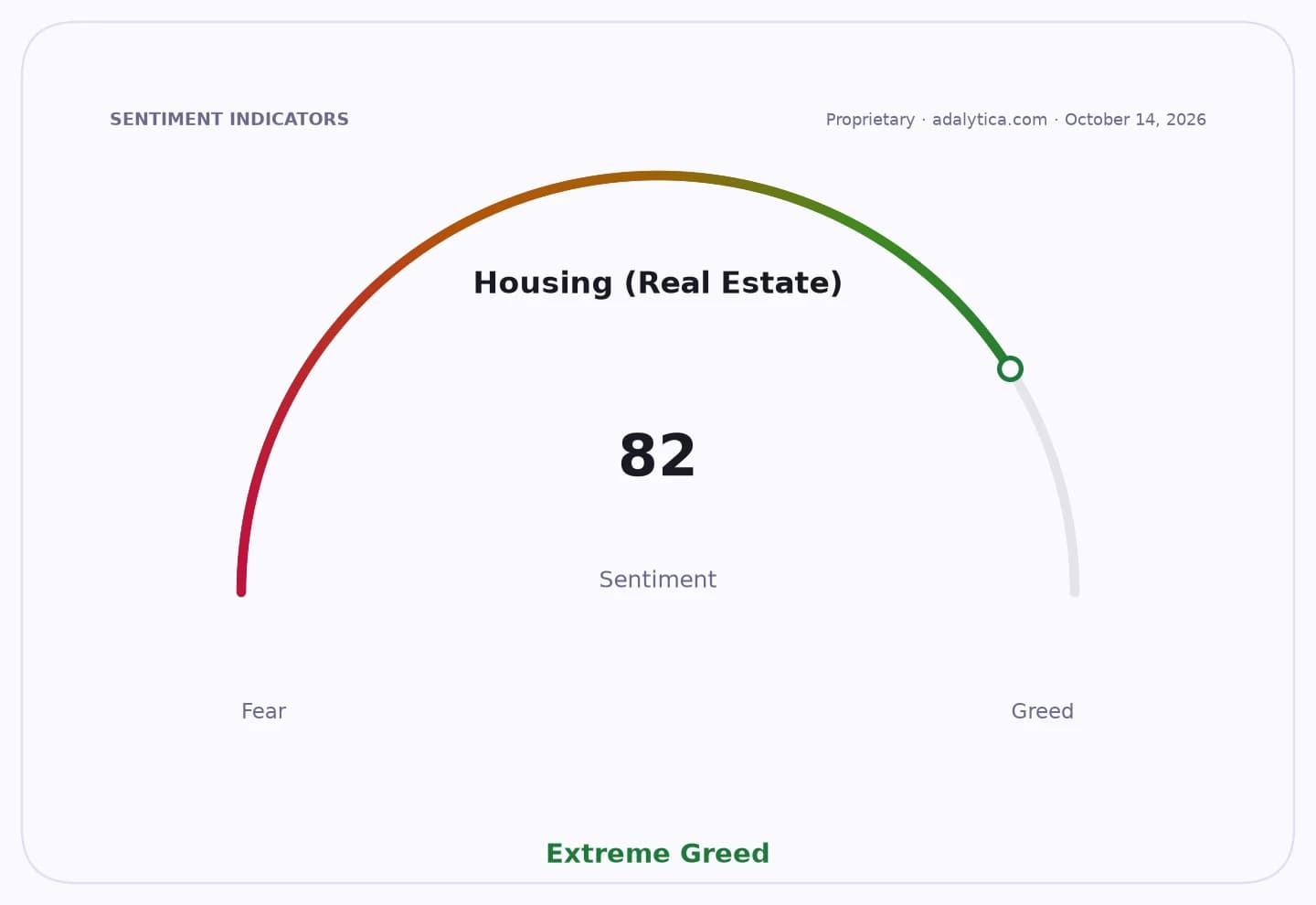
Housing (Real Estate)
The capital’s new “green lane” for administrative procedures comes as Hanoi scrambles to convert policy into completed apartments, not just approved plans. Under a July 20 directive, the city wants all 114 social housing projects in the pipeline to have started construction in the final six months of 2026 and for about 77 of them to finish their foundations, enough to support roughly 46,100 units coming to market.
Sentiment Indicators
That matters because Hanoi has been assigned 88,666 social housing units for 2025-2030, including 18,700 in 2026 alone. The city is now aiming to make about 25,000-27,000 units eligible for supply by the end of 2026, a pace that would be a meaningful test of whether regulatory easing can translate into actual homes in a market where approvals, land handover and compensation disputes have long slowed delivery.
The policy is also economically significant beyond the housing sector. Faster social housing delivery can support construction activity, unlock stalled land and labor, and reduce pressure on household budgets in a city where housing costs have outpaced many incomes. Hanoi is tying the effort directly to its goal of delivering double-digit economic growth, underscoring how housing has become both a social policy issue and a growth lever.
A key part of the strategy is administrative triage. Hanoi says social housing projects eligible under the 2026 Capital Law can move ahead with detailed 1/500 planning without waiting for completion or revisions of broader zoning plans, while some approval authority is being pushed down to ward and commune-level governments. The city is also requiring environmental consultations and land clearance to run in parallel, rather than sequentially.
For developers, the change lowers project risk and the carrying cost of land and permits. For buyers, especially low-income households, factory workers and civil servants, the bigger issue is whether the city can actually broaden access. Hanoi is reserving up to 20% of units in each project for civil servants to buy or rent-to-buy without a lottery, while also using the same policy framework to promote rental housing, resettlement housing and housing for high-quality talent.
The city’s latest update to its 2026-2030 housing plan shows the scale of the push. Hanoi added 42 social housing projects and 34 commercial housing or urban projects in the first batch of updates, alongside three rental-housing projects with total investment of 34.292 trillion dong, or about 4,367 apartments across 404,289 square meters. That signals a broader effort to diversify supply rather than rely solely on ownership-oriented products.
The bet is that a more varied housing mix will reduce pressure on the ownership market and create a more resilient urban housing system. Hanoi officials say the goal is not simply to build more units, but to match housing types to different income groups and mobility patterns, including rental options near transit-oriented development zones, industrial parks and dense urban districts.
Investors will be watching whether the “green lane” produces a real acceleration in land handover, construction starts and foundation completion over the next few quarters. If it works, Hanoi could become a template for using legal reform and faster permitting to unlock supply in a strained housing market. If it stalls, the city risks adding another round of plans without enough physical inventory to change affordability.
| Entity | Gains | Losses |
|---|---|---|
| Hanoi government | ▲Faster project delivery | ▼Bureaucratic delay |
| Low-income buyers and workers | ▲More affordable housing access | ▼Lottery pressure eases slowly |
| Developers | ▲Quicker approvals, lower carrying costs | ▼More execution pressure |
| Commercial ownership market | ▲— | ▼More competition from rental/social supply |