SIS financed more than 510,000 high-cost health care episodes in 2026, underscoring how quickly expensive care is swelling the financial burden on insurers, employers and public health systems.
Healthcare cost inflation pressures insurers
The scale matters because high-cost treatment is where healthcare inflation becomes visible. When a payer is absorbing more than half a million expensive episodes in a single year, the issue is no longer routine utilization but the durability of reimbursement models, margins and premium pricing. For investors, that raises the stakes for managed-care companies, hospitals and providers tied to elective, specialty or complex care, where pricing power and claims trends can move earnings faster than broad enrollment growth.
The broader backdrop is a healthcare sector already straining under workforce shortages and capacity constraints. A €37 million government training fund aimed at occupations such as radiography, speech and language therapy, clinical psychology and dietetics points to a system trying to expand supply slowly while demand keeps rising. That mismatch is economically important: limited staffing can delay care, push patients into higher-acuity settings and inflate per-case costs, all of which tend to favor providers with scale and pressure payers with weaker negotiating leverage.
The market reaction in healthcare names reflects that tension. UnitedHealth Group has rebounded sharply from a steep selloff earlier in the year and now trades well above its 50-day and 200-day moving averages, with the stock near the upper end of its recent trading range. Cigna has also stabilized above its 50-day and 200-day averages, suggesting investors are again rewarding balance-sheet resilience and earnings visibility after a volatile period. HCA, by contrast, remains below its longer-term average and far off earlier highs, reflecting the market’s caution toward hospital operators facing reimbursement uncertainty and softer margin assumptions.
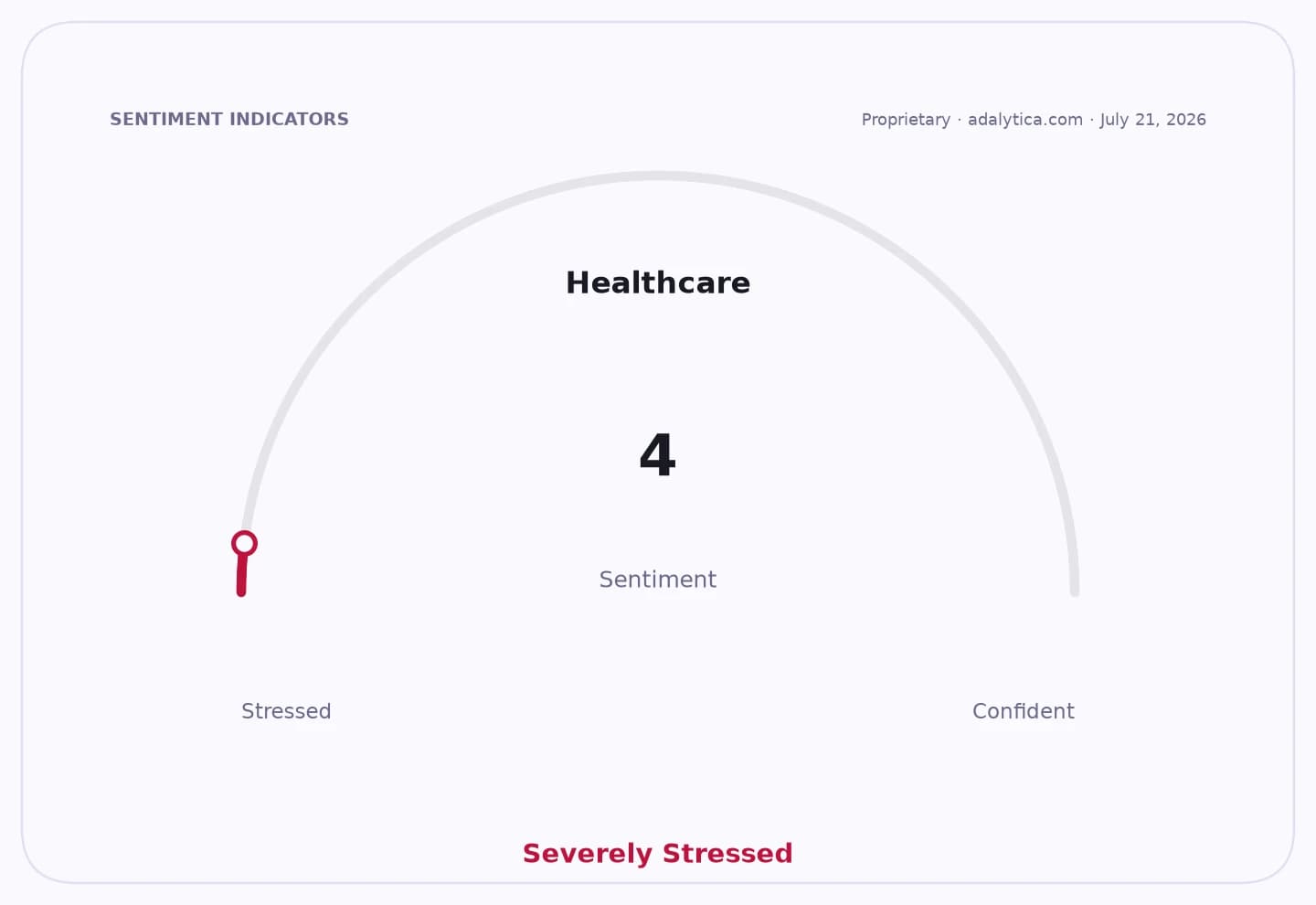
Healthcare — 30-day sentimentadalytica.com
Explore this data interactively — full history, time series and cross-market comparisons.Open AlphaPulse
That divergence highlights the bull and bear cases. Bulls argue that a surge in high-cost care supports premium increases, stronger pricing discipline and higher demand for specialized services. Bears counter that if utilization keeps rising faster than reimbursement, insurers face margin compression while hospitals and health systems may struggle to absorb labor and capital costs. In both cases, the economics point to a sector where revenue is still growing, but cost inflation is dictating who captures it.
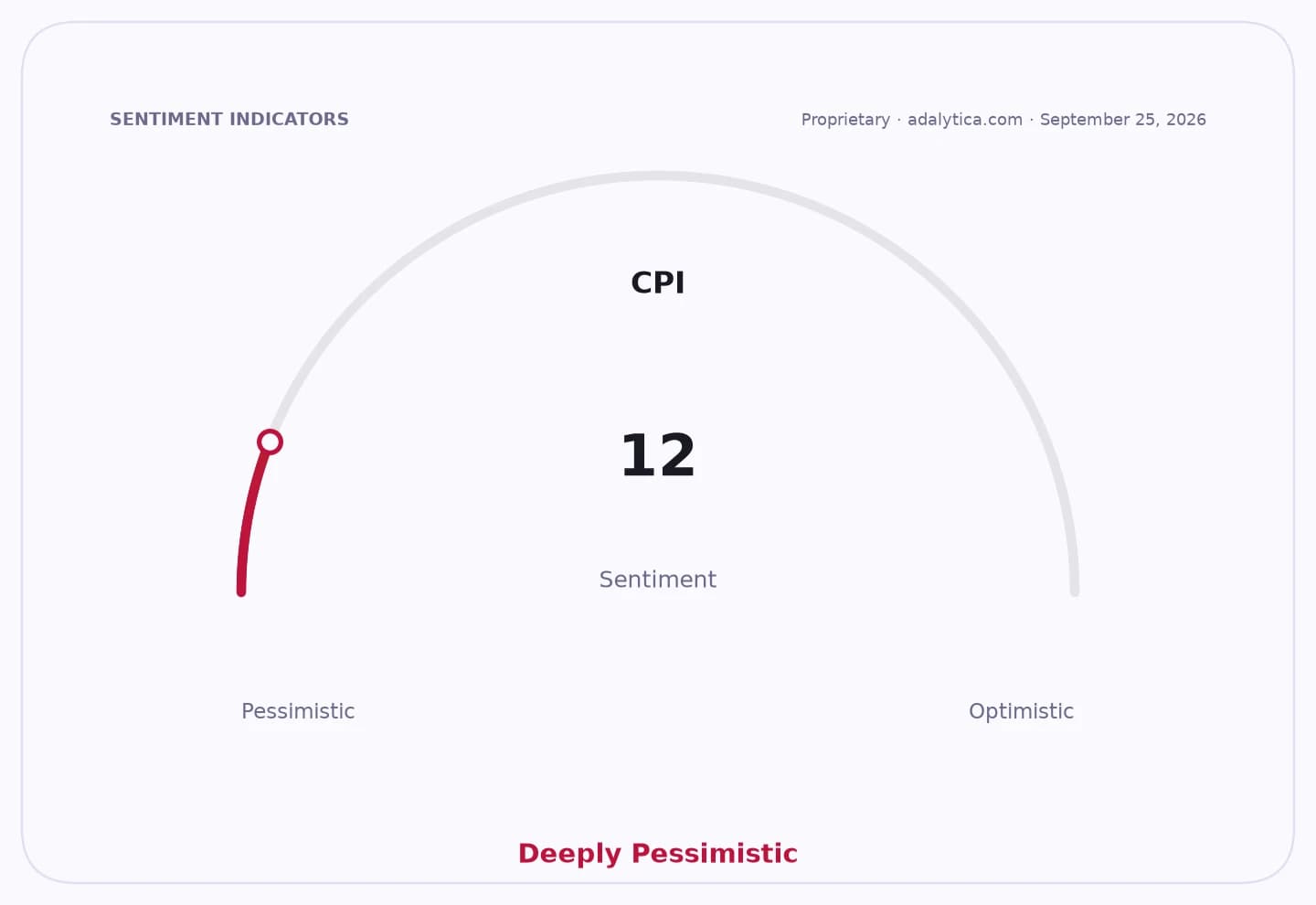
Adalytica’s healthcare spending gauge, which shows extreme fear, captures the level of concern around the issue. The reading suggests investors are increasingly treating healthcare cost escalation as a margin and policy risk rather than a temporary post-pandemic distortion. That is consistent with the recent price action: insurers are being watched for underwriting discipline, while hospitals are judged on their ability to convert high demand into stable earnings.
For investors, the key question is whether the current wave of expensive care is a one-off spending spike or the start of a more persistent repricing cycle. If workforce investment and capacity expansion eventually ease bottlenecks, the pressure on payers could moderate. If not, the winners are likely to be large insurers with scale, diversified product lines and negotiating leverage, while smaller payers, undercapitalized providers and governments face the greatest strain.
| Entity | Gains | Losses |
|---|---|---|
| Large insurers | ▲pricing leverage | ▼claims inflation |
| Hospital operators | ▲higher acuity revenue | ▼labor costs |
| Governments | ▲workforce capacity | ▼budget pressure |
| Patients/employers | ▲better access over time | ▼higher premiums |