President Lee’s call to strengthen government responsibility for public healthcare and rationalize medical fees lands at a moment when the U.S. health-care trade is already under strain, raising the prospect of tighter reimbursement and heavier policy pressure on insurers, hospitals and managed-care stocks.
Healthcare Policy Pressure Clouds Insurer and Hospital Outlook
The economic significance is straightforward: if policymakers move from rhetoric to fee restraint, the industry’s pricing power comes under pressure just as patients, employers and governments are demanding more care at lower cost. That is a direct threat to margins in a sector built on negotiated rates, utilization growth and premium pricing.
Sentiment IndicatorsⓘProprietary · adalytica.com · July 22, 2026
This is a snapshot — live sentiment, awareness and momentum for 130+ markets update continuously in the dashboard.Open AlphaPulse
UnitedHealth Group, the biggest U.S. health insurer by market value, has been caught in the center of that debate. Its shares have rebounded to $436.35 from a January low near $278.93, but the move has been volatile, with the stock still trading below its recent highs and its 50-day moving average at $404.19. The latest close also leaves it near the top of its Bollinger Band range, while RSI readings around 61.9 suggest momentum has improved but is not yet overheated.
The same policy backdrop matters for hospitals. HCA Healthcare shares have fallen to $373.09 from above $540 earlier this year, while remaining well below the 200-day moving average at $457.15. Universal Health Services is under even more pressure, with the stock at $149.91 versus a 200-day average of $193.11. Both names have been recovering from steep spring selloffs, but the chart damage underscores how sensitive providers are to any sign that regulators or governments may push harder on fees.
That is why Lee’s comments matter beyond one country’s policy agenda. Public healthcare expansion typically means more state involvement in pricing, coverage and reimbursement, which can help access but squeeze private-sector revenue pools. For investors, the key question is whether governments are simply signaling cost discipline or opening the door to a broader reset in how care is funded and paid for.
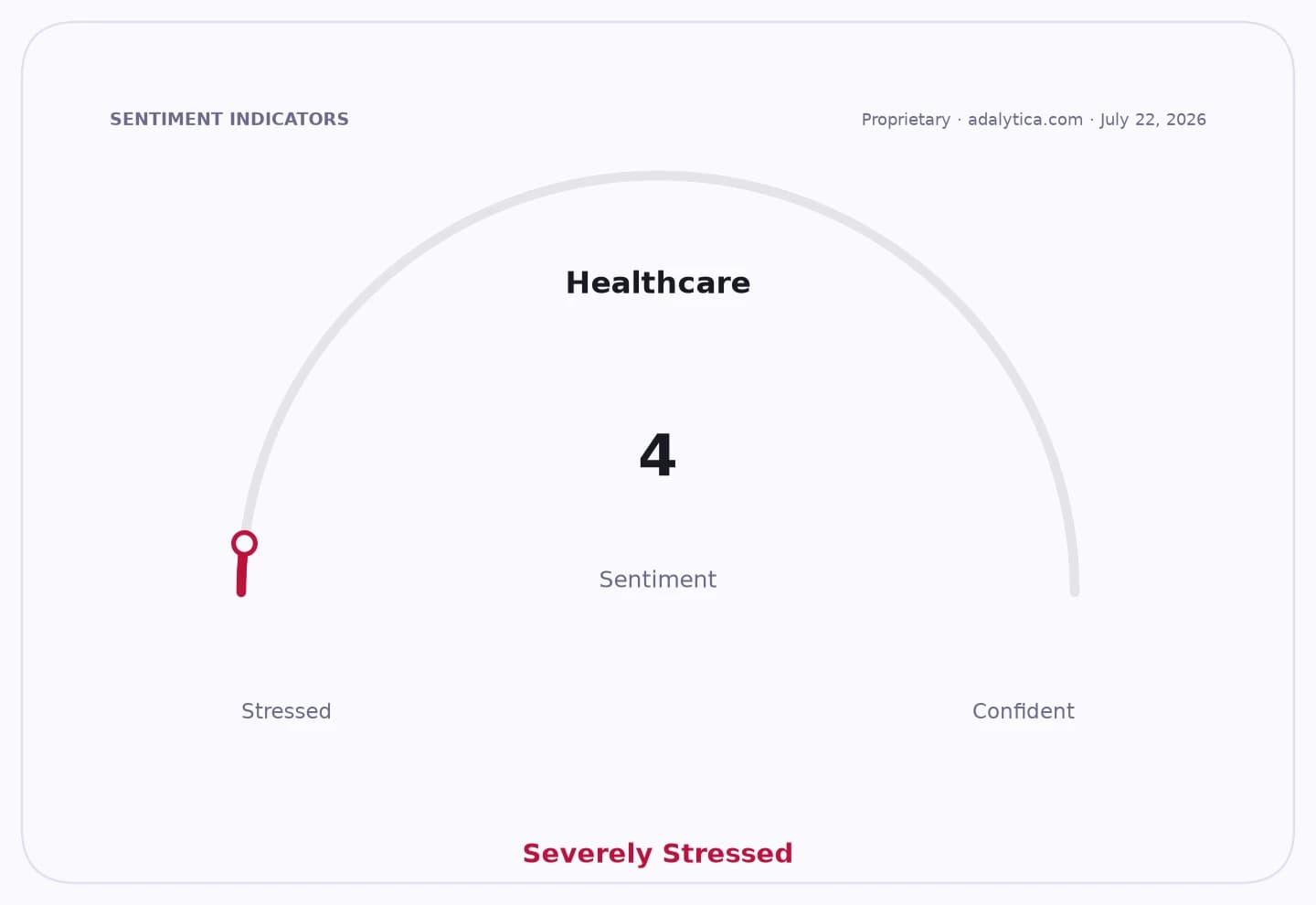
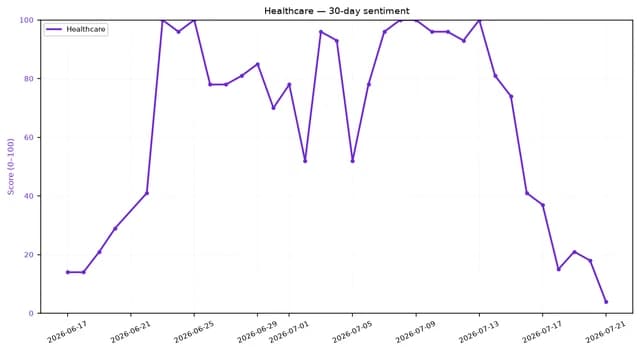
The backdrop is already weak. Adalytica’s Healthcare Spending Sentiment gauge sits at 4, labeled Extreme Fear, reflecting rising anxiety around healthcare costs and access. At the same time, the sector remains exposed to recurring pressure from staffing shortages, hospital congestion and broader concerns that technology such as AI could worsen access and quality rather than fix them.
For investors, the message is that healthcare is no longer just a defensive sector story. It is becoming a policy story, and policy can move valuation multiples fast when reimbursement is in the frame. The next catalyst is whether Lee’s remarks translate into concrete measures on public healthcare funding and fee reform, or whether the comments remain a political signal that nonetheless keeps pressure on insurers and providers.
| Entity | Gains | Losses |
|---|---|---|
| Patients / public system | ▲Broader access, lower fees | ▼Slower private-sector pricing |
| Government / regulators | ▲More control over costs | ▼Higher fiscal burden |
| Insurers like UNH | ▲Potentially less clarity if rules tighten | ▼Margin pressure from fee rationalization |
| Hospitals like HCA and UHS | ▲Some volume support if access expands | ▼Reimbursement compression |