Fueling up in Hesse now costs more than anywhere else in Germany, a reminder that regional pump prices can still bite even when the timing of the fill-up is favorable.
Hesse Has Germany's Highest Fuel Prices
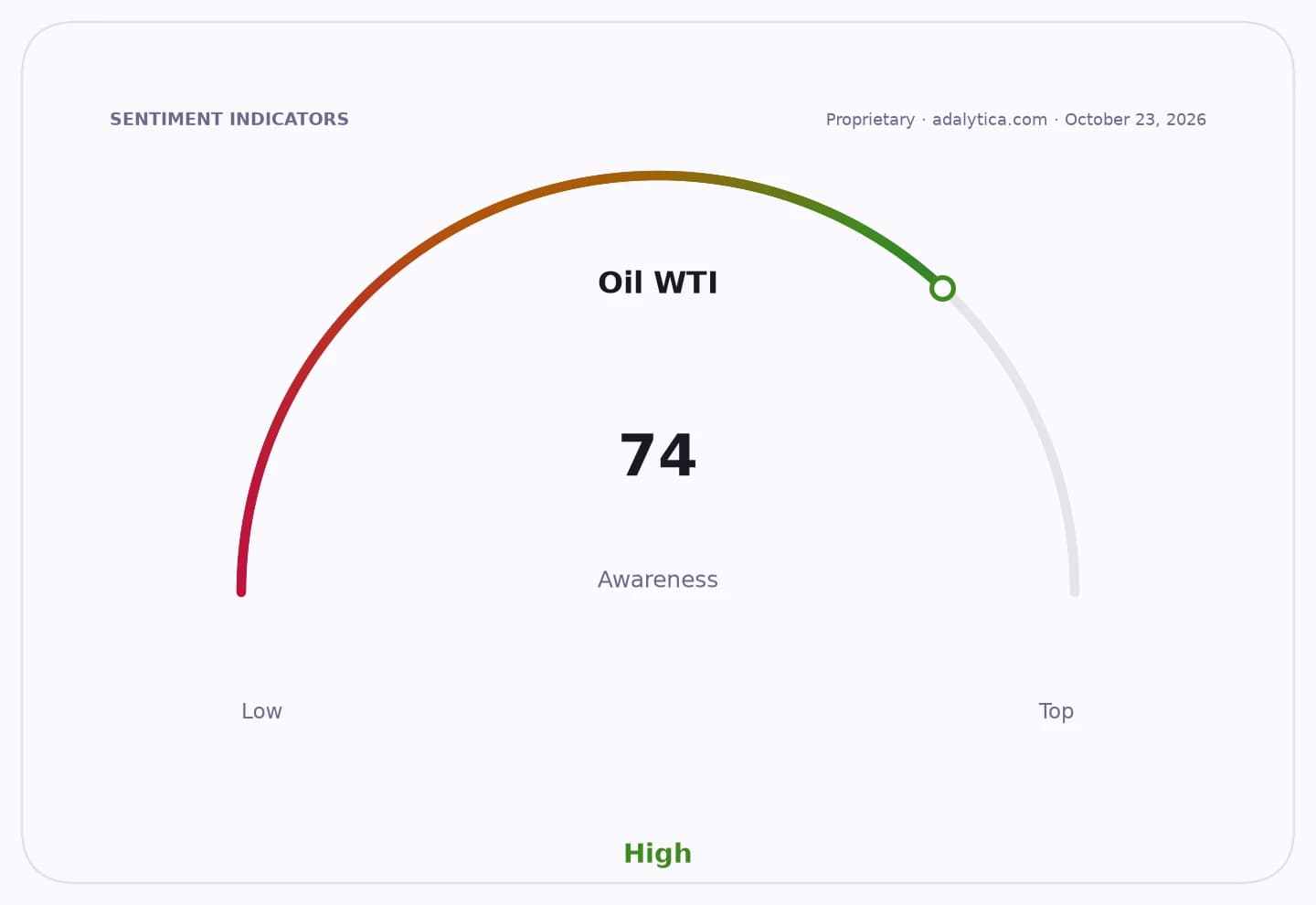
Oil WTI
An ADAC survey found Hesse had the highest average prices for both E10 gasoline and diesel in a midday snapshot on Tuesday, when fuel is usually cheaper than at other times of day. E10 in Hesse was 8.9 cents a liter more expensive than in the cheapest state, while diesel cost 5.1 cents more than in the lowest-priced region.
Sentiment Indicators
The ranking matters because fuel costs feed directly into household budgets, freight expenses and the wider cost of moving goods across Germany’s biggest economy. Even a gap of a few cents per liter can become meaningful for commuters, small businesses and logistics operators that refill frequently. It also points to an uneven regional pass-through of global oil prices, with western states broadly more expensive than the east.
North Rhine-Westphalia was second-most expensive for both fuels, while Lower Saxony and Rhineland-Palatinate also ranked among the priciest for E10. For diesel, Bavaria, Rhineland-Palatinate, Baden-Württemberg and Saarland also sat near the top of the table. Berlin, by contrast, was among the cheapest places to refuel for both gasoline and diesel, and Saxony also screened relatively low, especially on diesel.
That east-west split underlines how local competition, refinery access, distribution patterns and cross-border traffic can shape pump prices on top of the global oil backdrop. For consumers, the spread means the choice of where to buy fuel still matters. For transport firms and retailers, it reinforces the pressure to manage fuel exposure and route planning more tightly.
The broader backdrop remains one of elevated fuel volatility, with crude and refined-product markets still sensitive to geopolitical tensions and supply disruptions. For investors, that keeps energy prices relevant not just to oil producers, but also to consumer spending, inflation readings and sectors such as transport, chemicals and retail that are vulnerable to higher input costs.
If oil markets remain unsettled, the gap between expensive states such as Hesse and cheaper markets like Berlin is likely to persist, keeping regional fuel pricing a small but visible drag on German purchasing power.
| Entity | Gains | Losses |
|---|---|---|
| Hesse consumers | ▲none | ▼highest pump prices |
| Berlin motorists | ▲lower fuel bills | ▼none |
| Oil retailers in high-price states | ▲wider margins | ▼demand sensitivity |
| Transport firms | ▲lower-cost regions | ▼higher operating costs |