Her savings may have to do more heavy lifting than planned, and that is exactly the kind of pressure investors should pay attention to. Even with inflation no longer surging at the pace seen in prior years, the cost of getting through college remains high while interest rates are still elevated enough to make borrowing expensive and savings discipline essential.
High rates keep education costs squeezing households

That matters because education is not just a household expense; it is a long-duration financial commitment. When families are forced to lean on cash reserves to cover tuition and living costs, they have less room for error elsewhere, from emergency funds to retirement contributions. In a broader sense, the burden also hints at why consumer spending can feel resilient on the surface while still being under strain underneath.
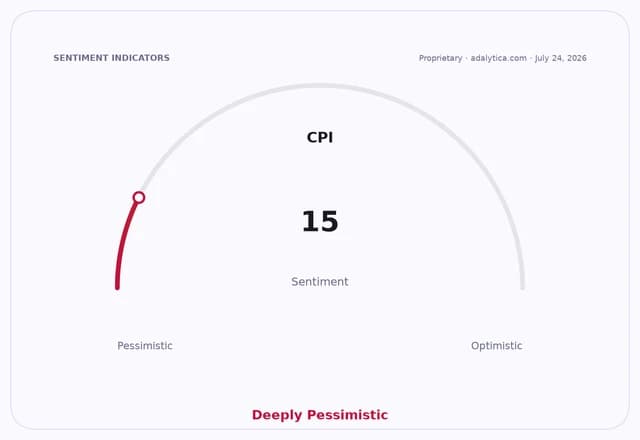
The macro backdrop helps explain the squeeze. Consumer prices are still far above pre-pandemic levels, with the CPI index at 332.568 in June 2026 and forecast to edge to 335.512 in July. Federal Reserve policy remains restrictive by historical standards, with the fed funds rate at 3.63% in June and only a slight decline expected. That means students and parents face a double bind: borrowing is still costly, but paying out of pocket is no bargain either.
Labor market data offer some relief, but not enough to remove the pressure. Unemployment was 4.2% in June and forecast at 4.18% in July, a sign the economy is holding up. Yet stable jobs do not erase the reality that higher education expenses have outpaced the comfort level of many families. For investors, that creates a clear divide between companies that benefit from necessity spending and those that depend on discretionary budgets.
Bond markets are reflecting the same tension. The iShares 20+ Year Treasury Bond ETF, TLT, has struggled to hold gains, closing at 83.34 on July 24, below both its 50-day and 200-day moving averages. Its RSI reading of 22.7 points to a deeply oversold condition, but the bigger message is that investors are still demanding a premium for duration risk while policy remains tight. By contrast, the S&P 500 remains well above its 200-day average, even after recent softening, showing that equities are still carrying the weight of optimistic growth expectations.
The narrative running through all of this is simple: households are being forced to fund the future with savings because the cost of money and the cost of living are still elevated. That is not a crisis headline, but it is a quiet drag on long-term wealth building. Families that preserve liquidity, diversify broadly, and avoid stretching for debt tend to be better positioned to weather these cycles.
For investors, the lesson is to look past the short-term noise and focus on what compounds. Companies tied to education financing, affordable housing, low-cost consumer staples, and broad-market index funds are likely to prove more resilient than businesses dependent on premium discretionary spending. If you are investing for the next 3 to 10 years, this is a reminder that balance sheets matter as much as headlines. Worth watching, and worth keeping in perspective.
| Entity | Gains | Losses |
|---|---|---|
| Cash-rich households | ▲More flexibility | ▼Lower spending power |
| Student lenders | ▲Steady demand | ▼Higher default risk |
| Bond investors | ▲Potential price upside if rates fall | ▼Duration losses while yields stay high |
| Discretionary retailers | ▲Less immediate benefit | ▼Weaker nonessential spending |