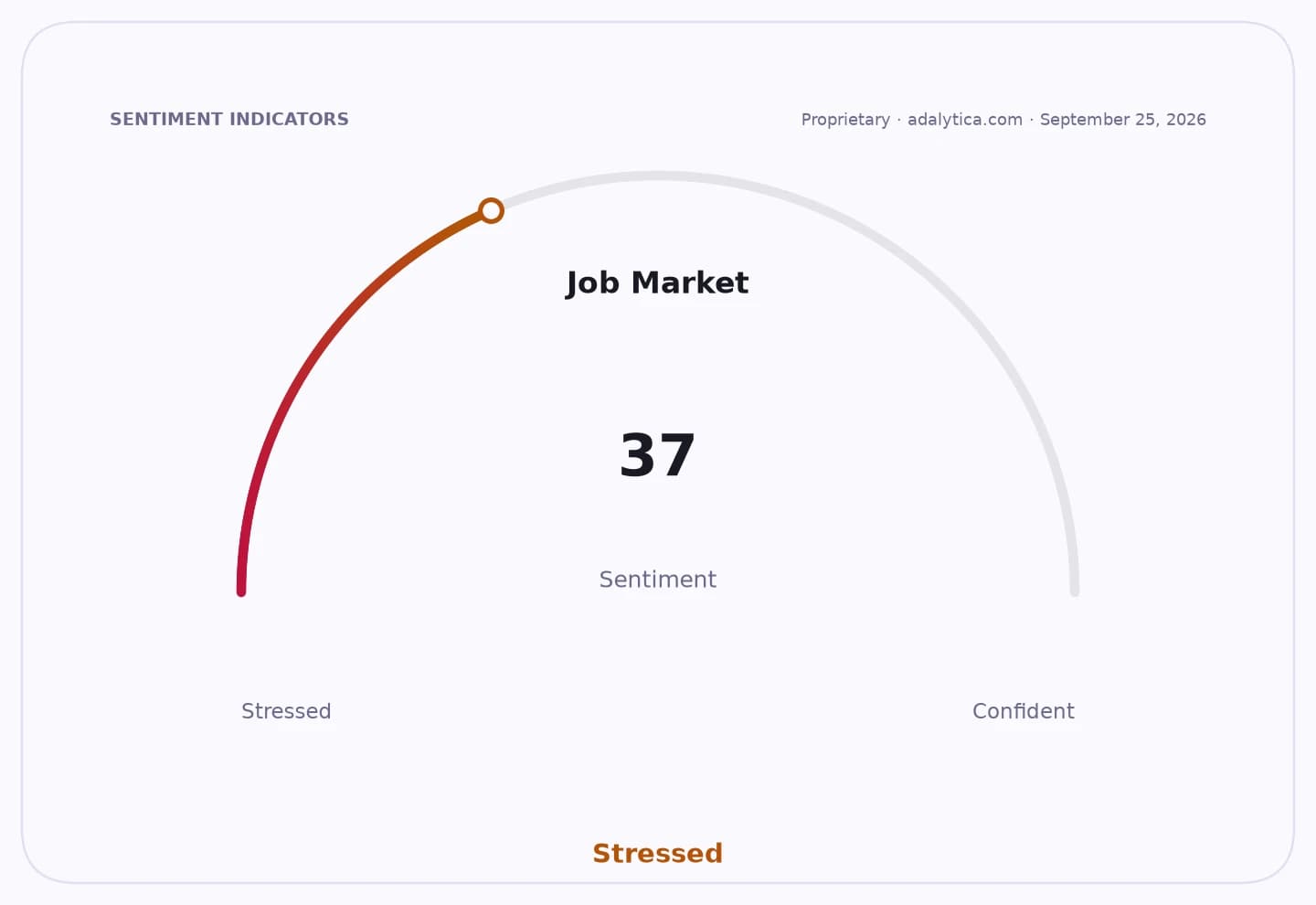
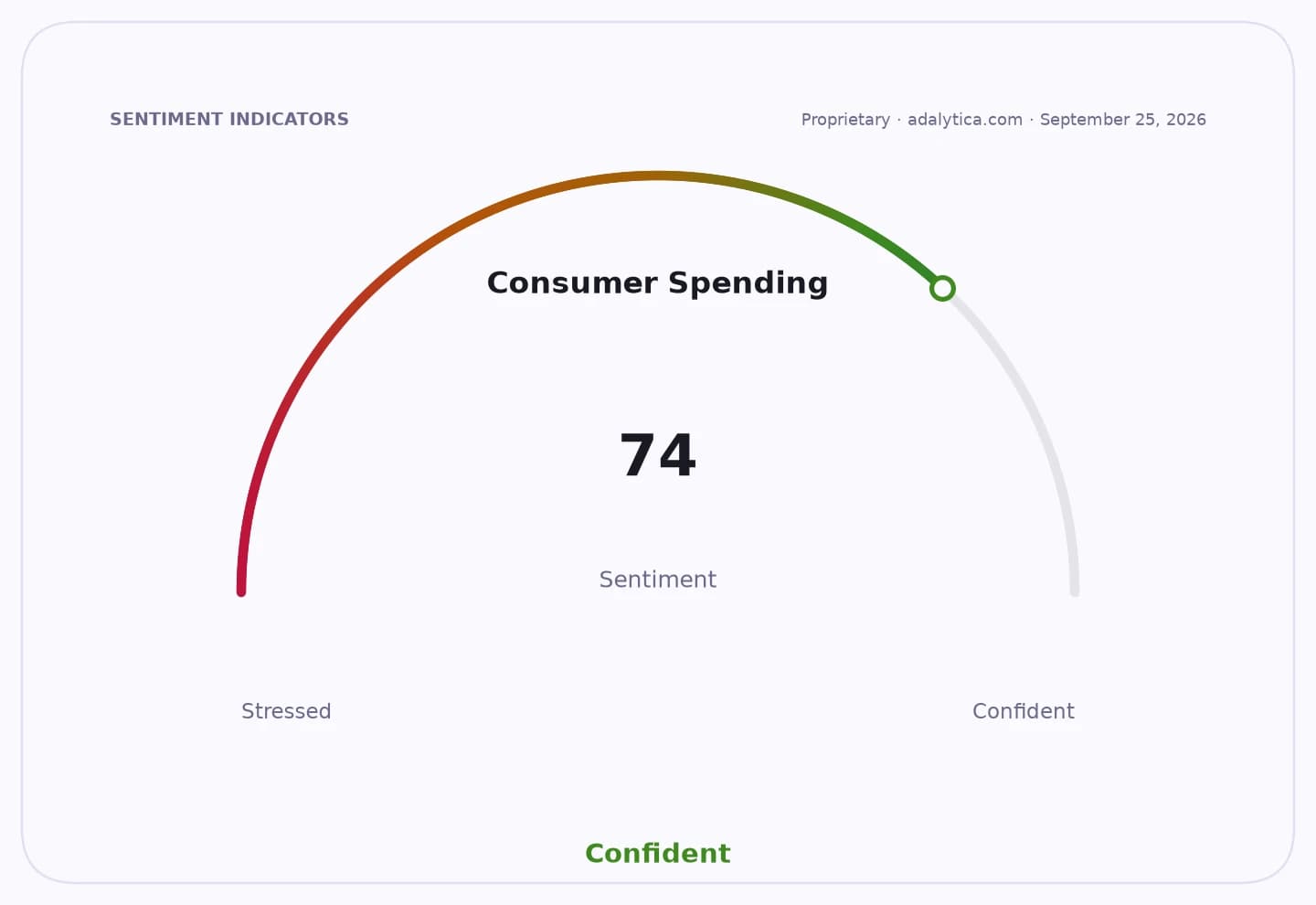
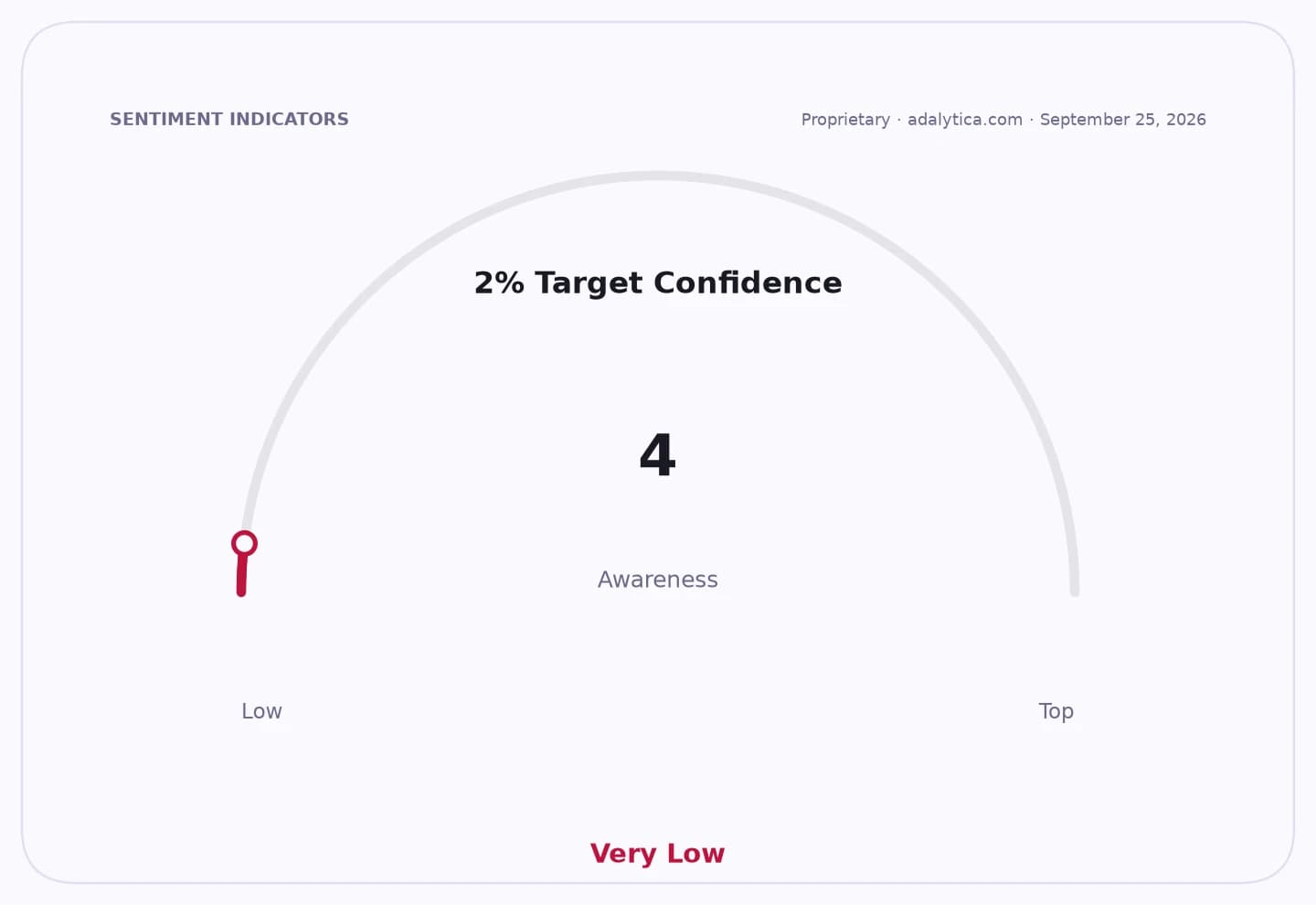
The Federal Reserve’s policy stance is still doing what it always does at turning points: forcing markets to reprice risk, duration and growth all at once.
Higher-for-longer favors cash-flow durable sectors
That is the real story behind the latest move in the Fed funds outlook, with the target rate forecast at 3.627% for July 2026, barely changed from 3.63% in June, while the 10-year Treasury yield sits near 4.74% and the hawkish-vs-dovish policy gauge has surged to an extreme-greed reading of 93. The message is simple: investors are no longer trading on the idea of an imminent Fed rescue. They are trading on the idea that policy will stay restrictive enough to matter.
Sentiment IndicatorsⓘProprietary · adalytica.com · July 28, 2026
This is a snapshot — live sentiment, awareness and momentum for 130+ markets update continuously in the dashboard.Open AlphaPulse
That matters economically because the Fed’s stance remains the anchor for U.S. financial conditions. A policy rate in the mid-3% area is not emergency-level accommodation, and with inflation still running above pre-pandemic norms, the central bank has room to keep pressure on demand, wages and credit. Even after the latest dip in the CPI index to 332.568 in June from 333.979 in May, the broader price level remains far above the old pre-2020 base. In other words, the easing cycle is not yet the all-clear signal for households or corporations. It is a controlled descent, not a sprint.
For investors, that means the market underestimates how long duration assets can stay volatile. The 10-year yield near 4.7% is a direct headwind for long-duration equities, leveraged balance sheets and rate-sensitive sectors. It also helps explain why Treasury bond sentiment is stuck in fear even as awareness of the trade has jumped: the bond market is signaling opportunity only for those willing to buy when the Fed’s restraint is finally priced in. The Treasury curve may not be screaming recession, but it is still warning that easy money is gone.

The bigger investment implication is that the winners are shifting away from broad beta and toward cash-flow durability, pricing power and capex beneficiaries. If policy stays tight, the market will continue to reward firms that can self-fund growth and punish those that rely on cheap capital. That creates an asymmetric setup in AI infrastructure, electrification, defense, industrial automation and grid buildout — the sectors that can still grow even when the cost of capital is high. The losers are the obvious ones: unprofitable growth, long-duration software names, speculative small caps and highly leveraged real estate.
The recent spike in Adalytica’s hawkish-policy sentiment and the sharp swings in Fed forward-guidance readings suggest traders are still trying to game every word from the central bank. But the more important signal is that the bond market is forcing discipline back into valuations. When the Fed moves, markets react not just because of rates, but because the entire discount-rate regime changes.
I believe the right play is to stay overweight the infrastructure behind the next cycle of growth — utilities tied to power demand, semiconductor supply chains, data-center enablers, defense primes and select large-cap industrials — while remaining cautious on long-duration assets that still depend on falling yields to justify their multiples. The Fed may eventually cut more decisively, but the market is already learning that “higher for longer” can be the most profitable macro trade if you own the picks-and-shovels.
| Entity | Gains | Losses |
|---|---|---|
| Treasury bond bulls | ▲Higher eventual yield upside | ▼Near-term price volatility |
| Banks and cash-rich lenders | ▲Wider net interest margins | ▼Rate-sensitive borrowers |
| AI infrastructure and utilities | ▲Capex tailwind | ▼Long-duration growth stocks |
| Leveraged real estate | ▲None | ▼Financing costs stay elevated |