The most important thing about today’s market anxiety is not that investors are living through something unprecedented — it’s that the old playbook for inflation, rates and volatility is not fitting cleanly anymore.
Higher Rates, Volatility Shape AI Valuations

The Federal Reserve’s policy rate is sitting at 3.63%, near the forecast 3.627% level for July, while the 10-year Treasury yield is around 4.56%. That puts borrowing costs well above the ultra-low-rate era that powered the last decade’s equity valuation boom, but far below the double-digit rates that defined the early 1980s. For investors trying to compare the AI-driven market surge with past manias, the message is that this is a higher-rate, higher-uncertainty regime — but not a replay of the inflation shock that crushed assets in the Volcker era.
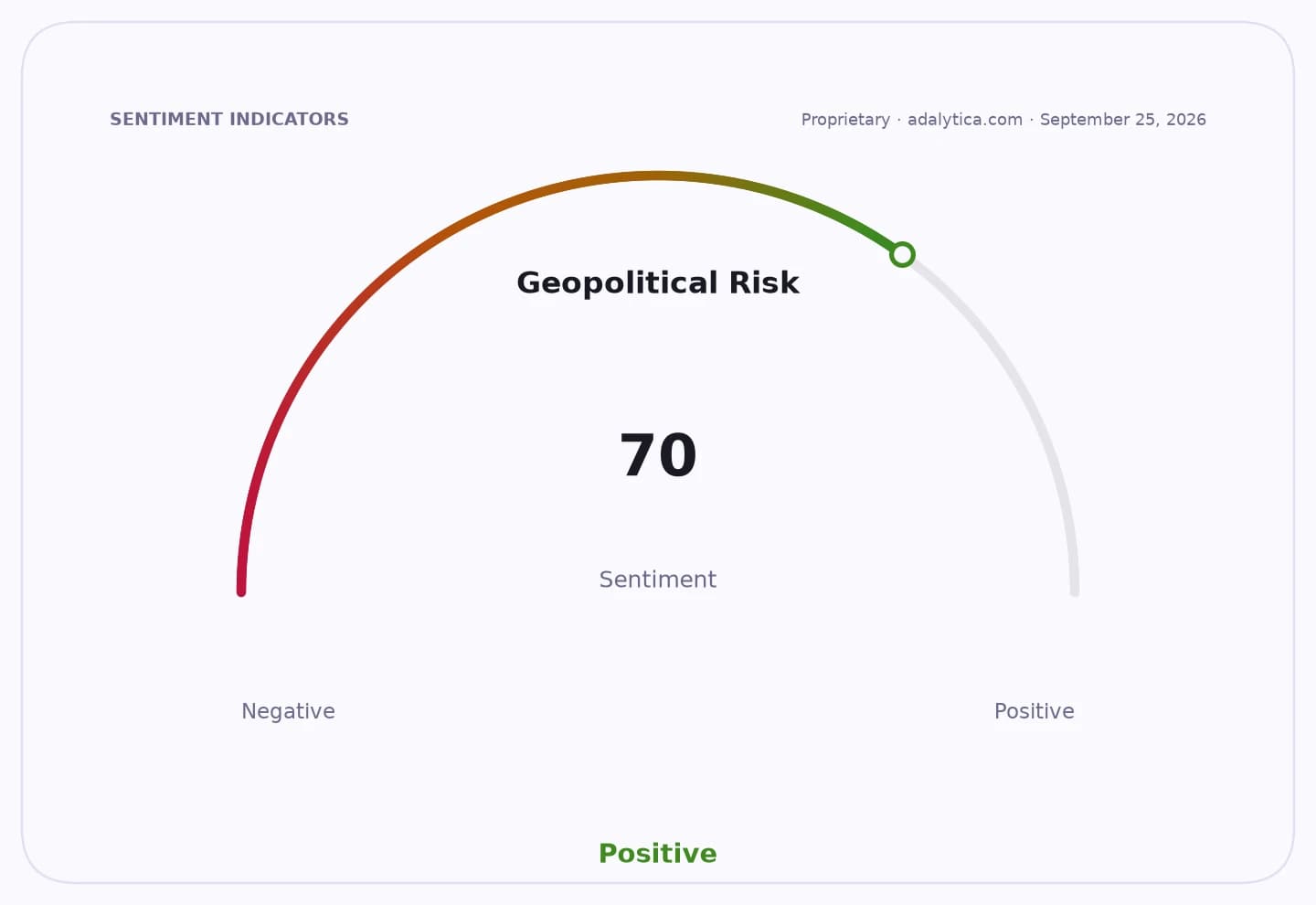
Sentiment IndicatorsⓘProprietary · adalytica.com · July 18, 2026
This is a snapshot — live sentiment, awareness and momentum for 130+ markets update continuously in the dashboard.Open AlphaPulse

That distinction matters because the market is still pricing growth, especially in AI and technology, against a backdrop of elevated but not crisis-level rates. The S&P 500’s trade signals from Adalytica.com show neutral sentiment at 55, even after a sharp 45-point drop over the past month in the trend gauge, suggesting investors remain engaged but less willing to chase risk aggressively. The macro backdrop is still volatile, with the VIX hovering near 16.8, down from panic levels seen in 2020 but still high enough to keep hedging demand alive.
The pattern also helps explain why safe-haven positioning is strengthening without a full flight from equities. Adalytica’s FX safe-haven signals show sentiment at 81, up 19 points on the day and 74 points over the past week, while the dollar’s trade signal remains neutral at 42 after a 57-point drop over 30 days. That combination points to investors looking for protection, but not fully abandoning risk assets, a hallmark of a market that is re-rating rather than breaking.
FEDFUNDS vs DGS10 — macro contextadalytica.com
Explore this data interactively — full history, time series and cross-market comparisons.Open AlphaPulse
For stock investors, the broader takeaway is that AI may be changing the rhythm of cycles, but it is not repealing them. Cheap capital is gone, policy is still restrictive relative to the last decade, and volatility is no longer a side note. If earnings keep validating AI spending and productivity gains, the market can justify higher valuations; if not, the same rate structure that supports today’s “new era” narrative could quickly expose crowded positions.
The next catalyst is the same one that has driven every regime change before it: inflation data, Fed guidance and whether AI-linked earnings can keep outrunning the cost of capital.
| Entity | Gains | Losses |
|---|---|---|
| AI and growth stocks | ▲Higher productivity narrative | ▼Valuation pressure from rates |
| Treasury bondholders | ▲Elevated yields | ▼Price volatility |
| Safe-haven FX | ▲Stronger demand | ▼Carry trades |
| Equity bulls | ▲Growth upside if earnings deliver | ▼Crowding risk if momentum fades |