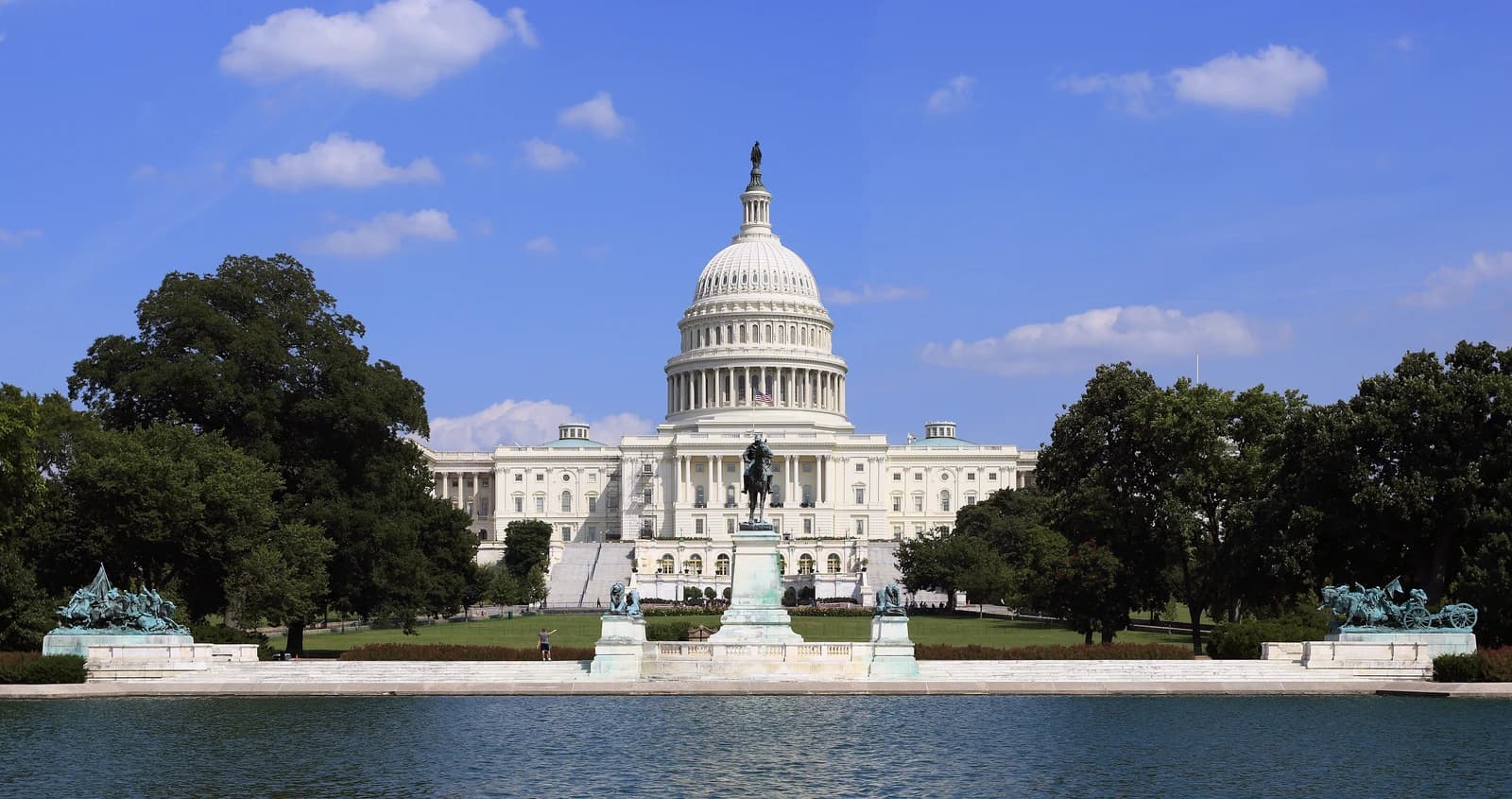
House Republicans are threatening to choke off as much as $350 billion in new Pentagon funding unless Donald Trump hardens sanctions on Russia, turning defense appropriations into leverage over a White House policy split that could ripple through the entire U.S. defense trade.
House Republicans Tie Pentagon Funds to Russia Sanctions

The fight matters because it puts the biggest funding vehicle for the U.S. military on the table at the very moment Washington is trying to supercharge defense spending. If lawmakers refuse to move the money, the consequences would go beyond politics: procurement timelines could slip, contract awards could be delayed and the Pentagon’s push to accelerate modernization would lose momentum.
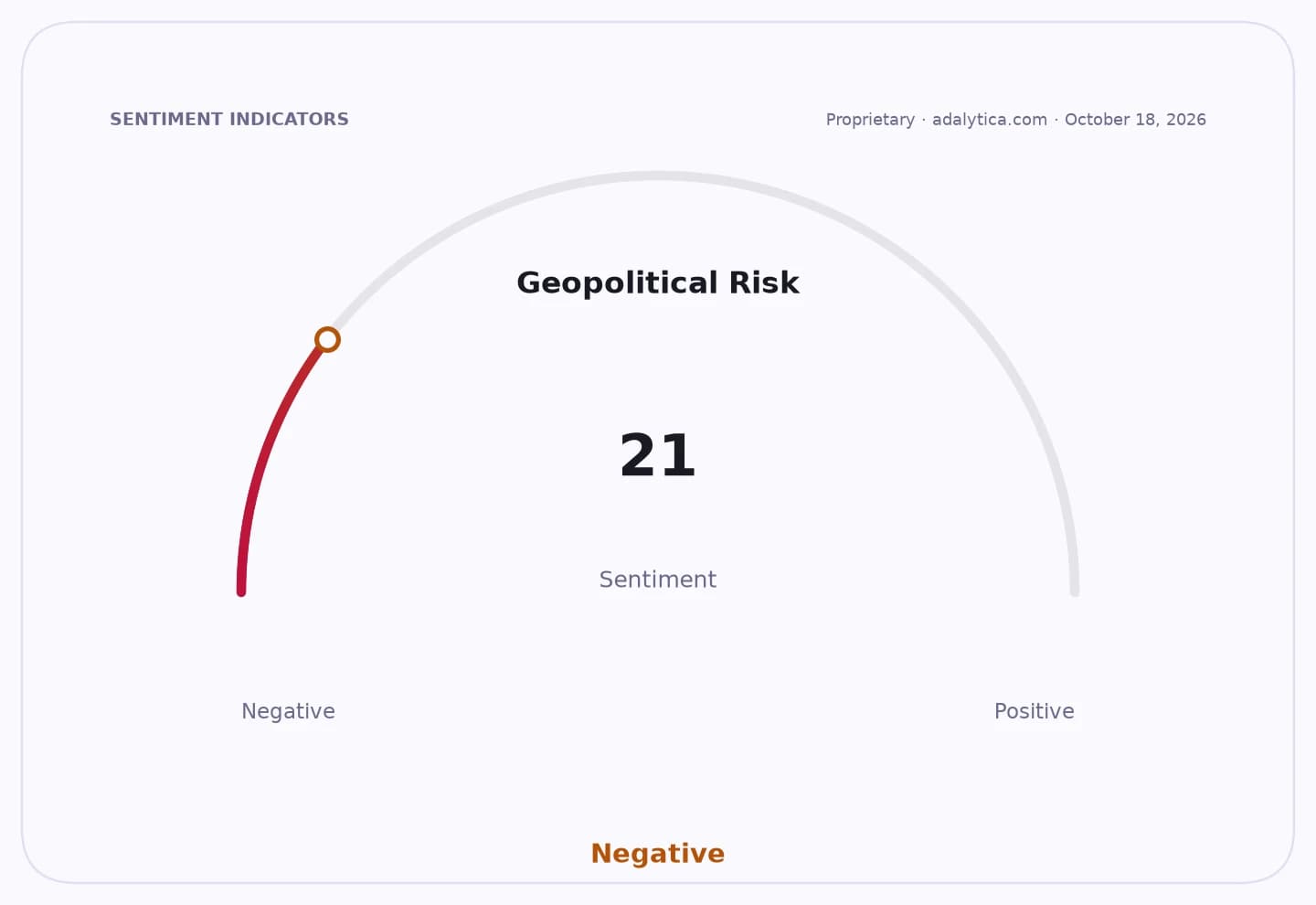
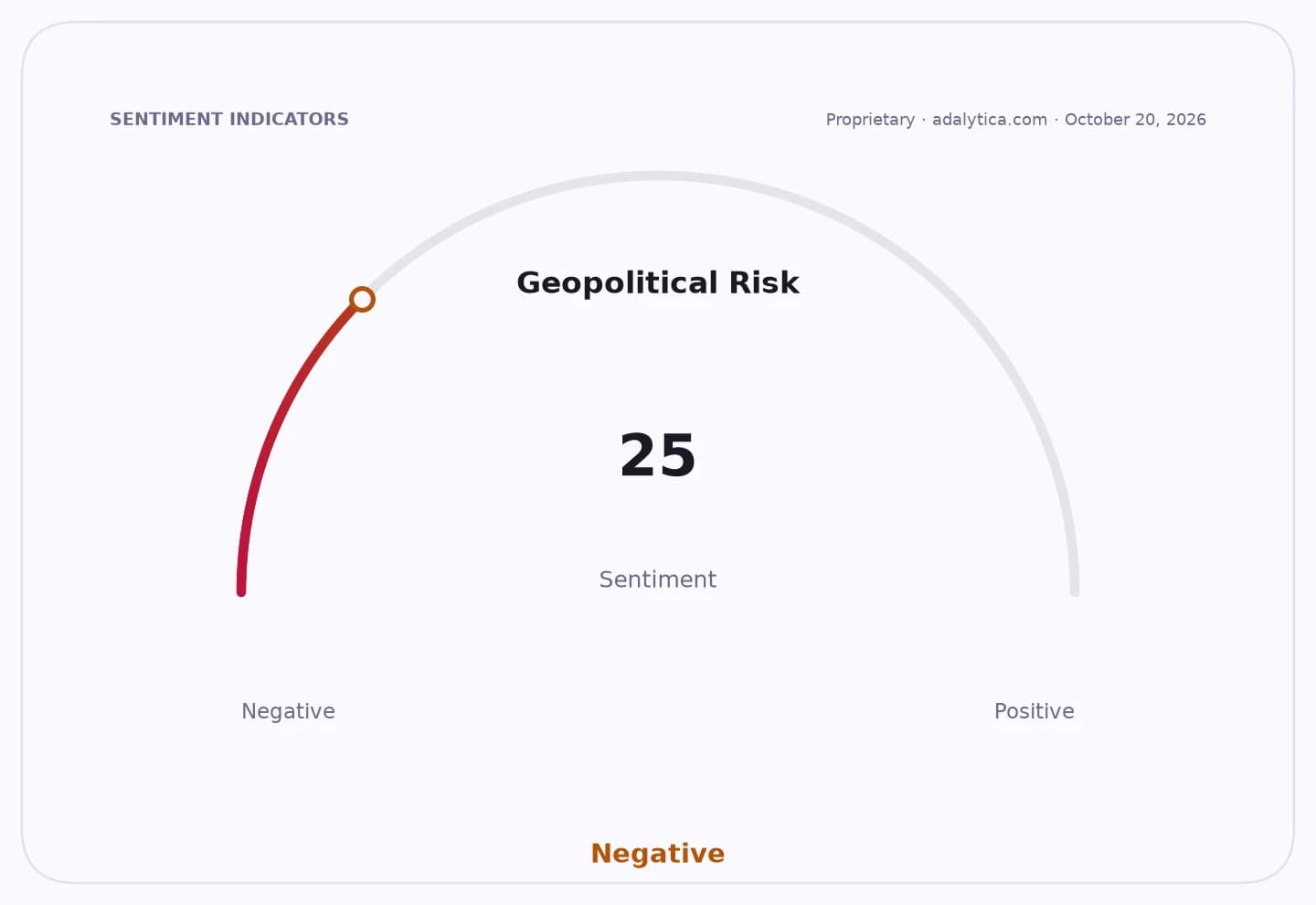
Sentiment IndicatorsⓘProprietary · adalytica.com · October 24, 2026
This is a snapshot — live sentiment, awareness and momentum for 130+ markets update continuously in the dashboard.Open AlphaPulse
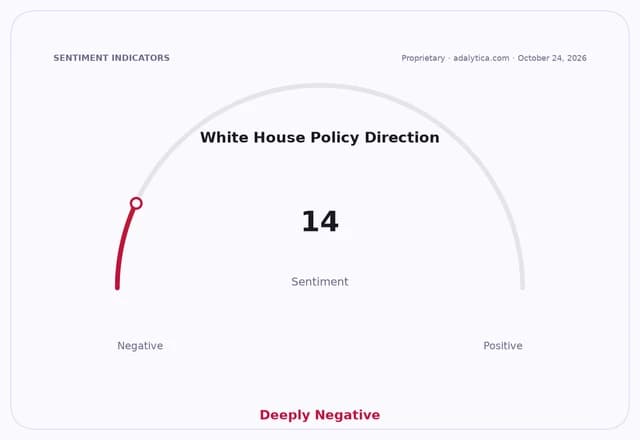
The standoff centers on Trump’s reported understanding with Vladimir Putin to allow Russian diesel supplies into global markets, a move that has angered a growing group of Republicans in the House, according to The Hill. Their message is blunt: tougher Russia sanctions, or they may block the extra Pentagon cash the White House is seeking.
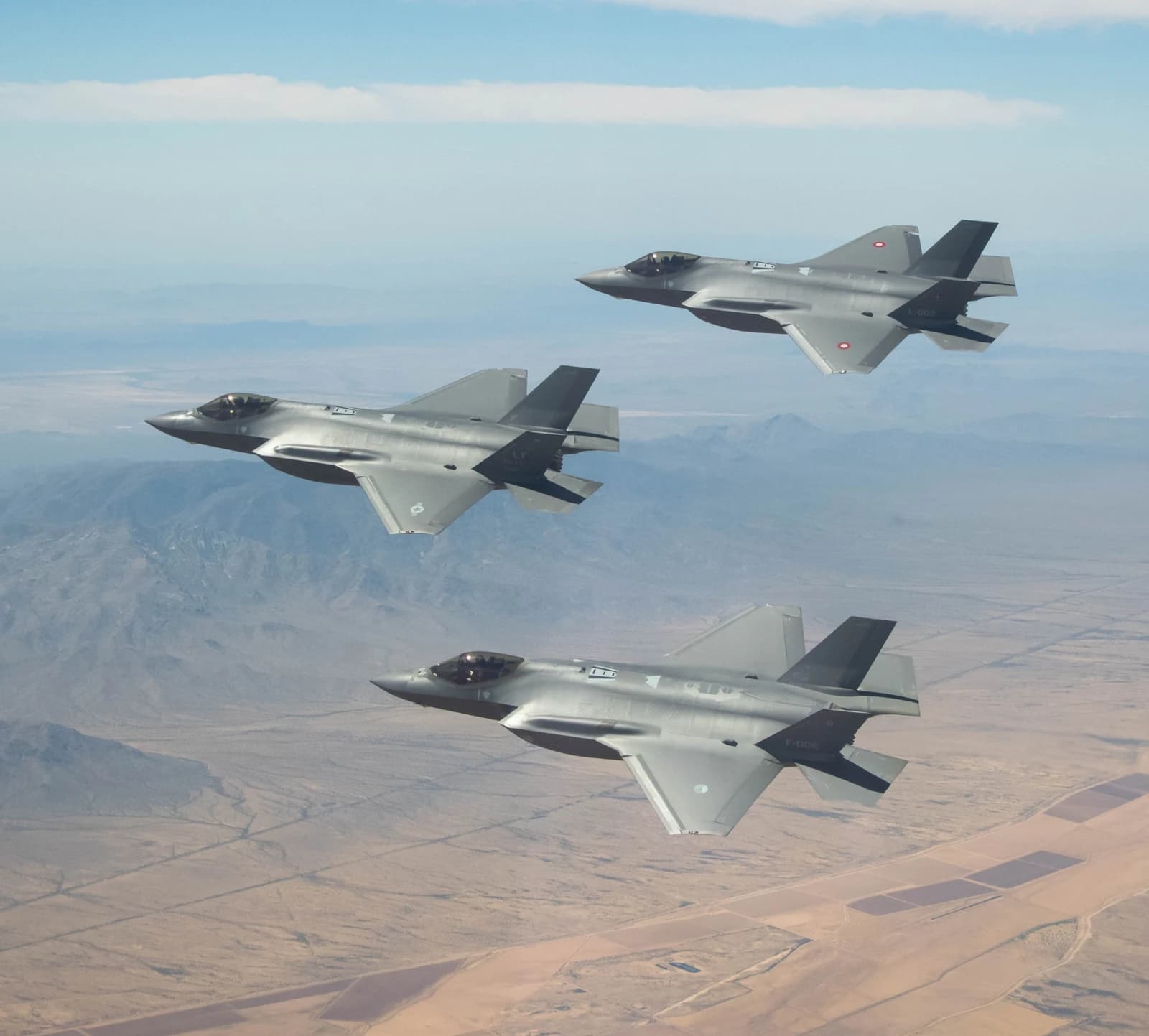
That budget is not small. The administration wants at least $350 billion in additional military spending, while defense contractors are already signaling that the fiscal environment is set to remain volatile. Lockheed Martin, Northrop Grumman and RTX all warned in recent filings that government funding uncertainty, continuing resolutions and budget debate can disrupt contract timing and negotiations.
For investors, this is exactly the kind of fiscal and geopolitical crosscurrent that can move defense stocks well before the details are settled. Northrop Grumman and RTX have already shown how quickly sentiment can swing on the prospect of higher defense outlays: NOC closed at $551.44 on Oct. 23, up from $473.46 on Oct. 7, while RTX has rebounded to $191.01 from $180.26 over the same stretch. Lockheed Martin, meanwhile, has surged to $604.18 from $499.22 on Oct. 7 and is trading well above its 50-day moving average.
The market is effectively pricing in more defense demand, but the policy path is anything but smooth. If Republicans make Pentagon funding conditional on sanctions escalation, the immediate winners are sanctions-sensitive defense names and missile-defense suppliers that benefit from a harder line on Russia and a longer cycle of replenishment spending. The losers are companies exposed to program delays, as well as any broader market segment that was counting on seamless federal spending.
There is also a wider macro angle. Defense budgets have become one of the few politically durable growth areas in Washington, but they are increasingly tied to foreign policy flashpoints from Russia to Iran and China. That means Pentagon spending is not just a government line item anymore; it is a volatility source, a capex catalyst and a geopolitical hedge all at once.
Our thesis is straightforward: the market underestimates how much this fight can reshape the next leg of defense spending. If the Republican revolt forces Trump to move harder against Russia, defense appropriations could ultimately get bigger, not smaller — but the path there could be messy. For now, investors should treat defense primes and missile-defense names as a tactical buy on any funding-related weakness, while staying alert to headline risk around Congress and the White House.
| Entity | Gains | Losses |
|---|---|---|
| Defense primes (LMT, NOC, RTX) | ▲Higher spending leverage | ▼Funding delay risk |
| Russia sanctions hawks | ▲Tougher policy stance | ▼Near-term legislative gridlock |
| Pentagon | ▲Potentially larger budget | ▼Less budget certainty |
| Broader market | ▲Defense hedge appeal | ▼Policy-driven volatility |