A newly approved affordable housing scheme on the site of a demolished County Durham estate is another reminder that Britain’s housing shortage is still being tackled one plot at a time, but with consequences that reach far beyond one former estate.
Housing approvals signal slow supply rebuild

For investors, that matters because housing supply is the clearest long-run driver of affordability, construction activity and demand for the companies that build, finance and furnish homes. Every approved scheme helps chip away at a shortage that has kept prices elevated and rent inflation stubborn, even as policymakers try to coax more supply onto the market. The broader message is simple: the U.K. housing market is not getting cheaper because demand is suddenly weak; it will only get more affordable if supply keeps moving.
Sentiment IndicatorsⓘProprietary · adalytica.com · July 15, 2026
This is a snapshot — live sentiment, awareness and momentum for 130+ markets update continuously in the dashboard.Open AlphaPulse

That tension shows up across the data. U.S. housing starts have been softening again, with the latest reading at 1,177,000 annualized in May, down 15.45% from the prior month, while the forecast for June points to a rebound to 1,253,400. Home prices, meanwhile, keep grinding higher: the Case-Shiller index rose to 332.678 in April, extending a long trend that has made ownership more difficult and kept pressure on rental markets. In other words, housing remains a supply problem, not a demand story.
That is why small approvals like the one in County Durham matter. They are the kind of incremental supply additions that can improve local affordability over time, especially when they replace obsolete stock with homes designed for today’s needs. They also reinforce the investment case for builders and housing-related ETFs when the policy backdrop favors more development. The homebuilding sector itself has been volatile — the XHB homebuilders ETF recently traded at 108.92, above its 50-day moving average but still close to its 200-day average — yet the long-term thesis remains tied to one durable idea: undersupply eventually has to be built out.
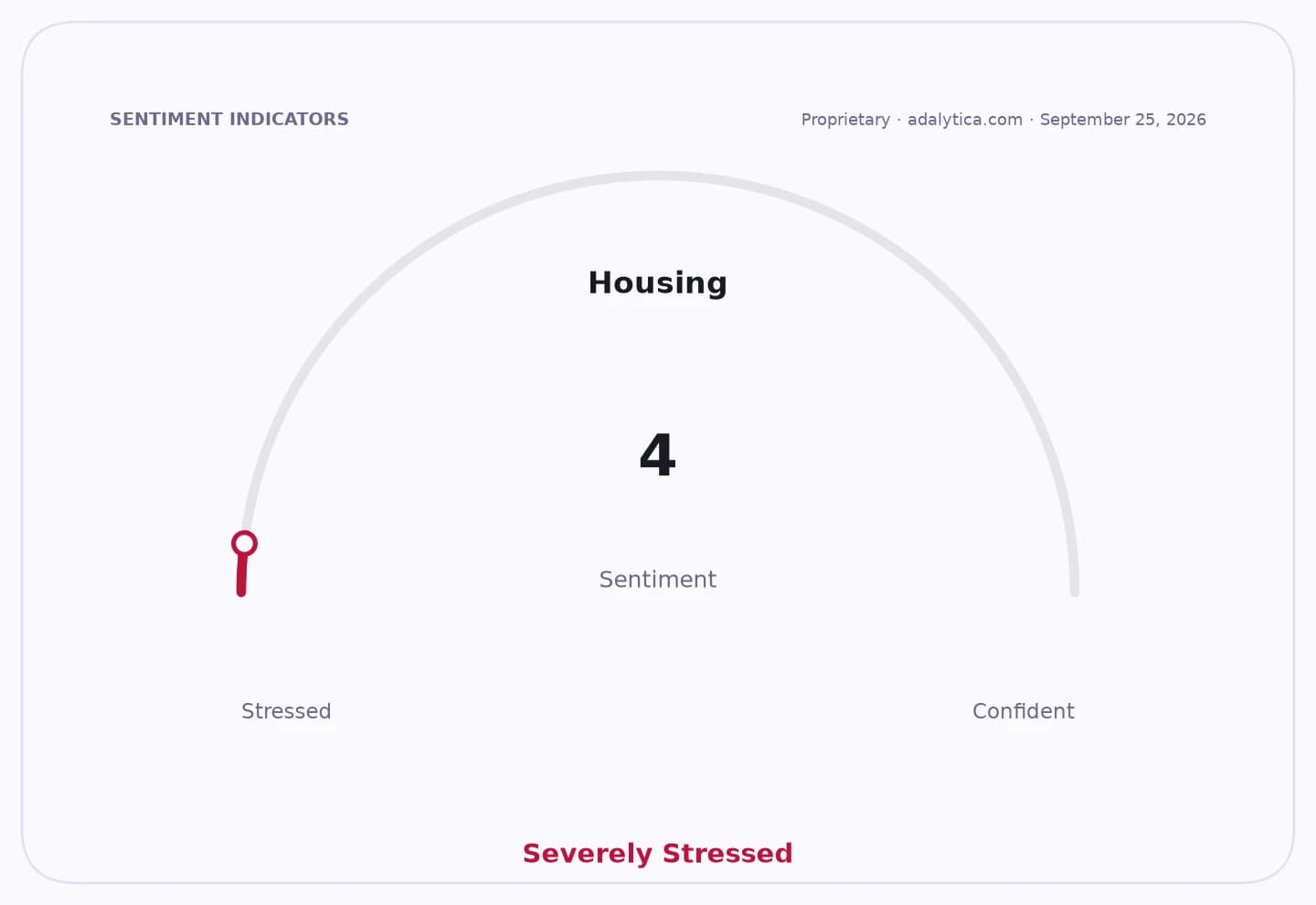
There is also a practical angle for investors watching the market’s mood. Adalytica’s Housing Fear & Greed Index for XHB is sitting at 96, or “Extreme Greed,” suggesting enthusiasm has outrun the fundamentals in the short run. By contrast, the Housing and Rent Inflation sentiment gauge is still in “Fear,” underscoring how stretched affordability remains. That split is useful for long-term investors: sentiment can swing quickly, but supply constraints and household formation work on a much slower clock.
For homebuilders, materials suppliers, landlords and local councils, the narrative is the same — more housing is being approved because the shortage is real, and the economic pain from that shortage is not going away. The best long-term investors should treat these local approvals as evidence of a secular trend, not a one-off headline: housing supply is gradually rebuilding, and the companies positioned to participate in that rebuild are worth watching over the next three to 10 years.
| Entity | Gains | Losses |
|---|---|---|
| Local buyers/renters | ▲More supply | ▼Less scarcity premium |
| Homebuilders/suppliers | ▲New project pipeline | ▼Execution risk |
| Existing homeowners | ▲Neighborhood renewal | ▼Slower price gains |
| Policymakers/councils | ▲Visible housing progress | ▼Pressure to deliver more |