Trump’s promised mortgage relief has still not arrived, and the delay matters because homeowners are facing a tougher affordability squeeze just as delinquencies edge higher and the 10-year Treasury yield stays near 4.75%, keeping mortgage borrowing costs elevated.
Housing Relief Delay Pressures Homebuilders

The lack of policy follow-through leaves borrowers with little room to breathe at a time when housing demand is already softening. The University of Michigan’s consumer sentiment index has fallen to a forecast 43.18 in June from 49.8 in April and 44.8 in May, underscoring the pressure on household finances even before any fresh hit from housing costs.
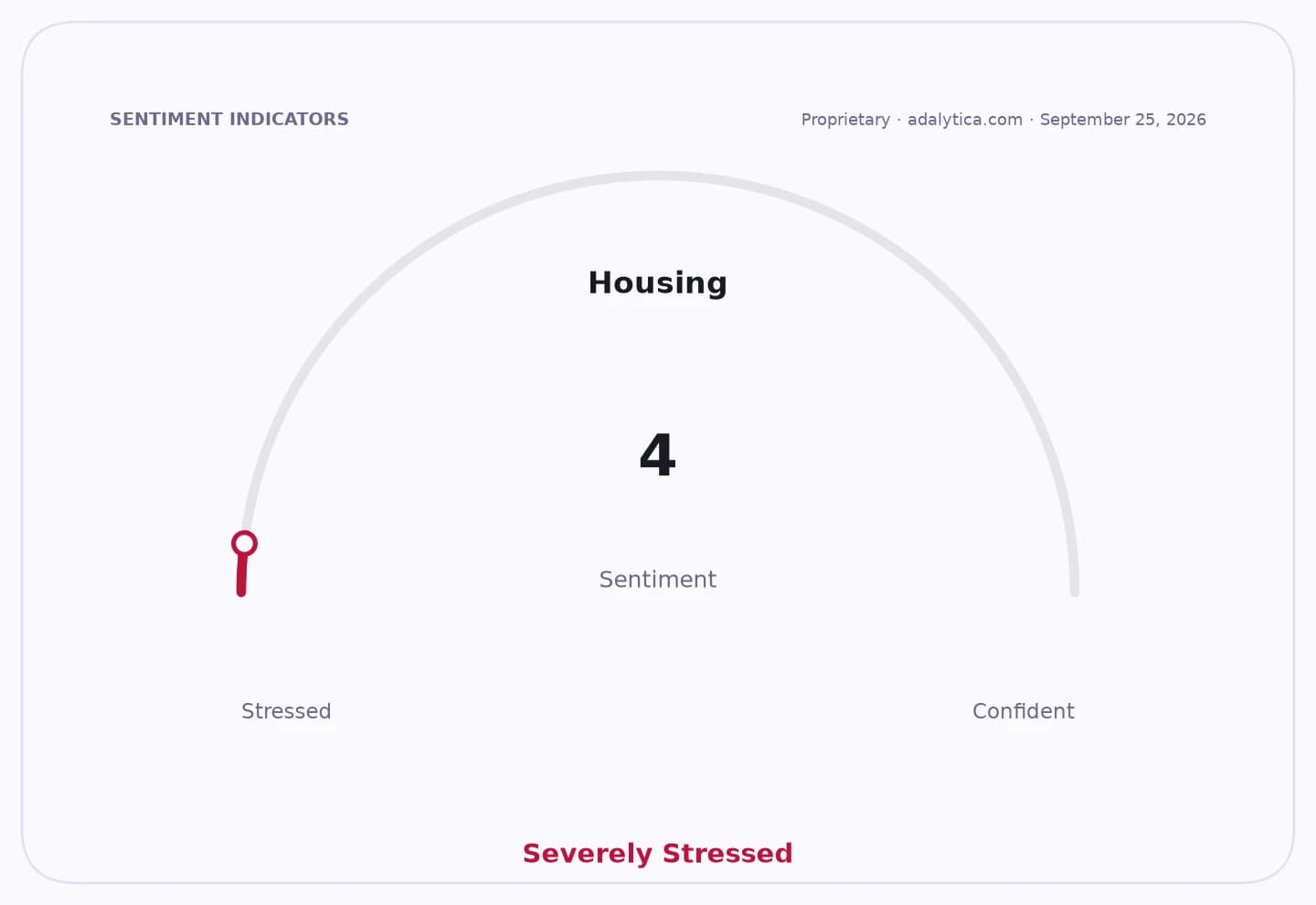
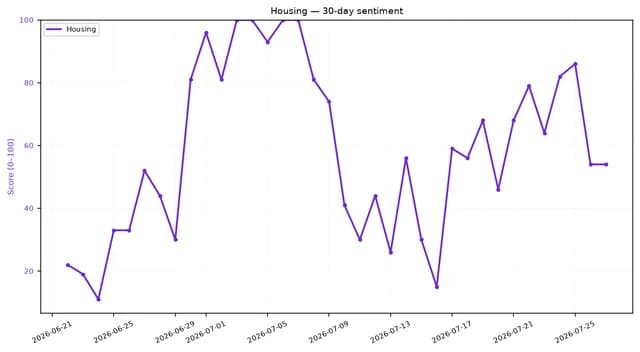
Sentiment IndicatorsⓘProprietary · adalytica.com · July 27, 2026
This is a snapshot — live sentiment, awareness and momentum for 130+ markets update continuously in the dashboard.Open AlphaPulse

That matters economically because housing is one of the biggest transmission channels from rates to the real economy. When mortgage payments stay high, more of household income gets diverted to debt service instead of spending, which can slow consumption, weaken home turnover and weigh on construction and renovation activity.
Mortgage-sensitive exchange-traded funds are showing that strain. The SPDR S&P Homebuilders ETF, XHB, has slipped to 108.75 from a 2026 high of 111.39, while the iShares U.S. Home Construction ETF, ITB, has recovered only partially to 97.61 after dropping as low as 88.13 in March. The iShares MBS ETF, MBB, is little changed around 93.32, reflecting a market that has not priced in much relief for borrowers.
Technical readings also point to a fragile backdrop rather than a clean breakout. XHB’s RSI sat at 48.3 on Monday, while ITB’s was 44.6 and MBB’s 40.7, consistent with cautious trading rather than broad housing enthusiasm. XHB remains just above its 50-day moving average of 106.54, and ITB is still below its 200-day average of 98.76.
Investors care because higher delinquencies can eventually feed through to lenders, mortgage-backed securities and housing-related earnings, even if the immediate damage is concentrated among stretched borrowers. The absence of relief also keeps pressure on the Trump administration to show how it intends to address housing affordability without a major decline in interest rates.
Adalytica’s Housing and Rent Inflation Sentiment gauge shows extreme fear on awareness and a neutral sentiment reading, while its S&P 500 trade signals remain in fear territory. That combination suggests the market is still braced for housing stress rather than pricing a quick policy fix.
The next catalyst is likely to be whether delinquency data keep climbing and whether the administration offers any concrete mortgage program, rate relief or refinancing support. Until then, the housing trade is stuck between stubborn borrowing costs and weakening household confidence.
| Entity | Gains | Losses |
|---|---|---|
| Homeowners with high-rate mortgages | ▲Little relief | ▼Higher delinquency risk |
| Homebuilders and housing ETFs | ▲Potential stimulus if relief arrives | ▼Softer demand, weaker sentiment |
| Mortgage lenders and MBS holders | ▲Stable pricing if defaults stay contained | ▼Credit stress if delinquencies rise |
| Trump administration | ▲Political upside from action | ▼Credibility if promises remain unfulfilled |