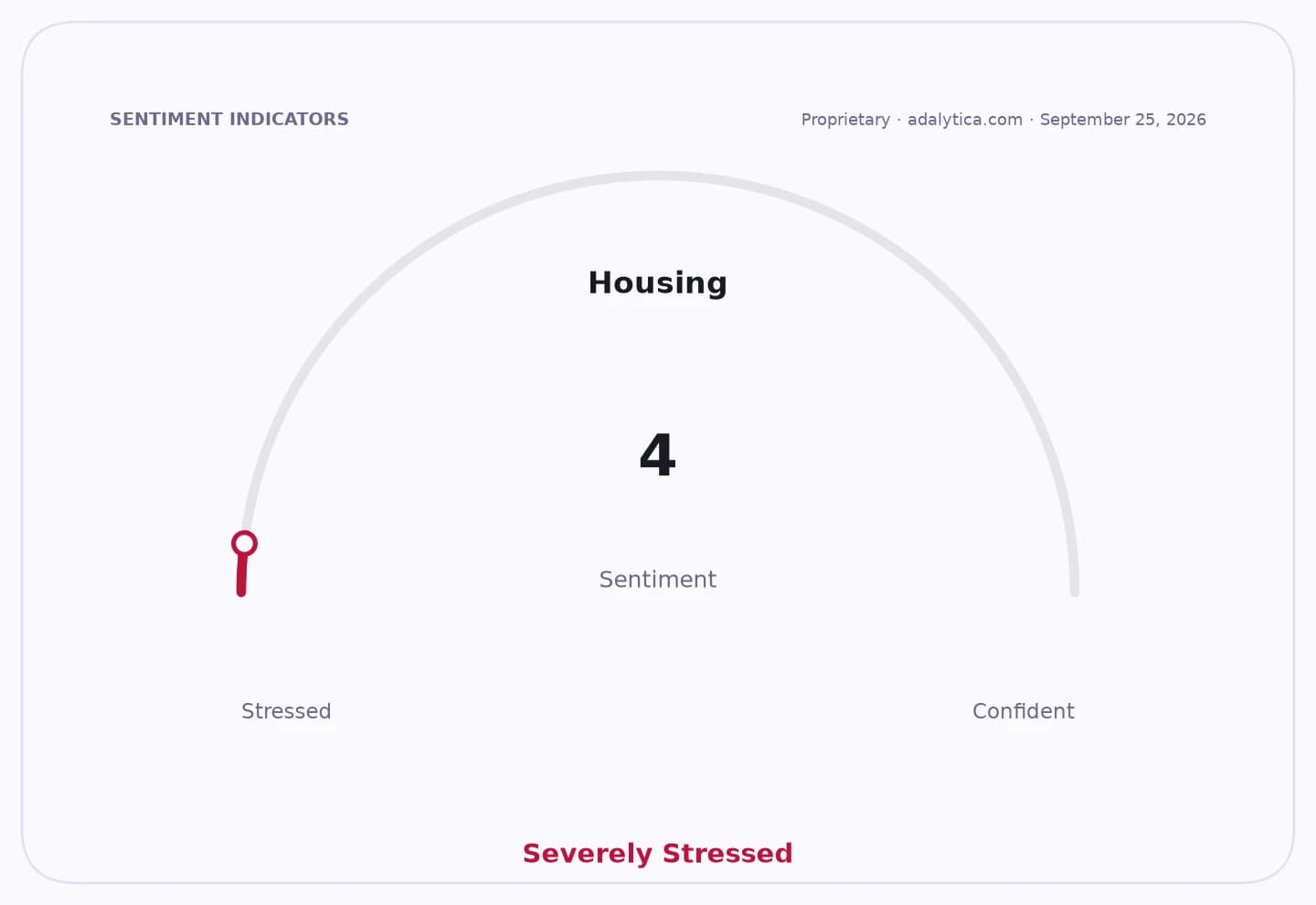
The biggest story here is not just that money is being withdrawn from an affordable housing fund — it’s that those withdrawals may leave one of the economy’s most sensitive safety nets underfinanced at a time when housing demand, rents and investor appetite for residential property remain firm.
Housing Shortage Favors Rental REITs
That matters because housing is where macroeconomics hits households first. When cash is pulled out of a fund meant to support affordable homes, the immediate risk is fewer new units, slower repairs and less help for low-income renters. Over time, that can widen the gap between what families can pay and what the market is asking, which feeds into rent inflation and keeps pressure on policymakers to step in.
Sentiment IndicatorsⓘProprietary · adalytica.com · July 23, 2026
This is a snapshot — live sentiment, awareness and momentum for 130+ markets update continuously in the dashboard.Open AlphaPulse
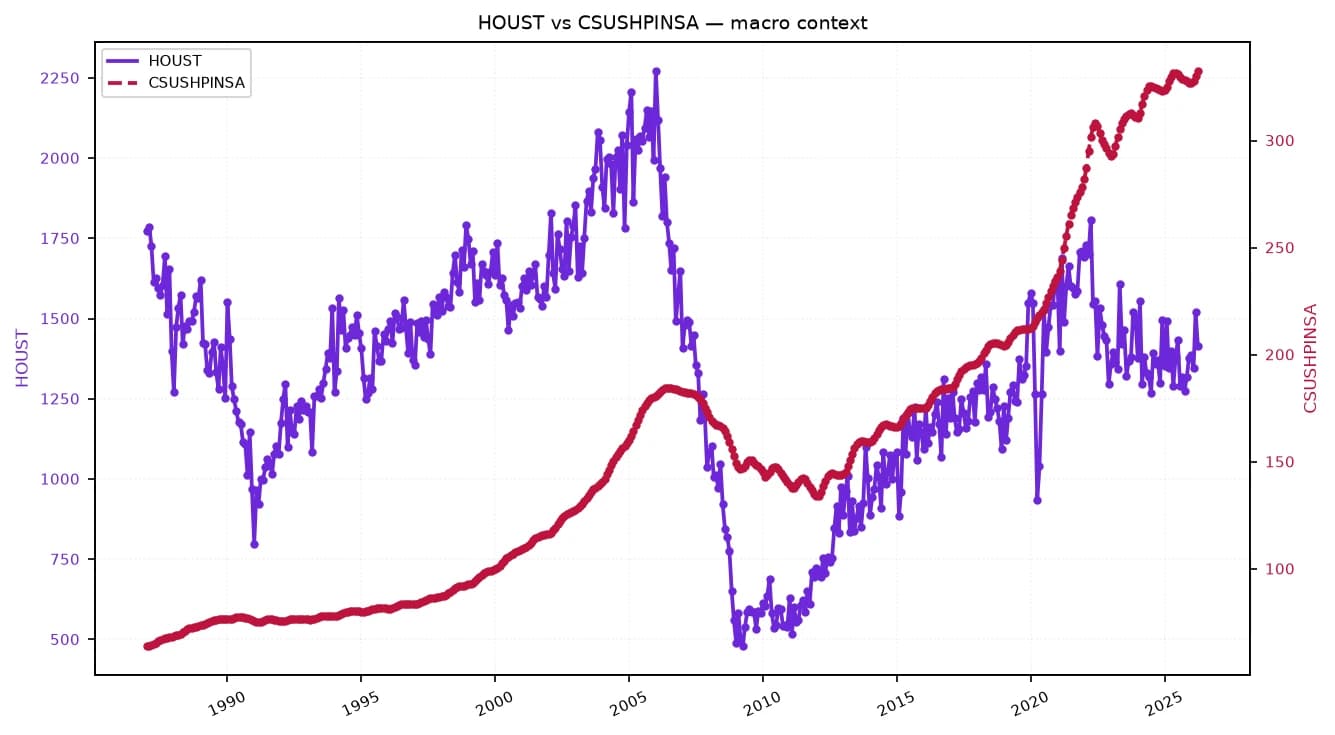
The data in the housing market points to exactly that tension. U.S. housing starts are projected to cool to 1,333.3 in July from 1,427 in June, while the S&P CoreLogic Case-Shiller home price index continues to run far above pre-pandemic levels at 333.3 in May. At the same time, the unemployment rate is still low at 4.2%, which helps keep household formation and demand for shelter intact. In plain English: supply is not keeping up, and the labor market is not doing enough to take the heat out of housing demand.
For investors, that is a mixed bag. On one hand, tighter affordable housing supply can be painful for tenants and politically fraught. On the other, it can support pricing power for the big apartment and single-family rental landlords that already own the stock. That helps explain why shares tied to the sector have stayed resilient. American Homes 4 Rent, or AMH, is trading above both its 50-day and 200-day moving averages, a sign the market still sees durable demand for single-family rentals. Invitation Homes, or INVH, is doing the same. Essex Property Trust, which concentrates on coastal apartments, has also held up well, with the stock sitting comfortably above its key long-term trend lines.
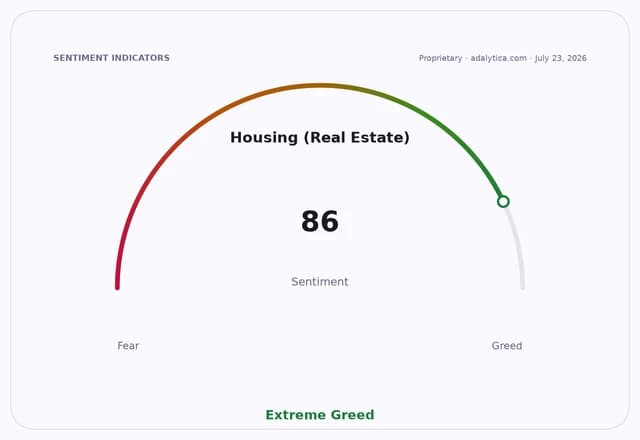
There is also a sentiment story running alongside the fundamentals. Adalytica’s Housing Fear & Greed Index shows extreme greed at 86, while its housing and rent inflation gauge sits at 79, or greed, suggesting investors are already leaning into the idea that shelter stays expensive. That can be a warning sign in the short run, but for long-term investors it also underlines the same structural point: housing scarcity tends to reward owners of scarce assets.
The key question now is whether policymakers treat the fund withdrawals as a temporary budget fix or a sign of deeper strain. If the kitty keeps shrinking, the burden shifts to local governments, private landlords and ultimately renters. If funding is restored, the sector may still face years of undersupply, but the political risk eases.
For patient investors, the takeaway is simple: housing remains a long game. Affordable housing shortages can create pain, but they also strengthen the case for diversified exposure to quality residential REITs and home-related stocks. This is a space worth watching, not trading around.
| Entity | Gains | Losses |
|---|---|---|
| Large rental REITs | ▲Better pricing power | ▼Political scrutiny |
| Renters and low-income households | ▲None | ▼Higher housing costs |
| Homebuilders | ▲Sustained demand backdrop | ▼Affordability pressure |
| Policymakers | ▲More urgency to act | ▼Budget and housing headaches |