The forint jumped on Tuesday after a senior Hungarian central banker said there was little reason to postpone euro-area preparations if Budapest’s adoption plan is credible, a message that traders read as the clearest official signal yet that Hungary may be moving closer to a firmer euro timetable.
Hungary forint rises on euro adoption remarks

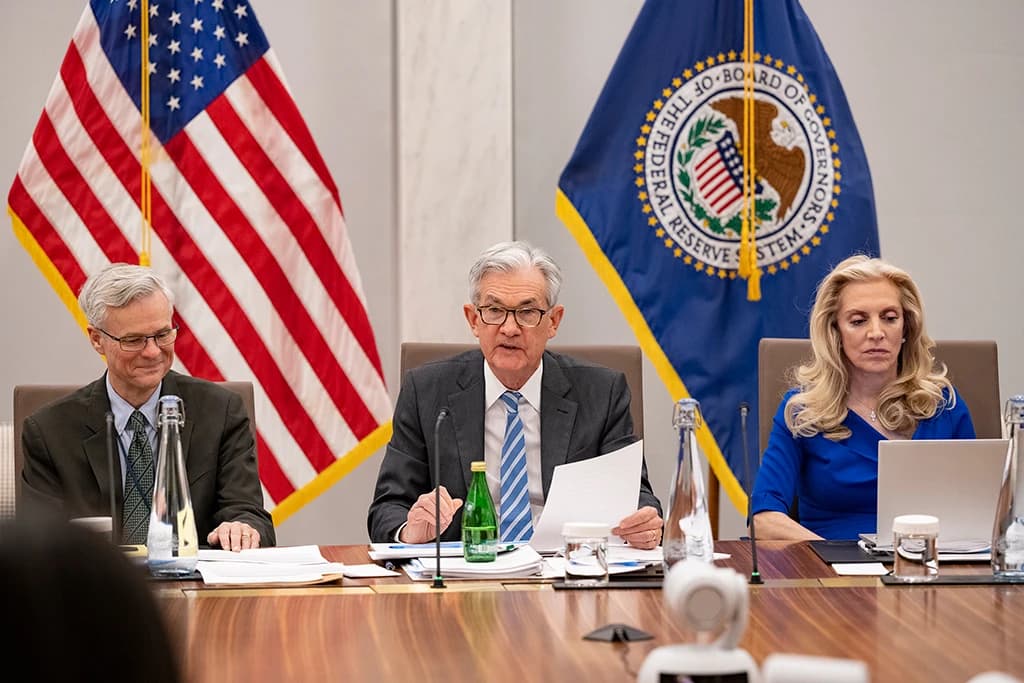
The currency rose about 0.4% against the euro in less than half an hour, strengthening from just above 367 forints per euro to 365.7, while also gaining against the dollar, pound and Swiss franc. The move was modest in absolute terms, but it mattered because it was driven less by broad risk appetite than by a domestic policy catalyst: comments from MNB Deputy Governor Zoltán Kurali at a conference in Budapest that a credible government roadmap would make delay on ERM II entry unjustified.
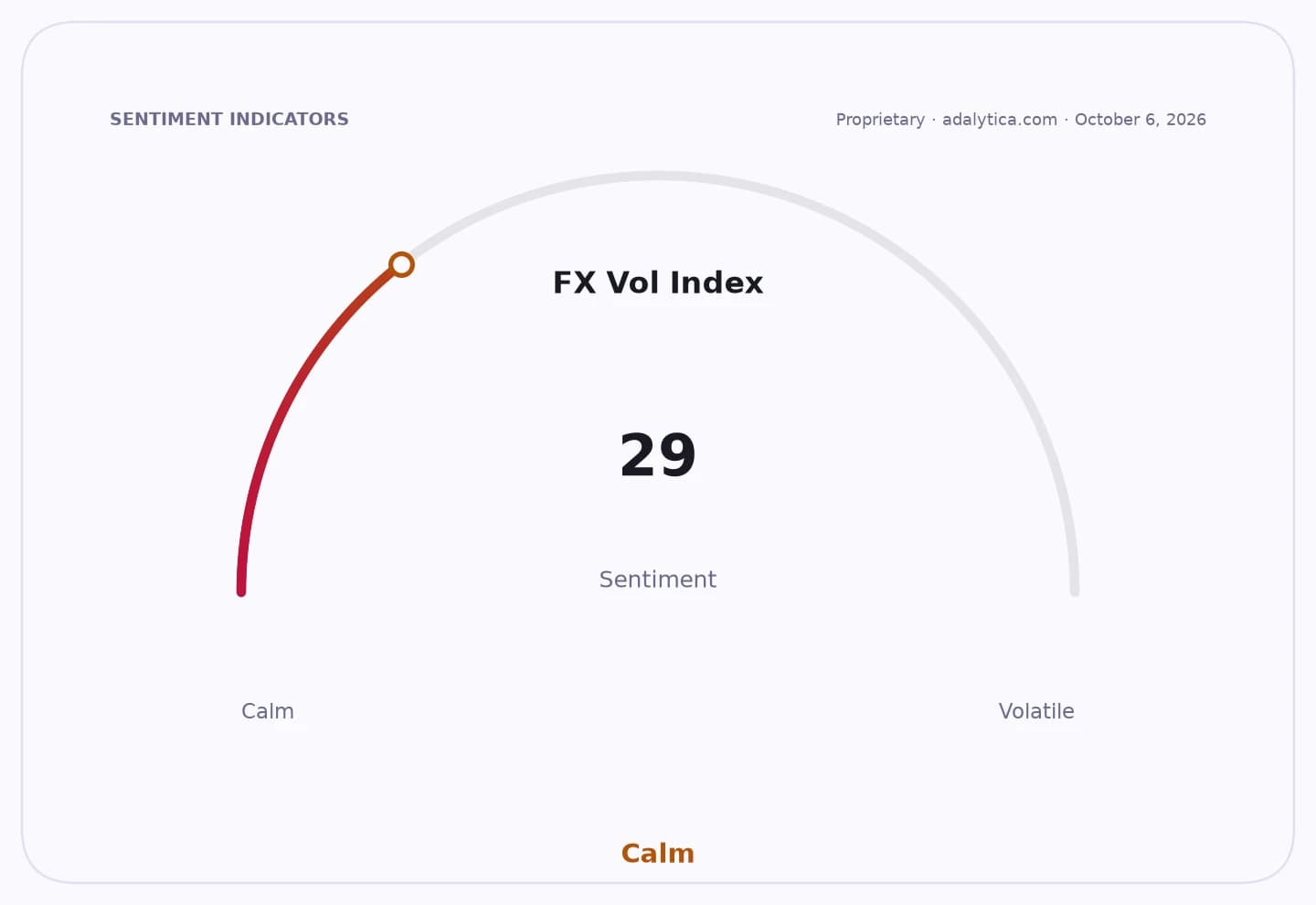
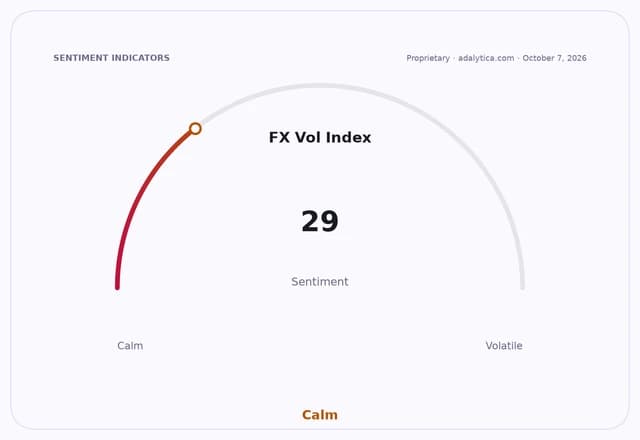
Sentiment IndicatorsⓘProprietary · adalytica.com · October 7, 2026
This is a snapshot — live sentiment, awareness and momentum for 130+ markets update continuously in the dashboard.Open AlphaPulse

That is economically significant because euro adoption is one of the few policy choices that can directly reduce Hungary’s long-term currency, funding and inflation risk premium. Joining ERM II, the exchange-rate mechanism that precedes euro entry, would not itself lock in a single currency, but it would signal a stronger institutional commitment to price stability and fiscal discipline. For a country whose markets have often priced in policy uncertainty, that can mean a stronger forint, lower imported inflation and potentially cheaper borrowing costs over time.
Kurali said the government’s current schedule — ERM II entry in 2029, a decision in 2031 and euro adoption on Jan. 1, 2032 — was consistent. The market’s response suggests investors were listening for more than a technical discussion: they were looking for confirmation that Hungary’s policymakers were willing to anchor expectations after years in which euro accession appeared distant and politically ambiguous. In that sense, even a mid-sized intraday move in the forint can carry outsized signaling power.
The broader market tone was supportive. Regional currencies were firmer and equity markets in Budapest and western Europe were in positive territory, reducing the chance that the forint rally was simply a one-off squeeze. But the domestic policy narrative was the main driver. When local assets rise on a euro-accession message, it usually reflects a narrower risk premium rather than a sudden improvement in growth fundamentals.
Hungarian equities also benefited from the more constructive mood. The BUX index rose 1.3% in early trade, with Mol leading gains after reclaiming 5,000 forints, while OTP and Richter also advanced. The move was in line with the idea that a stronger, more predictable macro framework would support domestic financial assets by lowering currency volatility and improving visibility for corporate cash flows and funding costs.
The bull case is straightforward: if Budapest truly commits to a euro path, the forint could enjoy a more durable repricing as investors anticipate lower policy uncertainty and better external credibility. The bear case is that the market may be front-running a political signal that still lacks hard implementation steps, leaving the currency vulnerable if the timetable slips or the message proves rhetorical rather than binding.
For investors, the key question is whether this was the start of a sustained revaluation of Hungarian assets or just a sharp reaction to a dovish-sounding policy remark. The answer will depend on whether the government follows through with specific ERM II milestones and whether the central bank continues to reinforce, rather than merely tolerate, a euro-accession narrative. Until then, the forint’s rally looks less like a conclusion than a test of credibility.
| Entity | Gains | Losses |
|---|---|---|
| Forint | ▲Stronger euro-linked credibility | ▼FX bears |
| Hungarian bonds/assets | ▲Lower risk premium | ▼Wait-and-see investors |
| Exporters | ▲— | ▼Price competitiveness |
| Euro adoption advocates | ▲Momentum and market validation | ▼Status quo defenders |