Fuel prices in Hungary are set to rise by as much as 5.73 forint a litre next week, a move that underscores how quickly geopolitical shocks are feeding through to household costs and transport expenses.
Hungary Fuel Prices Rise as Oil Strength Persists

The increase matters because petrol and diesel sit near the front line of inflation transmission. Higher pump prices can work their way into freight, food distribution and broader service costs, complicating the disinflation path just as consumers are already absorbing elevated living costs. The latest pricing table from the energy ministry points to fresh pressure on retail buyers, while also hinting at wider margin support for fuel sellers if demand holds up.
Sentiment IndicatorsⓘProprietary · adalytica.com · July 29, 2026
This is a snapshot — live sentiment, awareness and momentum for 130+ markets update continuously in the dashboard.Open AlphaPulse

The move comes against a backdrop of firmer global crude benchmarks. WTI has recovered sharply from mid-July lows around $80 a barrel and was last near $84.98 in the latest forecast reading, while the USO oil fund and energy equities have swung higher in response. XLE, the energy sector ETF, has climbed above its 50-day and 200-day moving averages, a sign the sector’s uptrend remains intact even after recent volatility. Exxon Mobil has also outperformed, with its shares holding well above both key averages, reflecting investor confidence that crude strength can support upstream earnings and cash generation.
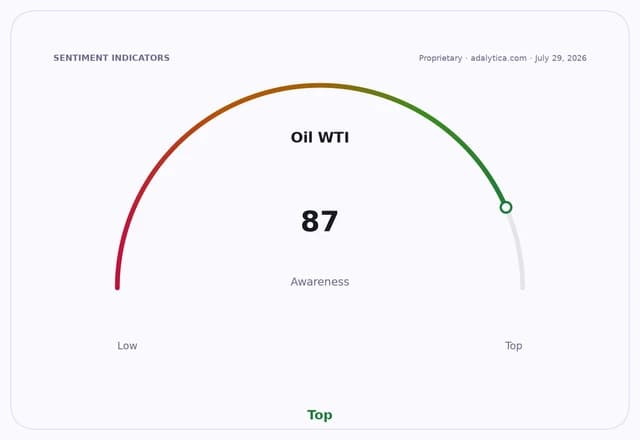
That said, the market is not treating the oil move as one-way. Adalytica’s Oil WTI Trade Signals show extreme fear even as awareness remains elevated, a combination that usually reflects a crowded, nervous market rather than a clean bullish conviction. In practical terms, that means crude can stay volatile: traders are pricing in disruption risk from the Middle East, but they are also aware that a supply response or demand wobble could reverse some of the gains.
For Hungary, the immediate effect is straightforward. Import-dependent fuel pricing leaves motorists and logistics companies exposed to swings in global benchmarks and the forint’s own stability. If the current oil move persists, the country could see another round of pass-through into consumer prices, reviving concerns about inflation persistence and policy constraints. If it fades, the relief may be temporary, because energy markets remain highly sensitive to headlines and shipping risk.
For investors, the winners and losers are becoming clearer. Energy producers and integrated oil majors gain from higher realised prices, while transport, consumer and industrial names face a higher input-cost burden. The next test is whether crude holds above recent support or whether the latest surge proves to be another short-lived spike in a market still dominated by geopolitical risk.
| Entity | Gains | Losses |
|---|---|---|
| Oil producers | ▲Higher realised prices | ▼— |
| Fuel retailers | ▲Wider nominal revenues | ▼Price-sensitive demand |
| Consumers | ▲— | ▼Higher pump bills |
| Transport and logistics firms | ▲— | ▼Higher operating costs |