Hungary’s planned tax reform may blunt next year’s minimum-wage increase, with workers at the bottom of the pay scale potentially keeping far less of their raise than they expect.
Hungary tax reform may reduce wage gains
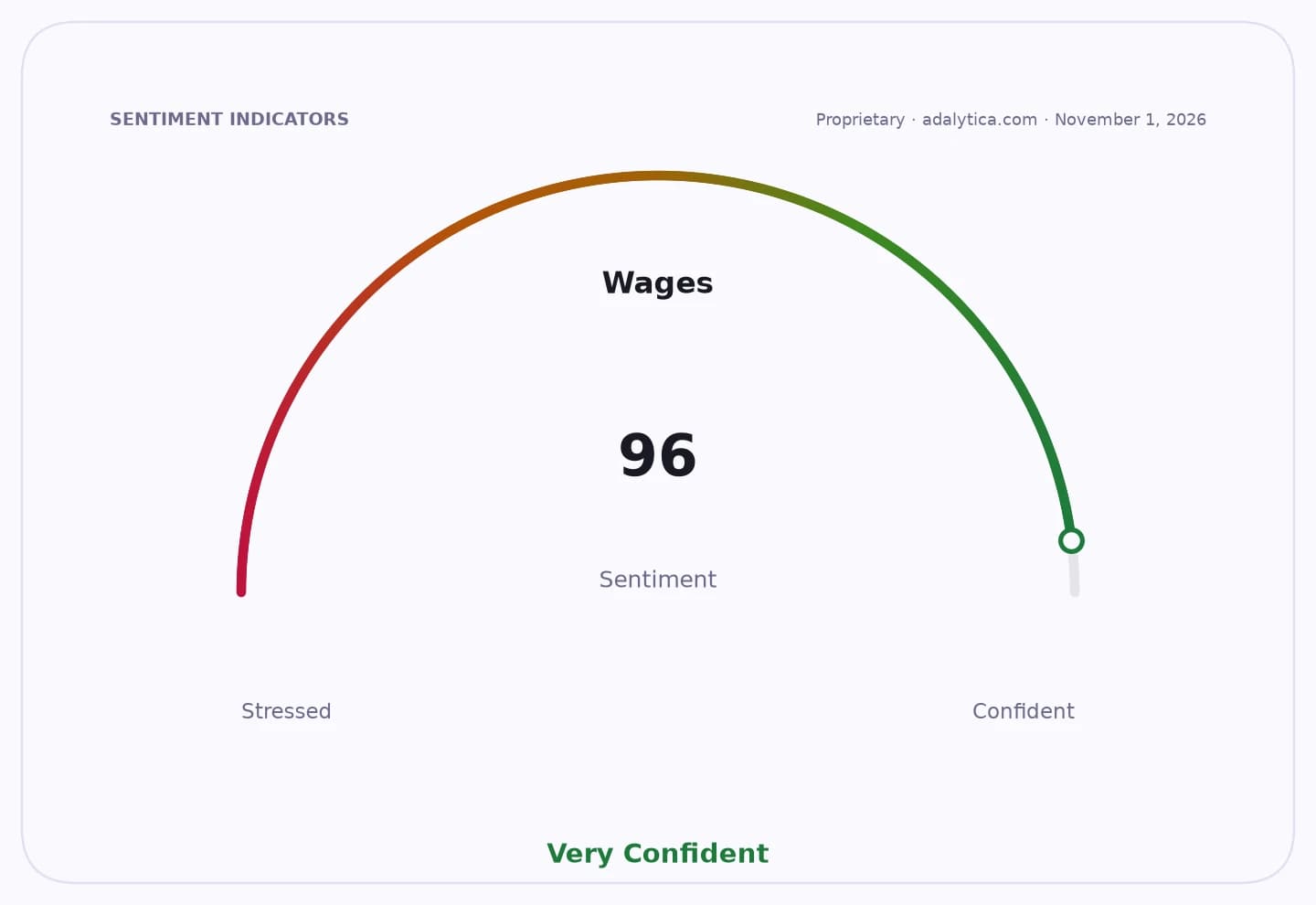
Wages
That is the big economic risk investors and households should focus on: a lower personal income tax burden can support disposable income, but if employers use the change as cover for smaller wage hikes, the reform could end up redistributing little real spending power to low earners. In a country where wage growth helps drive consumption, the difference between a meaningful pay rise and a token adjustment matters for retailers, lenders and the broader economy.
Sentiment Indicators
According to comments attributed to economist Gábor Regős, the personal income tax rate tied to the minimum wage could fall from 15% to 9%, with the benefit phasing in up to monthly income of 680,000 forints. On a 2026 minimum wage of 322,800 forints, that would cut the monthly tax bill from about 48,400 forints to roughly 29,000 forints, leaving workers almost 20,000 forints more in hand before other deductions and credits.
The same logic would apply to the guaranteed wage minimum, set at 373,200 forints in 2026 and paid to far more workers than the minimum wage itself. If the new system is phased in linearly, Regős estimated an effective tax rate of about 9.85% at that pay level, lowering monthly tax from around 56,000 forints to about 37,000. That still does not guarantee a bigger take-home pay gain, because the final effect will depend on the wage settlement itself.
Wages — 30-day sentimentadalytica.com
Explore this data interactively — full history, time series and cross-market comparisons.
And that is where the story gets tricky for workers. Employers have previously agreed to a 14% minimum-wage increase as part of a three-year wage deal, but the article suggests business groups may not be able to sustain that pace and could instead push for much smaller rises. If firms assume the tax cut has already done the heavy lifting, low-income employees could see only a modest improvement in real income even as headline policy sounds supportive.
For the Hungarian economy, the stakes are straightforward. Stronger net pay usually supports consumer spending, which feeds directly into growth. But if wage growth slows while inflation and living costs remain sticky, the reform risks becoming a fiscal relabeling exercise rather than a demand boost. That would be disappointing for households and for investors looking for a healthier domestic consumption cycle.
There is one important exception: the ekho employment tax regime appears unchanged for now, with the current 15% rate likely to stay in place. Still, the real market question is whether the government’s tax redesign will translate into durable household demand or simply offset pressure on employers. For investors watching Hungary’s consumer and labor backdrop, the answer will determine whether this is a genuine wage-supportive reform or just a political headline.
| Entity | Gains | Losses |
|---|---|---|
| Low-wage workers | ▲Higher take-home pay | ▼Risk of smaller raises |
| Employers | ▲Lower payroll pressure | ▼Wage negotiations stay complex |
| Hungarian consumers | ▲More disposable income if wages hold | ▼Weaker spending if pay growth slows |
| Retailers and domestic-facing stocks | ▲Stronger demand base | ▼Softer sales if workers get less real income |