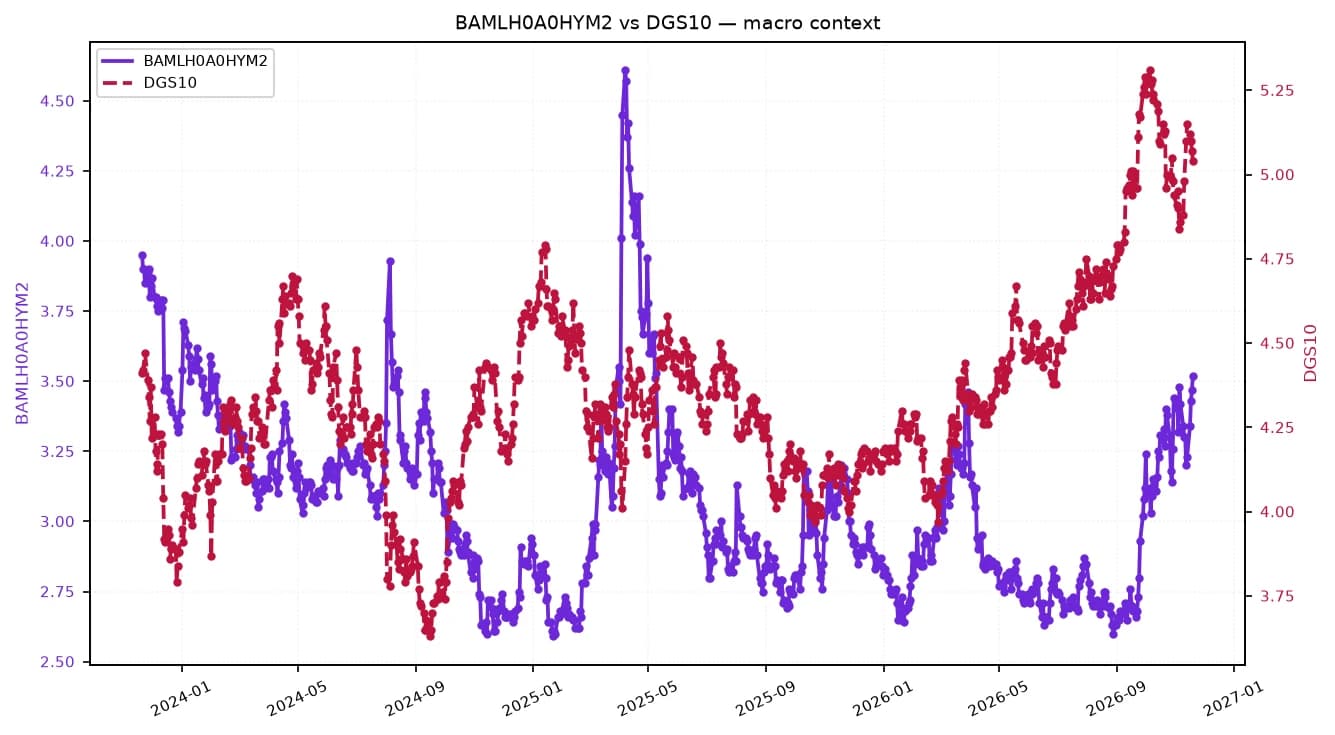
Higher U.S. Treasury yields are tightening the trade-off behind monthly bond income, leaving junk-bond and emerging-market funds to justify payouts with more credit and currency risk. With the 10-year Treasury at 5.10% and forecast to rise to 5.234%, investors in HYG, EMB and BNDX are being paid less for taking on more risk than they were earlier in the year.
HYG, EMB, BNDX Face Higher Treasury Yields
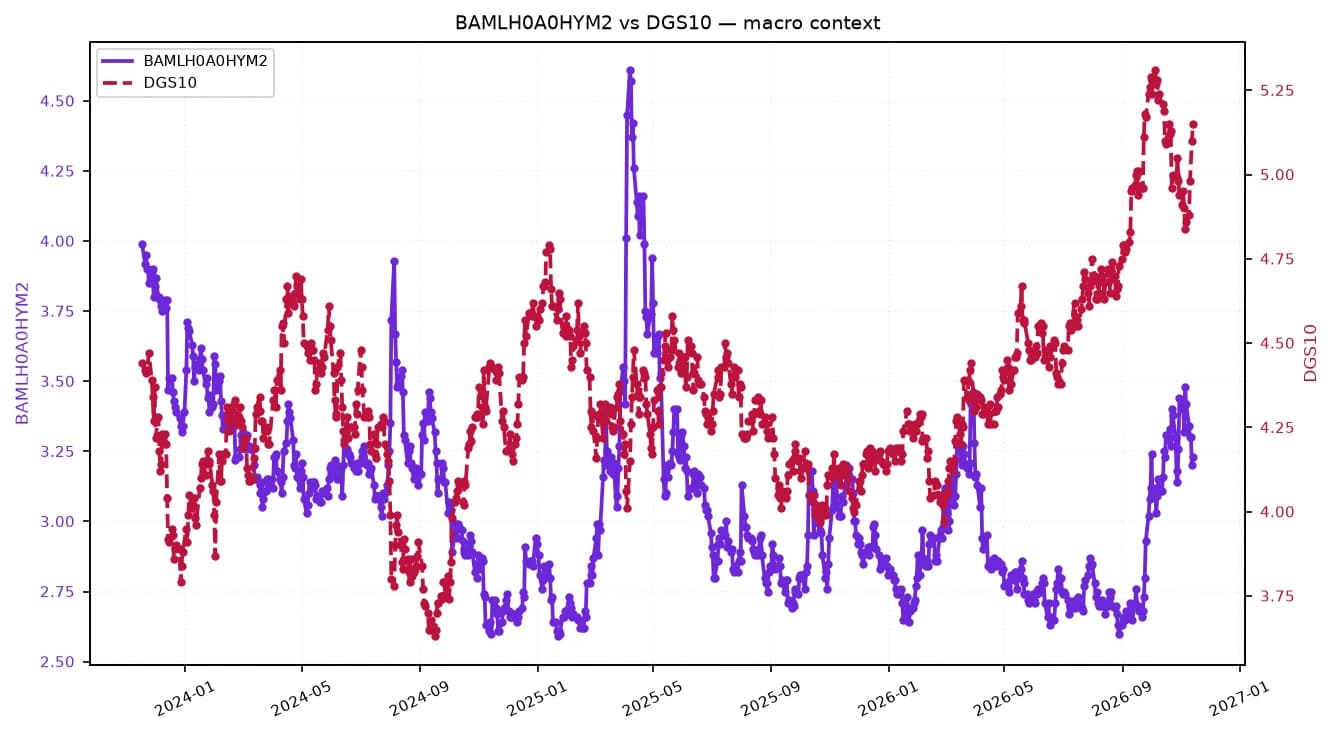
That matters because these funds sit in the part of the market most exposed to refinancing stress, sovereign payment shocks and foreign-exchange swings. HYG, which holds below-investment-grade corporate debt, has seen its spread over Treasuries move around sharply this year, reflecting the way credit risk can reprice quickly when growth worries or default concerns surface. EMB is more vulnerable still: its income depends on emerging-market governments that can suspend payments, and its portfolio still includes defaulted Lebanese bonds alongside debt from Ghana and Sri Lanka.
Sentiment Indicators
For retirees and income investors, the bigger issue is not headline yield but cash-flow reliability. The three ETFs all pay monthly, yet none of them paid in January at the most recent year-end, forcing holders who budget on a strict monthly schedule to bridge the gap from December distributions. HYG and EMB paid in early and late December before resuming in February; BNDX followed the same pattern. That irregularity turns these funds into timing tools rather than true paycheck substitutes.
BNDX carries a different kind of risk. Its December supplemental payout has swung from about $0.22 to $1.62 per share, making it a volatile bonus rather than a dependable source of income. That variability underlines the difference between owning bond exposure and building a liability-matching portfolio. Even funds that look stable on a monthly calendar can deliver uneven distributions once portfolio income, currency effects and year-end mechanics are stripped out.
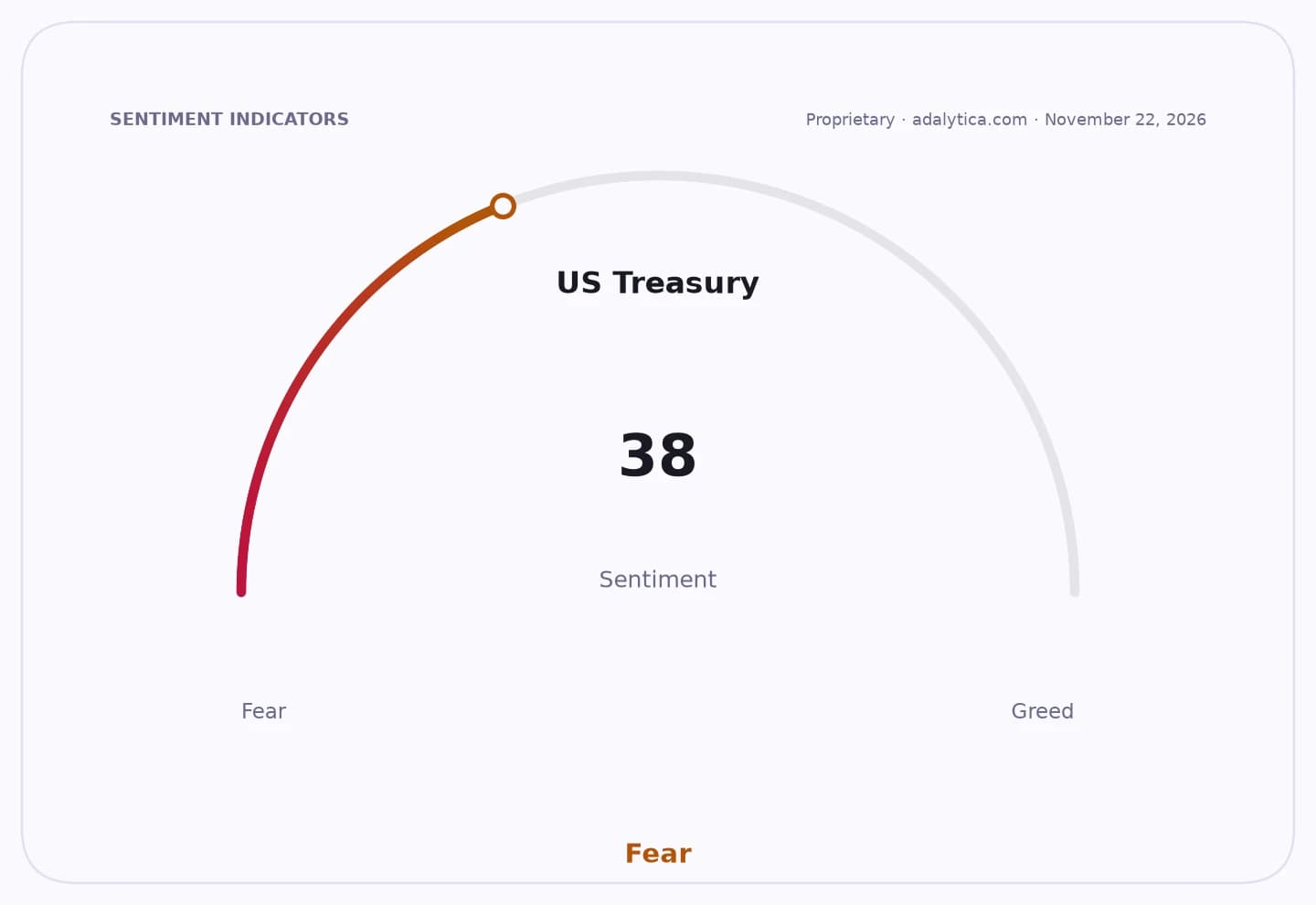
The market backdrop is also unusually unforgiving for bond allocators. U.S. Treasury prices have been under heavy pressure, as reflected in the extreme fear reading on Treasury trade signals, while the S&P 500 is showing extreme greed. That combination tends to pull capital toward equities while leaving fixed income investors more focused on carry, credit selection and duration risk. In that environment, high-yield and emerging-market bond ETFs can still attract buyers, but mostly as yield-seeking vehicles rather than defensive assets.
The investment case, then, is about discipline rather than yield-chasing. Bulls will argue that default rates remain manageable, that HYG offers diversified exposure to speculative-grade corporate debt, and that EMB can pay up for sovereign risk when the cycle is benign. Bears counter that a 5%-plus 10-year Treasury changes the hurdle rate for every risky bond fund, while sovereign restructurings and lower-quality credits can erode income faster than distributions suggest.
For investors, the message is simple: these ETFs are not interchangeable monthly income proxies. They are compensation for taking distinct risks in credit, sovereign repayment and currency markets, and the size and timing of their checks can change quickly when the macro backdrop shifts.
| Entity | Gains | Losses |
|---|---|---|
| HYG holders | ▲Higher carry | ▼Credit spread risk |
| EMB holders | ▲Sovereign yield pickup | ▼Default and restructuring risk |
| BNDX holders | ▲Diversified foreign bond income | ▼Uneven supplemental payouts |
| Treasury buyers | ▲Safer benchmark income | ▼Lower yield potential |