A higher-rate Federal Reserve could make floating-rate debt the rare corner of the bond market that actually gets better, and that is exactly why investors are paying attention to the Invesco Senior Loan ETF, JAAA.
JAAA Rises as Fed Stays Hawkish
For long-term investors, the appeal is simple: unlike traditional bond funds that can get hurt when yields rise, senior loans reset their coupons as short-term rates move higher. That makes them one of the more natural hedges in a tightening cycle, especially if the Fed has to keep policy restrictive to fight inflation. The market backdrop still points that way. The Fed funds rate is projected around 3.89%, while the 10-year Treasury yield sits near 5.015% and the 2-year around 4.733%, a setup that keeps borrowing costs elevated across the economy.
Sentiment Indicators
Hawkish vs Dovish
That matters because rising rates change the entire math for income investors. In a normal bond fund, higher yields can mean falling prices. In a senior loan ETF, the income stream can adjust upward instead. That does not make the fund risk-free — credit quality still matters, and loan prices can wobble if the economy weakens — but it does make JAAA a more resilient way to stay invested when rate volatility is the story.
The price action says investors already understand the appeal. JAAA has climbed to 50.61, above both its 50-day moving average of 50.39 and its 200-day moving average of 49.69. That is a healthy sign of trend strength, even if its RSI reading of 92.9 suggests the ETF is very extended in the near term. In other words, the fund has been bid up as investors look for income vehicles that can hold up if the Fed stays hawkish.
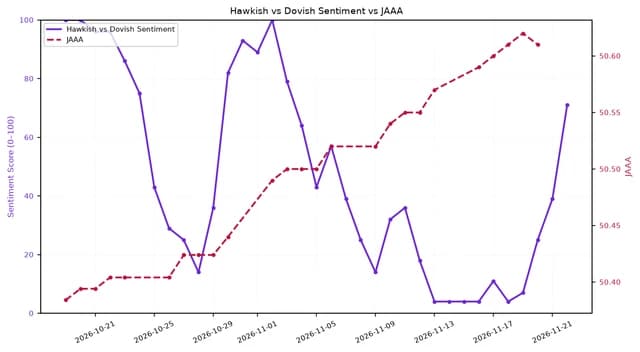
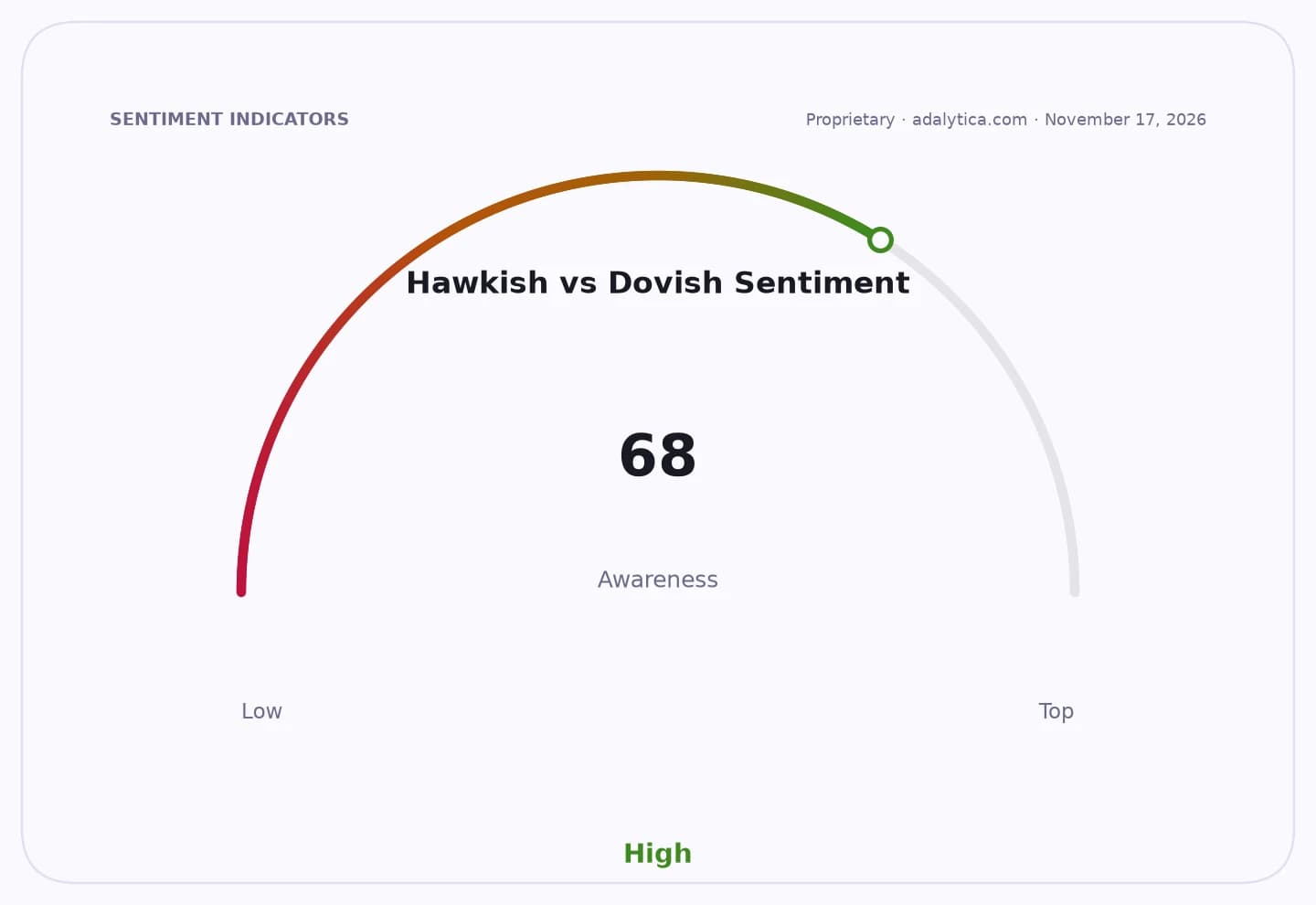
That hawkish backdrop is showing up elsewhere, too. Adalytica’s Hawkish vs Dovish Fed Policy Sentiment gauge jumped to 71 from 39 in one day, a sharp shift in market attention toward tighter policy. At the same time, Treasury-bond trade signals remain constructive, but not euphoric, and the S&P 500’s trade-signal snapshot shows extreme fear. That combination often pushes investors away from duration-heavy assets and toward floating-rate income.
For investors, the key question is not whether JAAA will soar. It is whether it can keep compounding income more reliably than traditional bonds in a world where the Fed may hike, hold, or at least stay restrictive for longer. If you are building a portfolio for the next 3 to 10 years, that is a useful feature, especially as part of a diversified income sleeve rather than a one-fund solution.
Could the ETF cool off after such a strong run? Absolutely. Short-term overbought readings usually lead to some digestion. But if you believe rates may stay elevated, JAAA deserves a place on the watchlist as a pragmatic, income-first way to benefit from a hawkish Fed.
| Entity | Gains | Losses |
|---|---|---|
| JAAA holders | ▲Floating-rate income | ▼Traditional bond price upside |
| Fed hawks | ▲Policy credibility | ▼Risk assets chasing easy money |
| Fixed-rate bond funds | ▲— | ▼Price pressure from higher yields |
| Income investors | ▲Higher reset coupons | ▼Lower duration protection |