China’s latest display of a hypersonic weapon designed to sink U.S. aircraft carriers is sharpening military risk in the Western Pacific and reinforcing demand for missile defense, naval hardening and counterstrike systems.
Hypersonic Threat Supports Missile Defense Stocks
The strategic significance is immediate: a weapon built to threaten a carrier strike group challenges the most visible symbol of U.S. power projection and raises the cost of operating near Taiwan, the South China Sea and other flashpoints. That matters economically because it increases the premium Washington and allies must pay for deterrence, surveillance, shipbuilding and interceptors, while also adding pressure on defense budgets already tilted toward high-end munitions and next-generation missile defense.
Investors are already treating the backdrop as structurally supportive for defense contractors tied to naval warfare and air defense. Lockheed Martin, Northrop Grumman and RTX have all been trading above their 50-day moving averages in recent sessions, with RTX near $194 and Northrop above $523, as traders position for higher demand in systems that can track, jam or intercept advanced missiles. Lockheed’s shares, however, remain below both the 50-day and 200-day averages at about $509, suggesting the stock has not fully recovered even as the geopolitical case for missile defense strengthens.
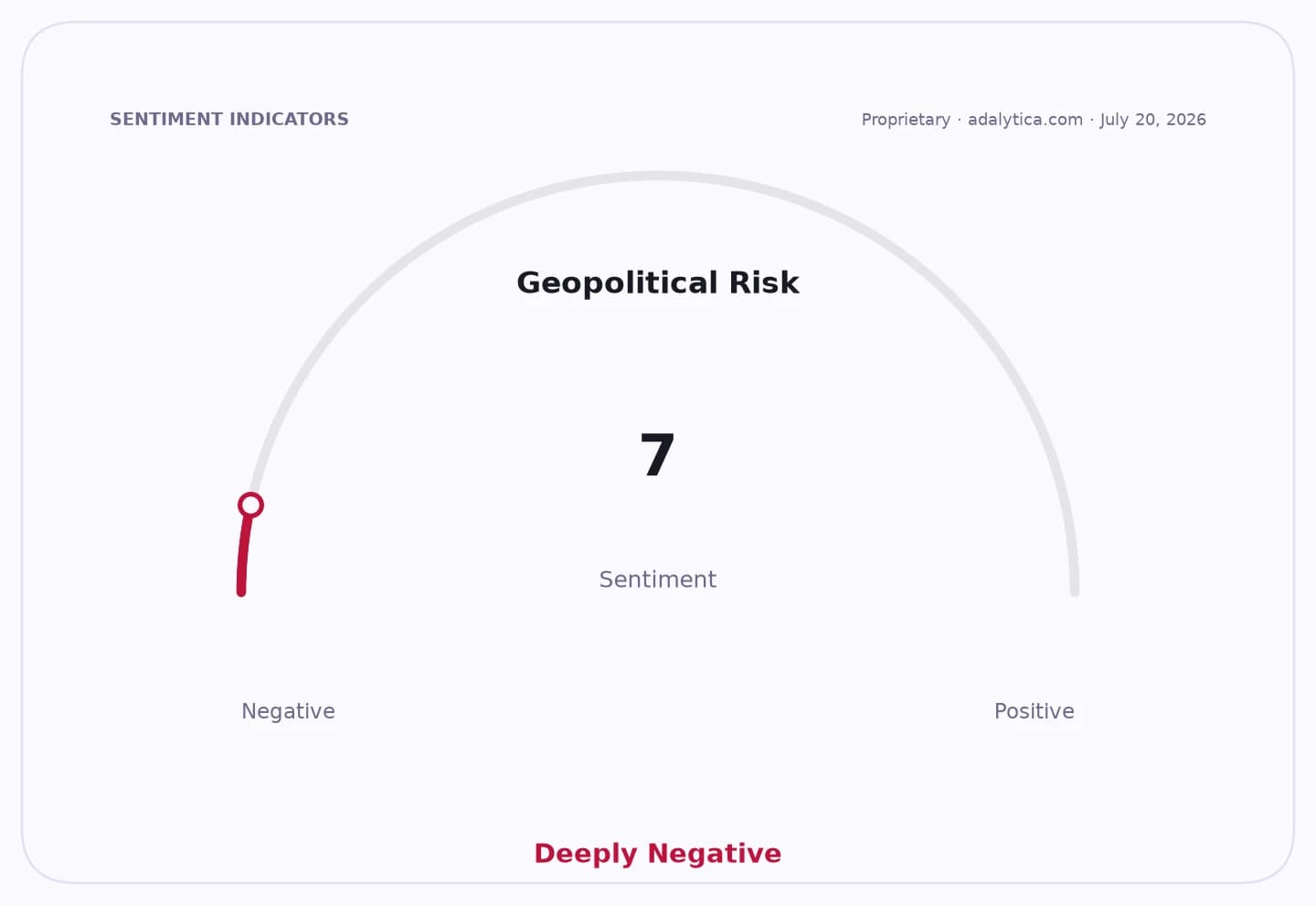
The market is also responding to a broader rise in global risk aversion. Adalytica’s Global Stability Sentiment snapshot shows “Extreme Fear” at 7, down 77 points over 30 days, underscoring how quickly geopolitical shocks can feed into asset prices, defense multiples and safe-haven flows. In defense, that usually translates less into immediate revenue and more into a firmer long-term procurement pipeline.
For U.S. policymakers, the development adds urgency to programs such as Golden Dome, ship defenses and long-range sensing networks. For investors, the next catalyst is whether the Pentagon and Congress turn the threat environment into larger orders for interceptors, sensors and naval platforms, or whether budget delays temper the benefit to contractors despite a more dangerous security backdrop.
| Entity | Gains | Losses |
|---|---|---|
| U.S. missile defense contractors | ▲Higher demand for interceptors, sensors | ▼Program timing risk |
| Chinese military signaling | ▲Greater deterrence leverage | ▼Higher escalation risk |
| U.S. Navy carrier strike groups | ▲Push for modernization funding | ▼Operational freedom near China |
| Defense investors | ▲Geopolitical bid for sector names | ▼Volatility if budgets slip |