Hyundai is on course to outsell Ford in the U.S. for the first time, a symbolic shift that underscores how electrification and changing consumer demand are redrawing the competitive map in America’s biggest auto market.
Hyundai May Outsell Ford in U.S. for First Time

The crossover matters because U.S. volume is still the most important profit pool for mass-market automakers, and a Hyundai pass by Ford would mark one of the clearest signs yet that legacy brand loyalty is no longer enough. Buyers are rewarding lineup breadth, pricing, fuel efficiency and dealer execution over old brand hierarchies, while the industry is still adjusting to higher interest rates, tighter affordability and a slower-than-hoped EV transition.
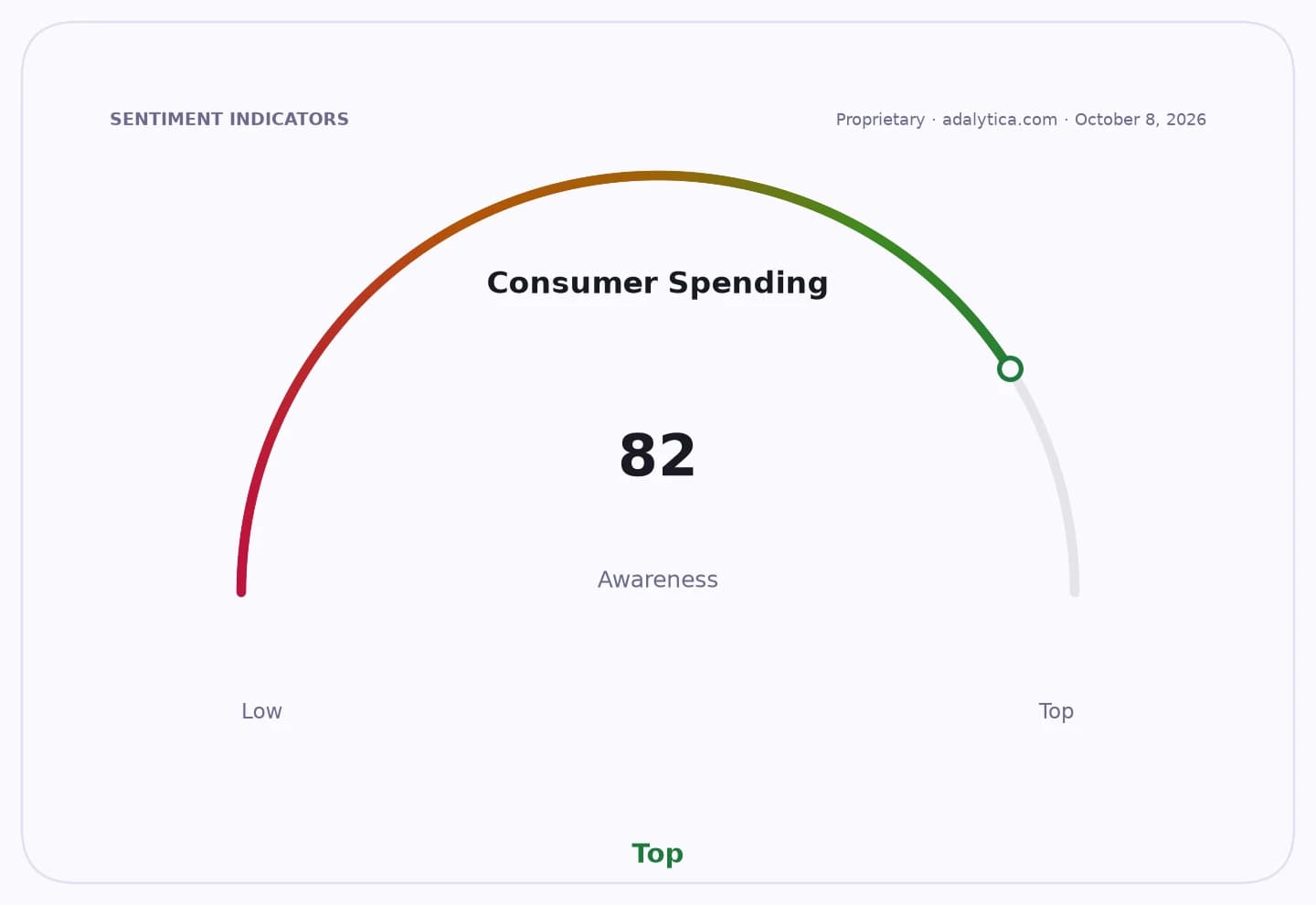
Sentiment IndicatorsⓘProprietary · adalytica.com · September 30, 2026
This is a snapshot — live sentiment, awareness and momentum for 130+ markets update continuously in the dashboard.Open AlphaPulse

Ford shares were already under pressure, closing at $12.03 on Sept. 30, down from $17.25 in late May, with the stock now sitting below its 50-day moving average and its RSI at 16.6, a technical reading that points to heavy recent selling. General Motors, by contrast, has held up better, though its stock slipped to $77.36 on Sept. 30 after a pullback from an August peak, while Honda ADRs eased to $31.81, leaving investors focused on relative execution rather than the broader sector.
The story also lands against a mixed macro backdrop. U.S. industrial production was up 0.02% in August, unemployment held at 4.1%, and the broader equity market is in a cautious mood, with Adalytica’s S&P 500 trade signals showing fear at 24 and awareness at 30. That combination suggests consumers are still buying, but with more discipline — a setting that tends to favor automakers with efficient product lineups and stronger pricing power.

For Ford, the risk is not just a ranking reversal but what it implies about share erosion in compact SUVs, crossovers and electrified models, where Hyundai and its affiliate Kia have been aggressive on design, features and incentives. For investors, the key question is whether Ford can defend margins while spending heavily on software, EVs and incentives, or whether market share gains by rivals will keep pressuring volumes and valuation.
Hyundai’s momentum will be watched into the next round of monthly U.S. sales data, when investors will look for confirmation that the gap is real and durable rather than a one-month swing. The next catalyst is whether Ford can stabilize retail demand and whether Hyundai can keep converting its product mix into share without sacrificing profitability.
| Entity | Gains | Losses |
|---|---|---|
| Hyundai | ▲U.S. share gain | ▼ |
| Ford | ▲ | ▼First-time ranking risk |
| General Motors | ▲Relative share stability | ▼Sector comparison pressure |
| U.S. buyers | ▲More model choice | ▼ |