The IMF’s warning that a wider Middle East war could deepen inflation and disrupt global trade lands as oil markets and bond yields already show investors are bracing for a geopolitical premium that can bleed into everything from fuel costs to central-bank policy.
IMF warns Middle East war could lift oil and inflation

Crude has been swinging on the conflict backdrop, with West Texas Intermediate closing at $85.58 a barrel on Nov. 17 after trading as high as $89.64 that day and reaching above $100 earlier this year. That keeps energy squarely in the macro crosshairs because oil remains the fastest transmission channel from Middle East instability to headline inflation, transport costs and consumer prices.
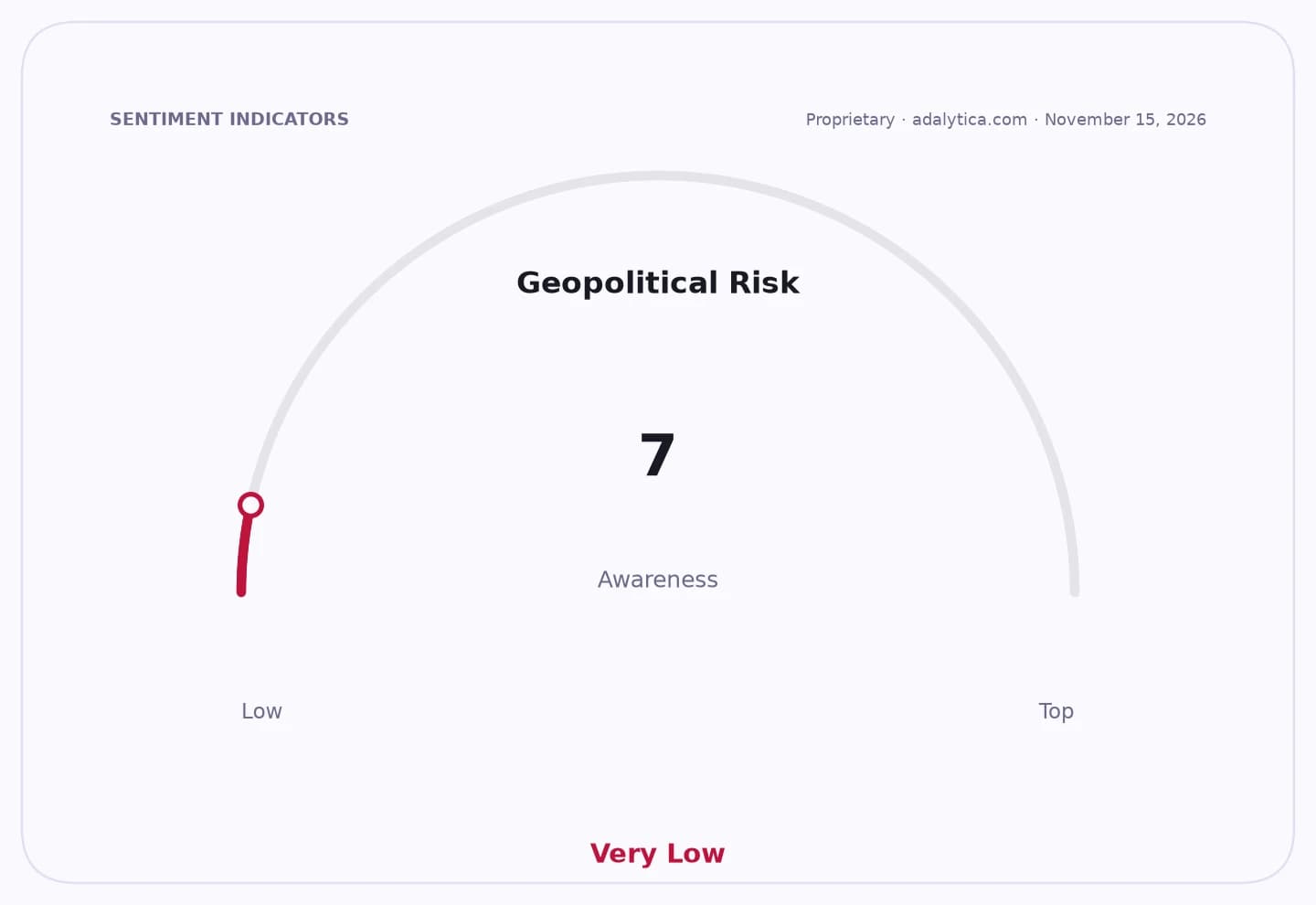
Sentiment Indicators
CPI
The threat is not just to oil. Higher shipping insurance, route disruptions and the possibility of attacks on energy infrastructure can ripple through supply chains and raise costs for importers across Europe and Asia, while exporters may benefit from stronger prices but face a more fragile trade environment.
That matters for policymakers because inflation is still sticky. The US consumer price index stood at 337.476 in October, with the next reading forecast at 338.6475 for November, leaving little room for another energy shock. Ten-year Treasury yields were around 5.12% on Nov. 16, showing investors have not fully priced in an easing of inflation pressure.
DCOILWTICO vs CPIAUCSL — macro contextadalytica.com
Explore this data interactively — full history, time series and cross-market comparisons.
CPI
The market reaction underscores the tension. USO, the oil ETF, is still up sharply from earlier in the year even after recent pullbacks, while its 50-day moving average sits well above the current price, a sign the rally has cooled but the war premium has not disappeared. WTI’s relative strength index has dropped to 23.3, suggesting the recent selloff has pushed crude into technically oversold territory even as the geopolitical risk remains unresolved.
For investors, the key question is whether the conflict broadens enough to keep energy prices elevated long enough to alter growth and rate expectations. That would favor oil producers and midstream operators, but it would pressure airlines, shippers, consumer discretionary names and rate-sensitive equities if inflation reaccelerates.
The IMF’s message is that the risk is not confined to the region. If the war expands or interferes with key trade corridors, the result could be a global inflation shock just as markets are trying to absorb slower growth and still-restrictive rates.
| Entity | Gains | Losses |
|---|---|---|
| Oil producers | ▲Higher realized prices | ▼Policy backlash risk |
| Consumers/importers | ▲None | ▼Higher fuel and shipping costs |
| Central banks | ▲None | ▼Harder inflation fight |
| Shippers/airlines | ▲None | ▼Margin pressure from fuel spikes |