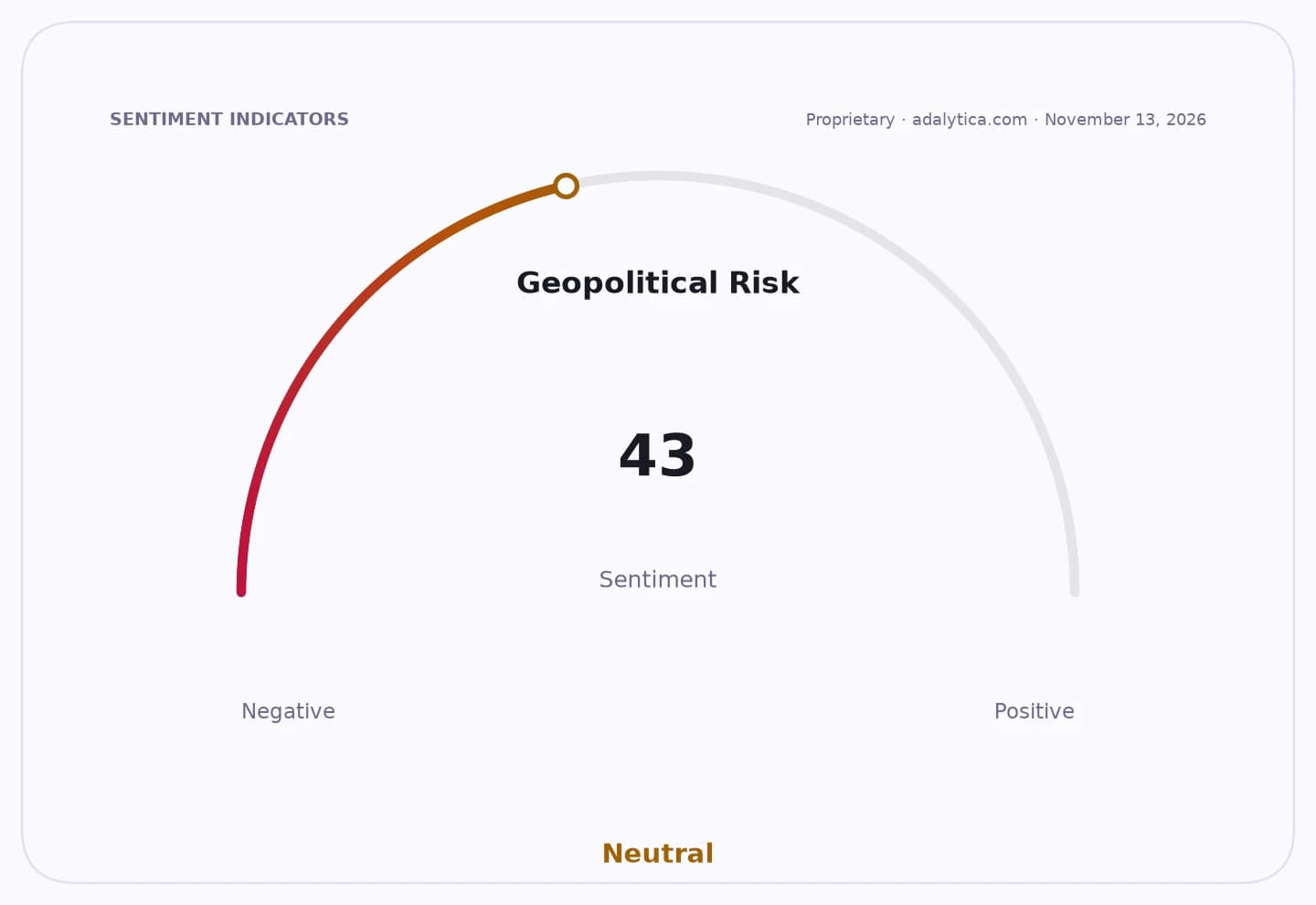
Oil prices slid as investors bet that progress in talks to end the war could reduce the geopolitical risk premium that has kept crude elevated, a shift that matters because every dollar lower in oil can ease inflation pressure, cool energy costs and alter the earnings outlook for producers and refiners.
Oil prices fall as peace talks ease risk premium
Geopolitical Risk
Brent crude slipped 0.64% to $97.67 a barrel and U.S. crude fell 0.40% to $90.51 after President Donald Trump said it was highly unlikely he would order fresh strikes on Iran if negotiations to end the conflict continued to advance. The move is important not just for the oil market, but for the broader economy: when tension in the Middle East eases, traders typically price in fewer supply disruptions, lower insurance and freight risks, and less fear of a sudden spike in global fuel costs.
Sentiment Indicators
Oil WTI
That matters for investors because oil still sits at the center of the inflation story. Softer crude prices can eventually filter through to gasoline, diesel and shipping costs, which is good news for consumers and for central banks trying to keep price pressures contained. For equities, the effect is more mixed. Airlines, transportation companies and industrials generally benefit from cheaper fuel, while oil producers and energy service firms can see margins come under pressure if crude keeps falling.
The market move also comes as the oil complex has already been highly sensitive to geopolitics. Technical readings on both Brent and U.S. crude show momentum cooling after a sharp run-up, with West Texas Intermediate recently trading below its 50-day average and RSI readings pointing to weaker short-term strength. Adalytica’s oil trade signals also show a sharp drop in awareness around the commodity, suggesting traders are rapidly reassessing the odds of a tighter supply shock.
DCOILWTICO vs DCOILBRENTEU — macro contextadalytica.com
Explore this data interactively — full history, time series and cross-market comparisons.
Still, investors should not mistake one hopeful turn in diplomacy for a lasting reset. Oil has spent much of the past year reacting to conflict headlines, supply disruptions and sanction risk, and any setback in negotiations could quickly restore the premium. But if peace talks keep advancing, the bigger long-term story may be a more stable supply outlook and a less inflationary oil market — a development worth watching closely for anyone with a multi-year portfolio.
| Entity | Gains | Losses |
|---|---|---|
| Airlines and transport companies | ▲Lower fuel costs | ▼Less protection from inflation-linked pricing |
| Consumers and importers | ▲Cheaper gasoline and diesel | ▼Less urgency for energy hedges |
| Oil producers | ▲Near-term price support if talks fail | ▼Lower crude prices if peace advances |
| Central banks | ▲Easier inflation backdrop | ▼Fewer reasons to keep policy tight |