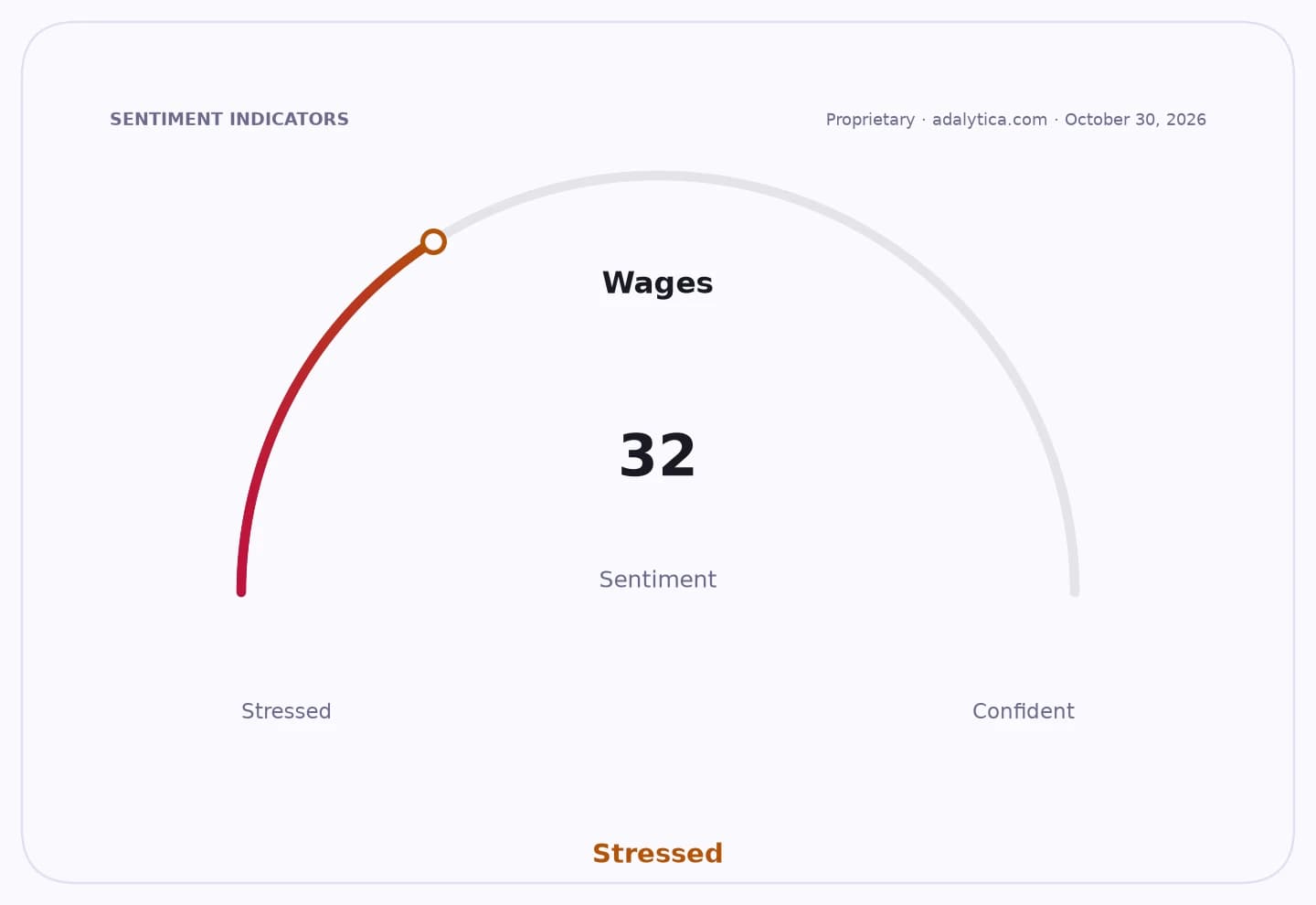
The IMSS’s wage adjustment is being presented as an increase of 8%, but only about 4% is flowing directly into base pay, leaving workers with a raise that merely outpaces inflation while doing little to improve future pension calculations.
IMSS wage hike raises pay less than pensions

That distinction matters because in Mexico, the composition of compensation can be as important as the headline number. If most of the increase is paid as a complement rather than salary, it does not feed through to benefits tied to formal wages, including retirement and severance, limiting the long-term gain for workers even as it raises current take-home pay.
Sentiment Indicators
Analyst Alejandra Cullen said the structure means “realmente ese 8% se reduce a un cuatro, poquito más,” underscoring why the announcement has triggered criticism from medical staff and other IMSS employees. On a macro level, the move is consistent with an employer and social-security system trying to contain medium-term pension liabilities rather than materially lift labor income.
The timing also highlights the strain on the Instituto Mexicano del Seguro Social. Cullen said the IMSS is dealing with pension commitments and staffing needs at the same time, even as it weighs changes to “modalidad 40,” the voluntary contribution scheme used by some workers to boost retirement payouts. Restricting additional contributions would curb the size of future pensions, but it would also reduce flexibility for workers who have relied on the mechanism to improve retirement income.
For investors, the story is less about the wage increase itself than about what it says on public-sector compensation, pension funding and labor relations in Mexico. A system that channels more pay into non-base compensation can help near-term balance-sheet management, but it does not eliminate pressure from aging liabilities, union demands or service shortfalls. Cullen noted that even if pension savings materialize, they may not be enough to cover the IMSS’s broader needs for doctors, workers and service delivery.
The dispute also carries political risk. Employees are not only contesting pay structure, but also demanding the removal of their union leader and a new election, a sign that the conflict could broaden beyond compensation into governance. That raises the odds of continued unrest at one of Mexico’s most important public institutions, with implications for healthcare provision and for the government’s ability to balance fiscal discipline against social demands.
For now, the key takeaway is that the IMSS move is better understood as a containment measure than a generous raise: it preserves nominal wage growth above inflation, but it also limits the pass-through into pensions and other labor benefits.
| Entity | Gains | Losses |
|---|---|---|
| IMSS management | ▲Slower pension cost growth | ▼Labor unrest |
| IMSS workers | ▲Pay above inflation | ▼Higher pension base |
| IMSS finances | ▲Near-term liability control | ▼Risk of service strain |
| Retirees / future pensioners | ▲None | ▼Lower benefit growth |