India’s effort to turn Iran’s Chabahar port into a trade and strategic gateway to Afghanistan and Central Asia has been pushed back by US sanctions, leaving one of New Delhi’s most important regional connectivity projects in limbo.
India Chabahar port project stalled by US sanctions
That matters because Chabahar is not just another overseas infrastructure investment. For India, it is the closest viable alternative to overland access through Pakistan, a route that would let New Delhi bypass an unfriendly neighbour and anchor longer-term trade links into Afghanistan, Central Asia and the wider Eurasian corridor. For Iran, the project is meant to open up its underdeveloped Sistan-Baluchistan province. For investors, the story is less about immediate revenue than about how geopolitics can delay, de-risk or derail cross-border infrastructure that depends on US waivers and regional stability.
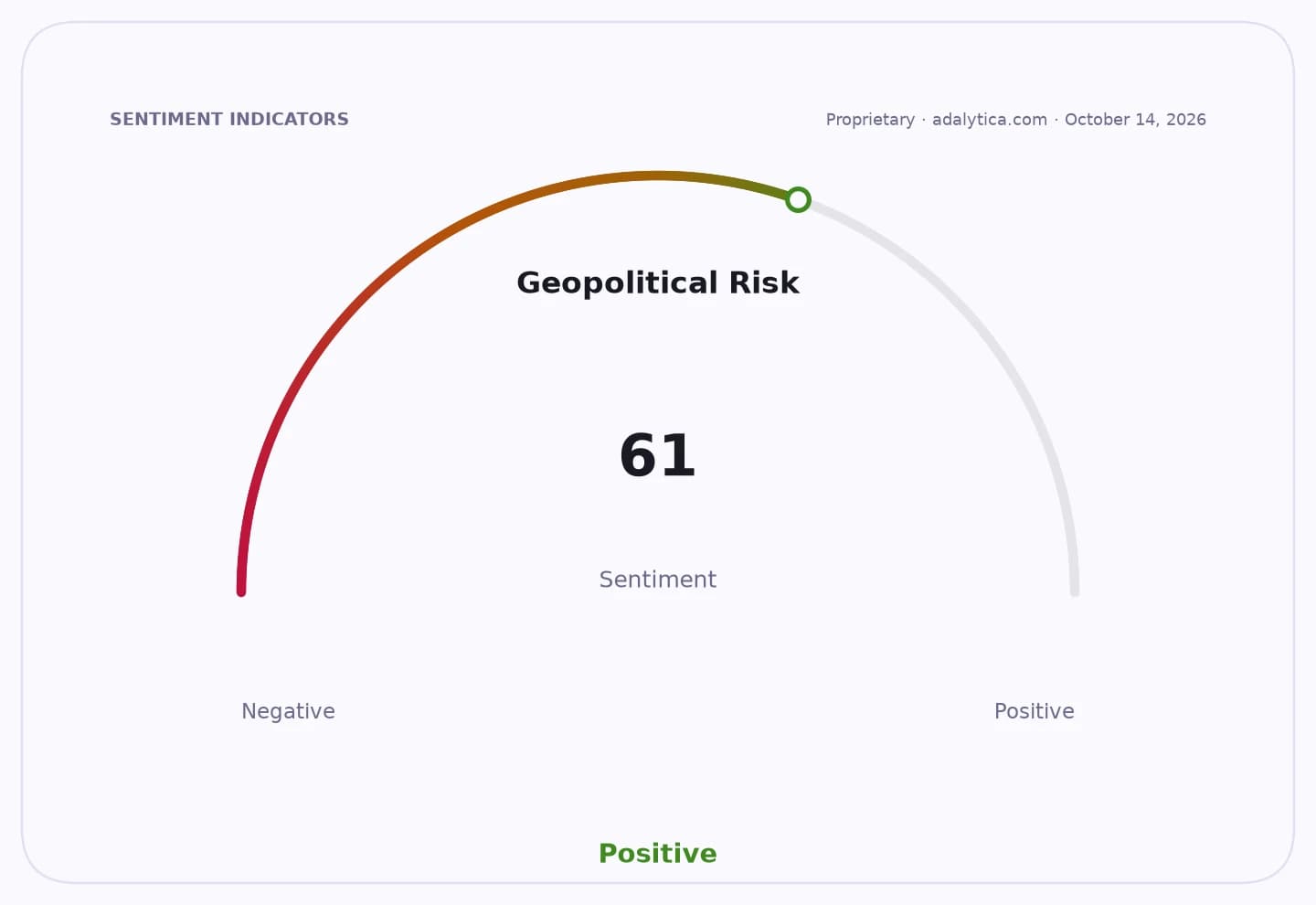
Sentiment IndicatorsⓘProprietary · adalytica.com · October 12, 2026
This is a snapshot — live sentiment, awareness and momentum for 130+ markets update continuously in the dashboard.Open AlphaPulse
The most immediate setback came when India’s waiver for operating the Shahid Beheshti terminal lapsed on April 26 and Washington did not extend it. New Delhi had already used the exemption to move humanitarian aid into Afghanistan, but it was forced to pull out of the terminal to avoid sanctions exposure. With the Trump administration also pressing India on Russian oil purchases, the episode underscored how Washington can use financial and trade pressure to shape India’s room for manoeuvre across multiple theatres at once.
The operational stakes are rising rather than fading. Iran says the Chabahar-Iranshahr-Zahedan rail line, a 630-km corridor designed to carry 7.7 million tonnes of freight and 2.2 million passengers a year, should be finished by January. If completed and commercially usable, it would improve the port’s economics and make the route far more relevant for regional trade flows. But without a sanctions carve-out, India cannot fully use the infrastructure it helped build, turning a potentially transformative asset into stranded optionality.
The broader geopolitical backdrop is even less forgiving. Conflict between Iran, the US and Israel has made the Strait of Hormuz a chokepoint for global trade, increasing the appeal of Chabahar as Iran’s only oceanic port on the Gulf of Oman. At the same time, Pakistan remains unwilling to grant India transit rights, while China’s backing of Gwadar gives New Delhi another reason to preserve a competing foothold on the Arabian Sea. Chabahar is also meant to sit at the maritime end of the International North-South Transport Corridor, a larger India-Iran-Russia project that has been repeatedly slowed by the war in Ukraine and deteriorating Russia-Europe ties.
For investors, the key question is whether strategic patience can outlast sanctions cycles. Bull case: India preserves influence in a region where transit politics are fluid, the port and rail link eventually become usable, and the corridor gains value if tensions ease. Bear case: sanctions stay in place, the project remains underutilised, and capital tied to Chabahar delivers geopolitical symbolism but limited economic return. For now, the story is that India’s regional ambitions remain hostage to forces largely outside its control.
| Entity | Gains | Losses |
|---|---|---|
| India | ▲strategic access option | ▼port operating rights |
| Iran | ▲regional trade potential | ▼sanctions relief |
| Pakistan | ▲transit leverage | ▼India bypass route |
| US sanctions regime | ▲coercive leverage | ▼India-Iran trade flow |