Bitcoin is trading near $65,530, but the bigger market catalyst is India’s push toward a more balanced crypto rulebook that could determine whether digital assets remain a policy headache or become a mainstream financial product.
India Crypto Rules Could Boost Adoption
The case for a clearer framework is getting stronger as crypto markets mature and tokenized assets move closer to traditional finance. OKX this week launched a unified tokenized stocks product that puts U.S. equities and cryptocurrencies in the same order book, underscoring how trading infrastructure is converging even as regulators slowly adapt.
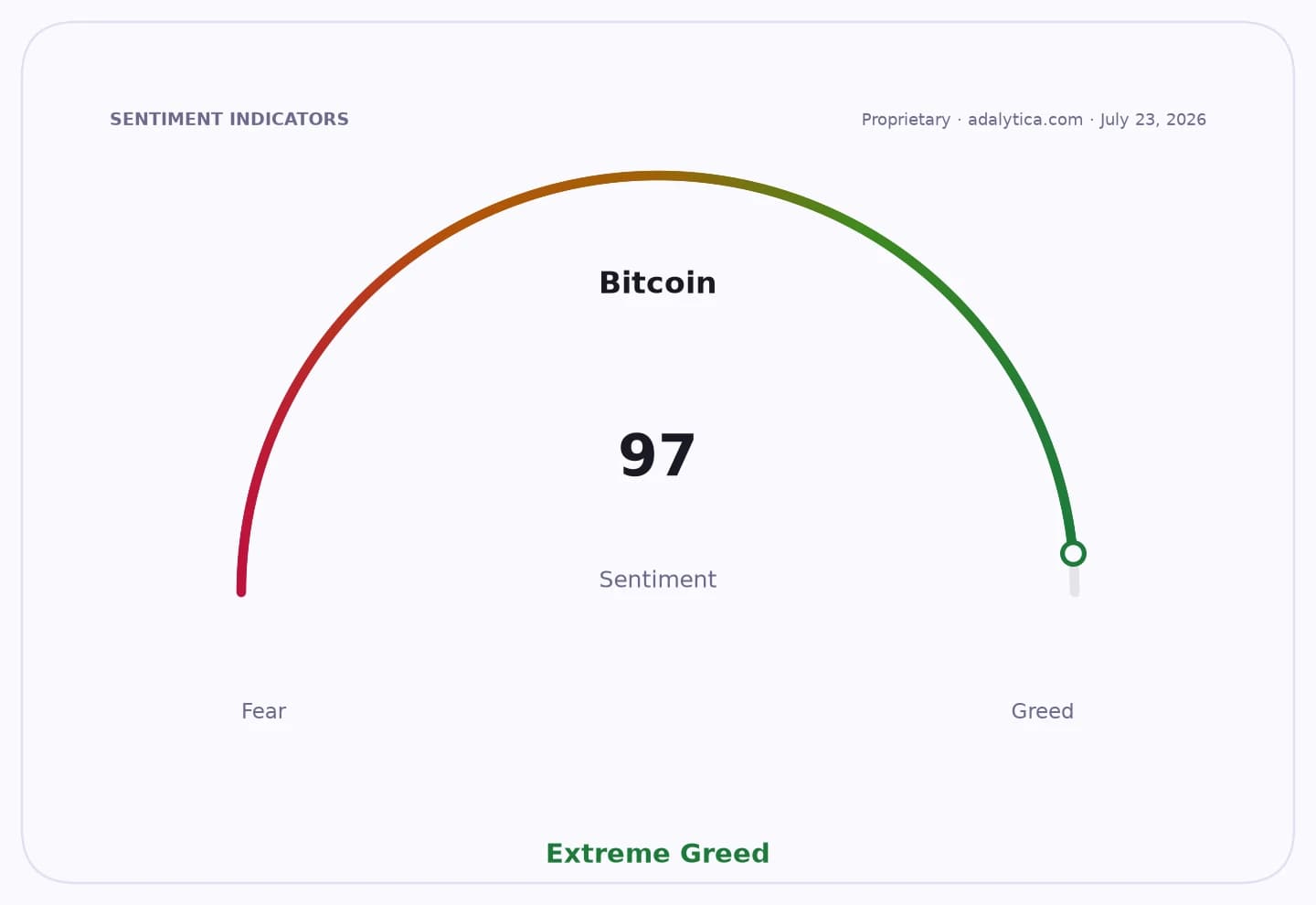
Sentiment IndicatorsⓘProprietary · adalytica.com · July 23, 2026
This is a snapshot — live sentiment, awareness and momentum for 130+ markets update continuously in the dashboard.Open AlphaPulse
For investors, India matters because it is one of the world’s largest potential retail crypto markets and a major source of demand for exchanges, custody, payment rails and tokenization products. A rules-based regime could unlock institutional participation, improve liquidity and reduce the regulatory overhang that has kept capital on the sidelines.
The stakes are visible in market behavior. Bitcoin’s technical backdrop remains constructive, with the price still above its 50-day moving average of $63,110, while the RSI reading of 61 suggests momentum has cooled but not broken. At the same time, Adalytica’s Bitcoin Fear & Greed Index shows “Extreme Greed” at 97, even as awareness sits at “Extreme Fear” at 6, a split that points to high enthusiasm but still-limited broad participation.
That mix matters for exchanges such as Coinbase and bitcoin-treasury buyers such as Strategy, both of which are effectively levered to crypto adoption and liquidity. Coinbase shares closed at $166.12 on July 22, while Strategy ended at $100.01, reflecting a market that is still pricing the sector on policy visibility, bitcoin volatility and the next wave of trading activity.
India’s policy direction also has broader macro implications. A balanced framework would help tax collection, consumer protection and anti-money-laundering oversight while avoiding a blanket crackdown that drives activity offshore. For global markets, that would be another sign that crypto is shifting from speculative fringe to regulated infrastructure.
The key risk is that policymakers stop short of clarity or impose rules that are too restrictive for exchanges, stablecoins and tokenized assets to scale. If India leans toward a pragmatic regime, the next leg of crypto adoption could come not from hype, but from regulated market access.
| Entity | Gains | Losses |
|---|---|---|
| India regulators | ▲Oversight and tax visibility | ▼Policy ambiguity if delayed |
| Crypto exchanges | ▲New users and trading volume | ▼Offshore activity if rules stay harsh |
| Bitcoin bulls | ▲Adoption tailwind | ▼Regulatory shock risk |
| Strategy and Coinbase | ▲Higher liquidity and product demand | ▼Slower growth if India stays closed |