Debt mutual funds in India are tilting more heavily toward certificates of deposit than government securities, a sign that managers are still finding better value in bank paper as interest rates stay elevated and the curve remains hard to ignore.
India debt funds tilt toward CDs as rates stay elevated
That rotation matters because fixed-income portfolios are not just chasing yield; they are trying to balance carry, liquidity and duration risk at a time when the Reserve Bank of India’s easing cycle has yet to fully pull bond yields lower. With the policy rate forecast at 3.625% for August and the U.S. 10-year Treasury still around 4.65%, global rate conditions remain restrictive enough to keep investors selective about adding duration.
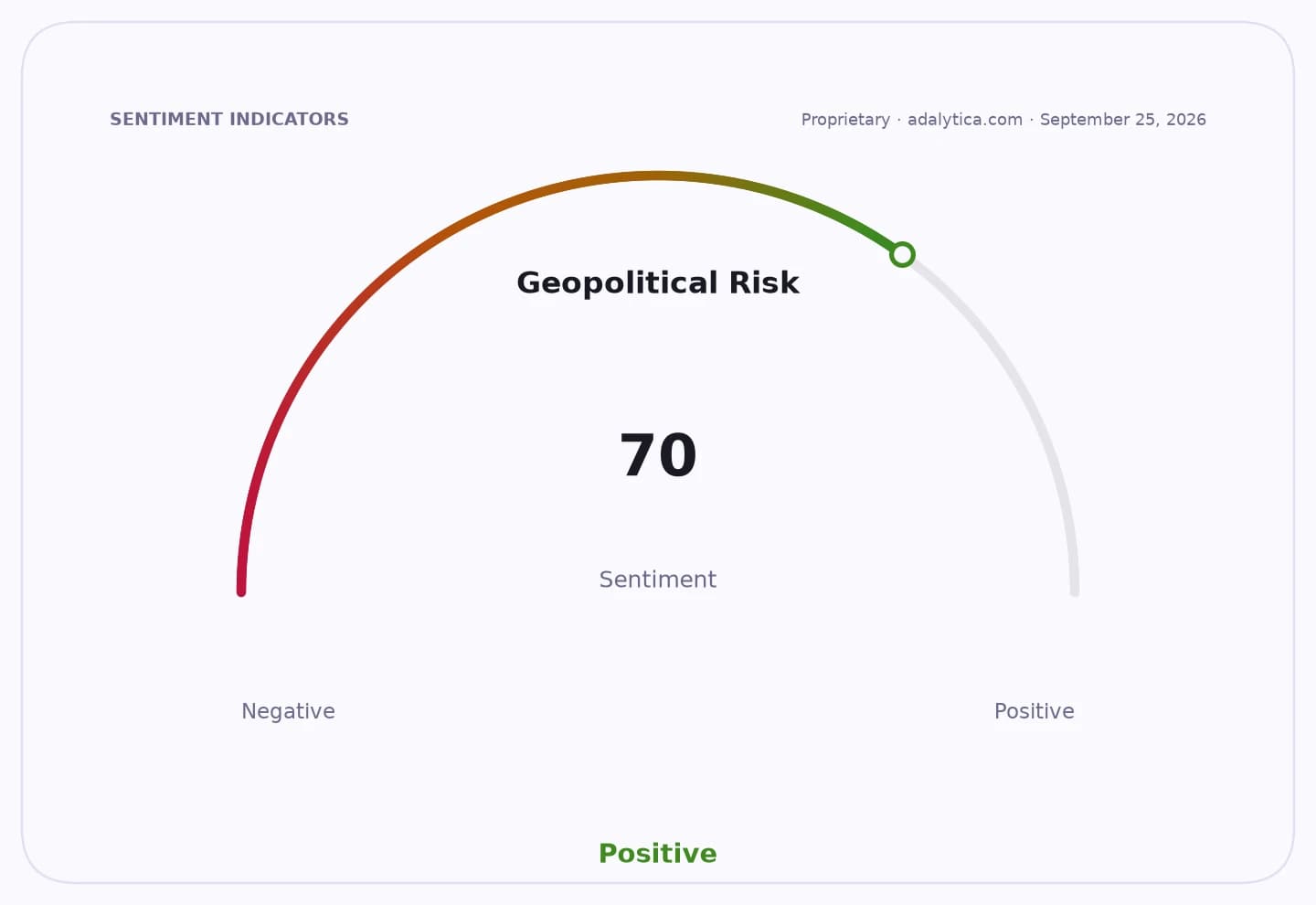
Sentiment IndicatorsⓘProprietary · adalytica.com · August 11, 2026
This is a snapshot — live sentiment, awareness and momentum for 130+ markets update continuously in the dashboard.Open AlphaPulse
The shift toward CDs also reflects the market’s preference for shorter, higher-carry instruments when the next leg in government bond returns is uncertain. CDs typically offer a spread over comparable sovereign paper, which can be attractive for debt funds seeking to defend returns without taking on as much interest-rate risk. That helps explain why portfolio managers have been reallocating ahead of g-secs even as yields on benchmark government bonds remain relatively elevated.
For investors, the trend is a reminder that the debt-fund industry is still operating in a yield-first environment rather than a capital-gain one. A stronger appetite for CDs usually benefits banks and other issuers looking to fund themselves in money markets, while it can weigh on demand for longer-dated government bonds and keep sovereign borrowing costs from easing as quickly as policymakers might want.
The backdrop is still fragile. Credit spreads in India’s high-yield market have been narrowing, but not enough to make lower-rated risk broadly compelling, and that keeps bank-issued paper a natural parking place for institutional cash. At the same time, equity markets are sitting in what Adalytica’s trade signals classify as “Extreme Greed” for the S&P 500, and the dollar is also flashing “Extreme Greed,” underscoring how global risk appetite and rate expectations can shift quickly and affect allocation choices across asset classes.
The key question for the coming weeks is whether a sustained drop in inflation or a clearer signal from central banks can revive demand for government securities and reverse the CD-heavy positioning. If yields on g-secs start to compress, debt funds could rotate back into duration. If not, CDs are likely to keep absorbing a larger share of portfolios, at the expense of sovereign bonds and longer-duration bets.
| Entity | Gains | Losses |
|---|---|---|
| Banks issuing CDs | ▲Cheaper funding access | ▼— |
| Debt mutual funds | ▲Higher carry, lower duration risk | ▼Potentially lower upside from g-sec rallies |
| Government bond market | ▲— | ▼Weaker portfolio demand |
| Long-duration investors | ▲— | ▼Marks-to-market volatility risk |