The BJP’s claim that the INDIA bloc lacks foundation matters because political cohesion, not just electioneering, is what determines whether India’s growth, security and capital-allocation agenda stays on track.
India ETF Dips Viewed as Buyable
For investors, the issue is bigger than parliamentary sparring. A splintered opposition lowers the odds of policy reversals on infrastructure spending, border security and strategic partnerships at a time when India is trying to position itself as the main alternative manufacturing and investment hub in Asia. That keeps the earnings case intact for domestic banks, defense suppliers, infrastructure names and market-linked India funds.
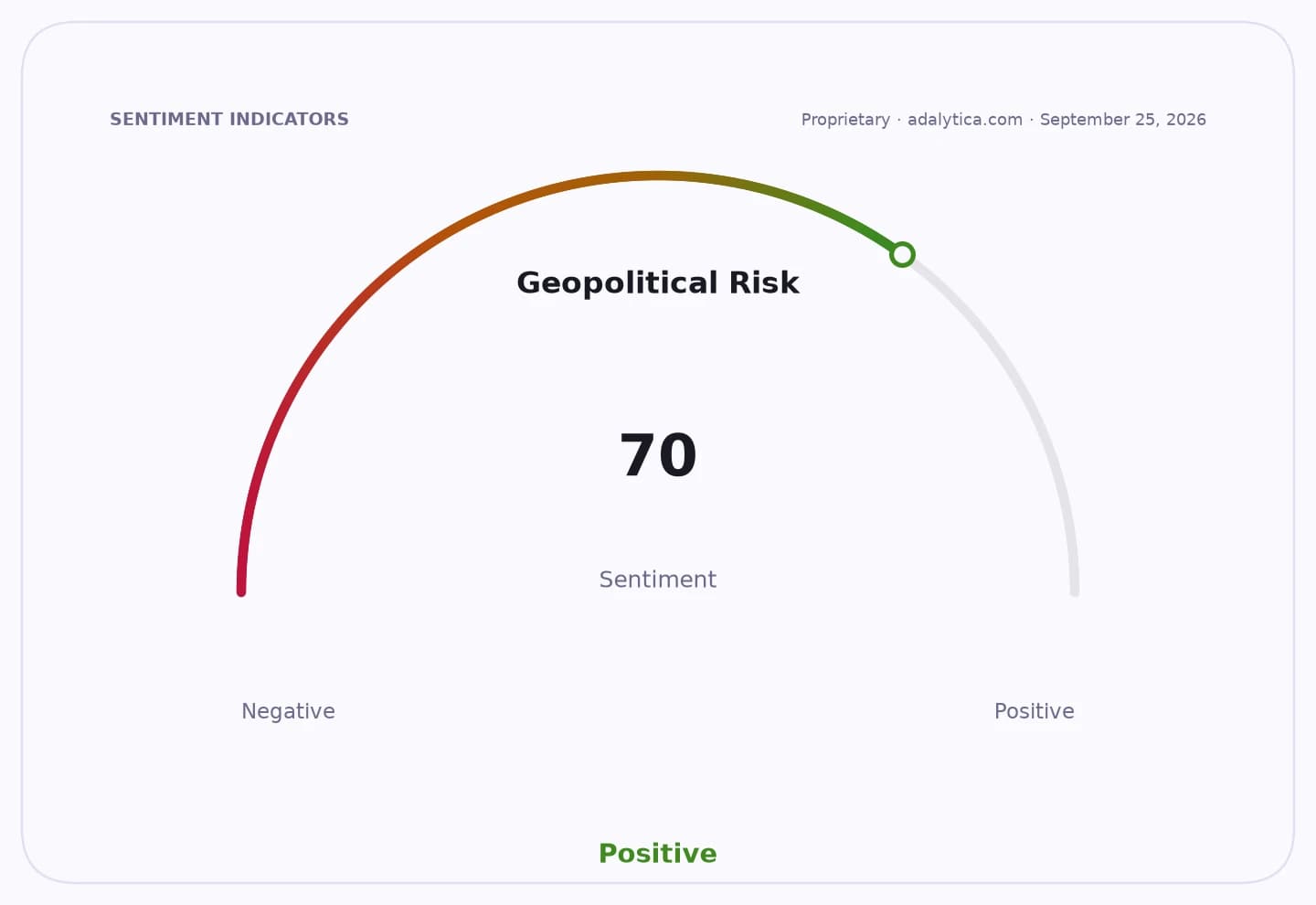
Sentiment IndicatorsⓘProprietary · adalytica.com · July 16, 2026
This is a snapshot — live sentiment, awareness and momentum for 130+ markets update continuously in the dashboard.Open AlphaPulse
The market has already been signaling that India remains a relative winner even through bouts of volatility. The iShares India ETF, INDA, has held near $48.69, while staying just below its 200-day moving average around $51.20, suggesting a consolidating but not broken trend. The Nifty-linked EPI fund is trading around $42.19, also below its long-term average, even as the broader setup continues to favor companies tied to government capex and formalization. ICICI Bank’s U.S.-listed shares, IBN, have recovered to $29.57 from March lows, reflecting faith that credit demand and asset quality can hold up if policy continuity persists.
That continuity is the real prize. India’s industrial production forecast points to modest expansion, while U.S. rate expectations and a softer dollar backdrop keep global capital searching for durable growth stories. In that environment, India’s relative political stability is a competitive advantage, especially as New Delhi pushes tighter border controls, deeper regional security coordination and more strategic economic diplomacy.
The controversy over the INDIA bloc also feeds directly into sentiment around foreign inflows. A coalition that looks directionless makes it harder for the opposition to credibly argue against the government’s growth-and-security model, which in turn reinforces the “Modi premium” in equities and policy expectations. If that narrative holds, the beneficiaries are not just the ruling party’s political fortunes but the companies leveraged to public spending, logistics, defense and financial intermediation.
I believe the market is underestimating how much political fragmentation in the opposition can extend India’s policy runway. That is why dips in India ETFs and high-quality lenders should be treated as accumulation opportunities, not warnings.
| Entity | Gains | Losses |
|---|---|---|
| BJP / Modi government | ▲Policy runway | ▼Opposition pressure |
| India ETFs and domestic reform plays | ▲Stability premium | ▼Reversal risk |
| Banks and capex beneficiaries | ▲Credit and spending tailwind | ▼Political uncertainty |
| INDIA bloc | ▲Short-term headlines | ▼Credibility and cohesion |