US Vice President JD Vance’s call with Prime Minister Narendra Modi underscores Washington’s push to strengthen ties with India at a time when tariffs, export controls and defense supply chains remain central to the relationship.
India ETFs INDA, EPI rise as Vance-Modi call highlights ties

For investors, the significance is less about the call itself than what it suggests for trade, technology transfer and security cooperation between the world’s biggest economy and one of its fastest-growing ones. A closer alignment could ease friction in sectors ranging from semiconductors and aerospace to defense manufacturing, where companies on both sides are exposed to policy shifts and cross-border sourcing risks.
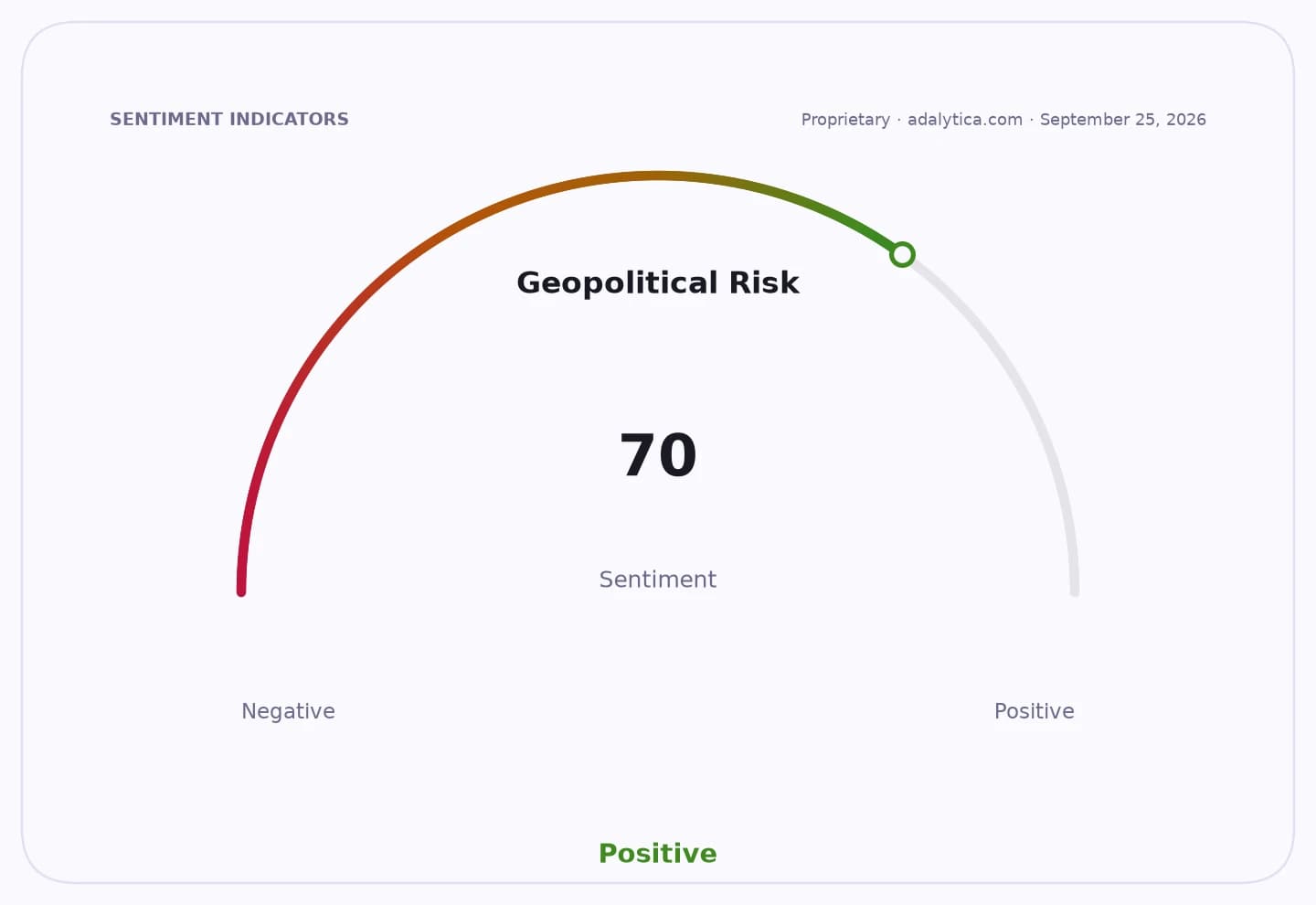
Sentiment IndicatorsⓘProprietary · adalytica.com · August 9, 2026
This is a snapshot — live sentiment, awareness and momentum for 130+ markets update continuously in the dashboard.Open AlphaPulse
India’s scale matters here. The country’s economy has expanded to about 32,475 billion in the latest data point, up 1.9% from the prior reading and projected to reach 32,893.4 billion in the next quarter, reinforcing why U.S. officials are treating New Delhi as a strategic and commercial priority.
The backdrop is also market-relevant. The iShares MSCI India ETF, INDA, has climbed to $50.37, while the WisdomTree India Earnings Fund, EPI, has risen to $43.68, both trading above their 50-day moving averages. Their recent strength suggests investors are still willing to pay for India exposure even as the 10-year U.S. Treasury yield sits near 4.69%, keeping global financing conditions tight.
The strategic angle cuts across defense contractors and industrial suppliers. Recent company filings from Lockheed Martin, Boeing, RTX and Qualcomm all flag tariffs, sanctions, export restrictions and supply constraints as material risks, showing how a more cooperative U.S.-India policy could support sentiment for firms tied to aerospace, chips and defense hardware.
Adalytica’s U.S. dollar trade signals also show extreme greed, a reminder that currency and risk appetite are already stretched as markets position for policy developments. Any concrete follow-through from the Vance-Modi discussion — whether on defense procurement, technology sharing or trade facilitation — would be watched closely for its impact on Indian assets and multinational industrial names.
| Entity | Gains | Losses |
|---|---|---|
| India | ▲Stronger U.S. strategic backing | ▼Less room for policy friction |
| U.S. defense contractors | ▲More export and procurement opportunities | ▼More competition from local partners |
| Indian markets/ETFs | ▲Better capital inflows and sentiment | ▼Higher sensitivity to deal delays |
| Tariff/export-control hawks | ▲Less leverage over policy | ▼Easing of trade constraints |