India’s push to lock in an investment protection agreement with the European Union is moving toward the finish line, and that matters because it could unlock a larger, more durable wave of foreign capital into the world’s fastest-growing major economy.
India-EU pact could boost capital inflows
For investors, this is bigger than diplomacy. A credible legal framework for protecting cross-border investment can lower the risk premium on India-bound capital at a time when global portfolios are actively rethinking supply chains, China exposure and dollar volatility. The market underestimates how quickly trade policy can turn into capex policy: when multinationals believe their assets, contracts and dispute rights are better protected, the next phase is not just exports but factories, logistics, energy infrastructure and technology transfer.
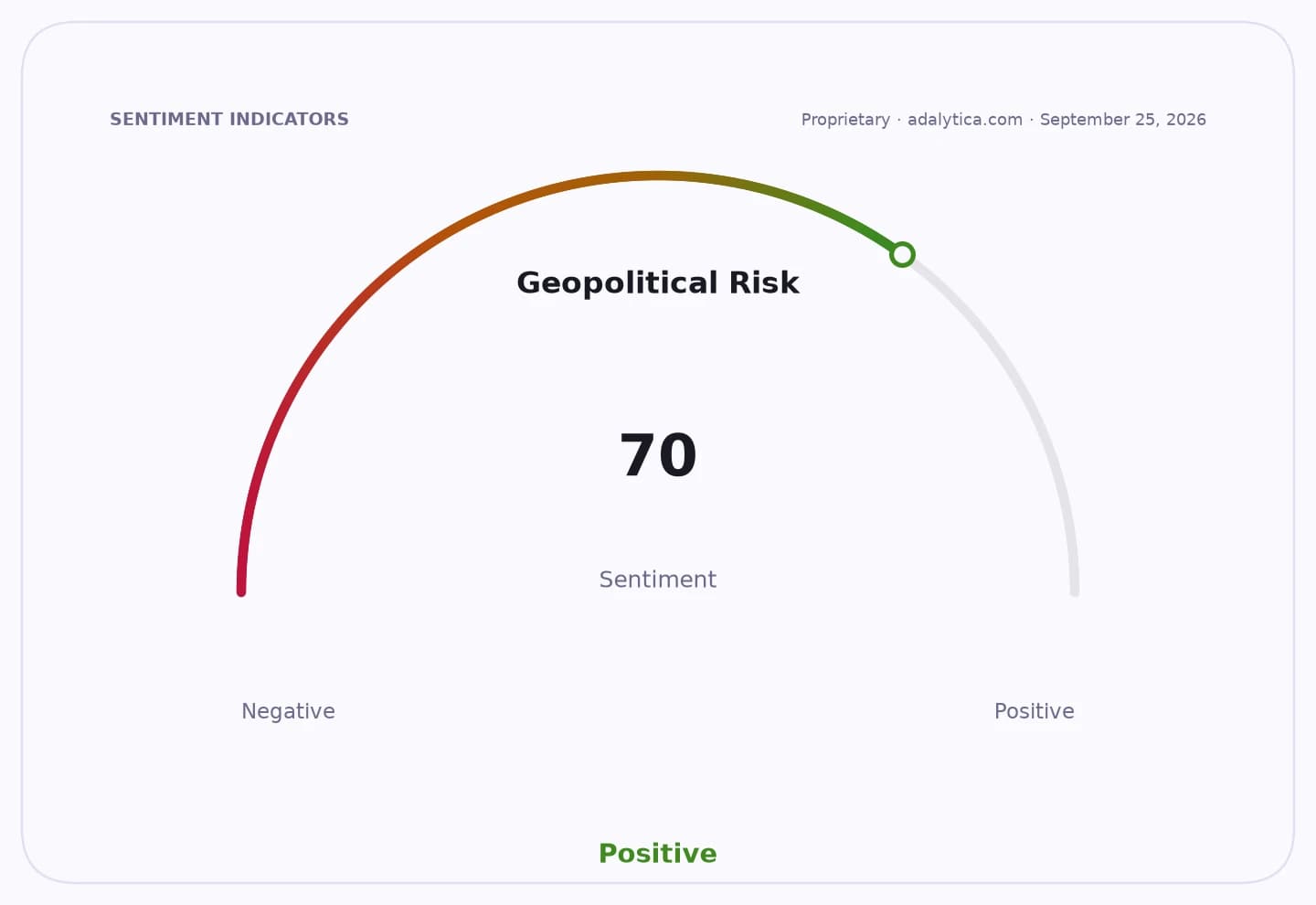
Sentiment IndicatorsⓘProprietary · adalytica.com · July 15, 2026
This is a snapshot — live sentiment, awareness and momentum for 130+ markets update continuously in the dashboard.Open AlphaPulse

That is the real prize. India is already trying to convert geopolitical realignment into manufacturing share gains, and the EU is one of the richest and most stable pools of long-duration capital available. If the agreement is signed soon, it would complement New Delhi’s recent trade momentum, including the India-UK pact that has already come into force, and could make Europe a more willing partner in sectors where India needs scale: semiconductors, clean energy, autos, defense supply chains and digital infrastructure.
The timing also helps explain the market setup. India-focused assets have been choppy, with the India ETF INDA still trading below its 200-day moving average even after a recent rebound, suggesting investors have not fully priced a policy-led rerating. Technical readings show the ETF stabilizing around its 50-day average, while broader risk appetite has been weakened by extreme fear in the US dollar and growing unease around China’s growth outlook. That combination is important: when capital looks for the next structural winner outside the US and away from China, India is one of the few markets with scale, domestic demand and policy continuity.
The same thesis extends across Europe. German equities as reflected by EWG have steadied above key long-term averages, but the real upside from an India-EU investment framework is not in a single index move. It is in the second-order effects: European industrials selling capital goods into India, Indian exporters gaining easier access to one of the world’s highest-value consumer markets, and both sides benefiting from more predictable rules on investment.
France, as shown by EWQ, sits in the same corridor of opportunity. A deeper India-EU relationship would reinforce European exposure to India’s buildout while giving Indian firms a firmer platform to sell into advanced markets. That is why the story matters for allocators: it is not just a trade deal, it is a capital-allocation signal.
Our thesis is straightforward. The market is still treating India’s external-policy progress as incremental. It is not. An India-EU investment protection pact would be another step in a broader re-rating of India as a destination for industrial capital, and the companies that supply the picks and shovels of that transition are the ones likely to benefit first. Think infrastructure, power equipment, industrial automation, ports, logistics and financial rails, along with ETFs and multinationals levered to India capex.
If Goyal is right and the agreement lands soon, the next catalyst will be flows, not headlines. That is when investors who positioned early should benefit most.
| Entity | Gains | Losses |
|---|---|---|
| India | ▲More FDI, lower risk premium | ▼Slower reform drag |
| EU investors | ▲Better access, legal protection | ▼Higher uncertainty without deal |
| India-focused ETFs | ▲Valuation rerating potential | ▼Sideways if talks stall |
| China-linked competitors | ▲— | ▼Share shift to India |