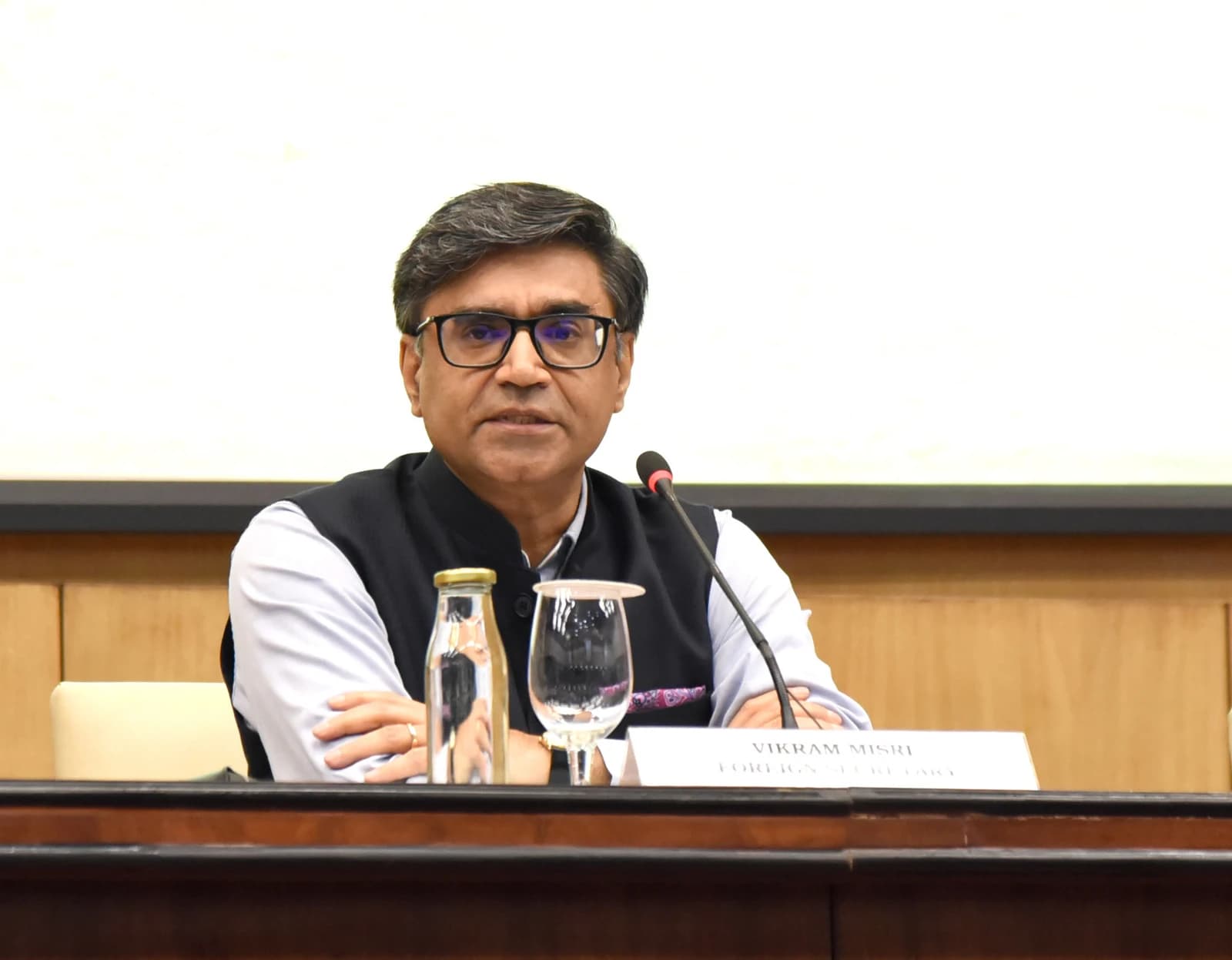
India used its latest foreign ministry briefing to draw a hard boundary around its diplomacy, saying it would not compromise on national security or economic interests even as it deepens ties with the Quad, manages tensions with Washington and preserves working relations with neighbours such as Nepal and Bangladesh.
India foreign ministry sets diplomatic red lines
That message matters because it captures the balancing act now defining Indian foreign policy: expand strategic partnerships with the US and its Indo-Pacific allies without being seen to submit to outside pressure on trade, human rights, sanctions or regional disputes. For investors, the stance is relevant because it affects the policy backdrop for India’s trade flows, defence cooperation, maritime security and capital-market risk premium at a time when global supply chains are being redrawn and geopolitical fragmentation is rising.
Sentiment Indicators
The clearest economic signal from the briefing was not the rhetoric, but the continuing effort to pair diplomacy with trade and investment gains. New Delhi said the India-UK free trade agreement is intended to open opportunities for trade, investment and exports, with benefits for farmers, youth, exporters and small and mid-sized firms. That fits India’s broader push to convert geopolitics into market access, and it underscores why foreign policy is now closely tied to growth strategy.
The Quad remained central to that approach. India said the Manila summit produced concrete cooperation on artificial intelligence, emerging technologies, maritime surveillance, cyber security and regional cable connectivity, while Prime Minister Narendra Modi’s meeting with the Philippine president covered defence, security, the economy and space. For Indian equities and regional assets, such cooperation supports the case for deeper defence procurement, digital infrastructure investment and a more secure shipping environment in the Indo-Pacific.
At the same time, the briefing showed India resisting external pressure on politically sensitive issues. New Delhi dismissed the US Commission on International Religious Freedom as biased and politically driven, and rejected a US court case against the national security adviser as baseless. That suggests India will continue to push back when it believes Washington crosses from partnership into interference, even as bilateral ties remain strategically important. The bear case for investors is that such friction can complicate trade talks and temper diplomatic goodwill; the bull case is that India is signalling policy independence, which domestic markets often reward.
Neighbourhood diplomacy also stayed firmly in view. India said Nepal’s prime minister will make a state visit on Nov. 22-23, with talks expected to cover development, economic partnership and cooperation. It also reiterated that relations with Bangladesh will remain constructive, while protecting Indian interests on cross-border river disputes through the existing Joint River Commission. The reference to the Indus Waters Treaty indicated no change in India’s position there either.
On maritime security, New Delhi condemned attacks on commercial ships and Indian sailors and called for dialogue to restore peace and preserve freedom of navigation. That is economically important beyond the immediate crisis: sea lanes are central to India’s energy imports, export competitiveness and inflation outlook, and any erosion in maritime security carries costs for insurers, shippers and regional trade.
The briefing also touched on humanitarian and consular issues, including concern for former Indian naval commander Purnendu Tiwari in Qatar and support for the safe, durable return of Rohingya refugees to Myanmar. Those points reinforce India’s effort to present itself as a status-quo regional power that mixes hard security, humanitarian outreach and economic diplomacy.
For markets, the broader read-through is that India is not softening its posture to fit any single bloc, including the US-led camp. It is trying to extract commercial and strategic gains from all sides while preserving maximum room to manoeuvre. That should support the long-term investment case for India as a diversified emerging-market exposure, but it also leaves the country exposed to periodic diplomatic volatility whenever trade, security or human-rights agendas collide.
| Entity | Gains | Losses |
|---|---|---|
| India | ▲Strategic autonomy | ▼Diplomatic friction |
| Quad partners | ▲Deeper security ties | ▼Less policy alignment |
| UK exporters and investors | ▲FTA access | ▼Slower market entry for rivals |
| Bangladesh and Nepal | ▲Continued engagement | ▼Limited leverage on disputes |