India’s biggest economic challenge may not be a shortage of graduates, but a shortage of graduates employers actually need.
India graduate unemployment and employability gap

That is the central warning running through the country’s employability debate: millions of young Indians are finishing college, often at public or private expense, only to discover that a degree no longer buys access to stable work. For investors, that matters because a weak transition from education to employment does not just strain household finances — it limits consumption, suppresses productivity and threatens to turn India’s prized demographic dividend into a drag on growth.
Sentiment Indicators
Consumer Confidence
The scale of the mismatch is hard to ignore. NITI Aayog says graduate unemployment is 13%, well above India’s overall unemployment rate of 3.2%. Even more stark, only 8.25% of graduates are working in jobs that match their qualifications. At the same time, more than two crore of India’s 3.4 crore undergraduates are enrolled in just three broad streams — B.A., B.Sc. and B.Com — many of which are no longer linked to clear labor-market demand.
That gap is more than a social problem. It is an efficiency problem for the economy. India has 65% of its population under 35, yet the latest labour data still show unemployment of 14.8% among 18- to 29-year-olds, while 8.7 crore people aged 15 to 29 are neither in education, employment nor training. In other words, the country is producing large numbers of job seekers faster than it is producing jobs that fit them.
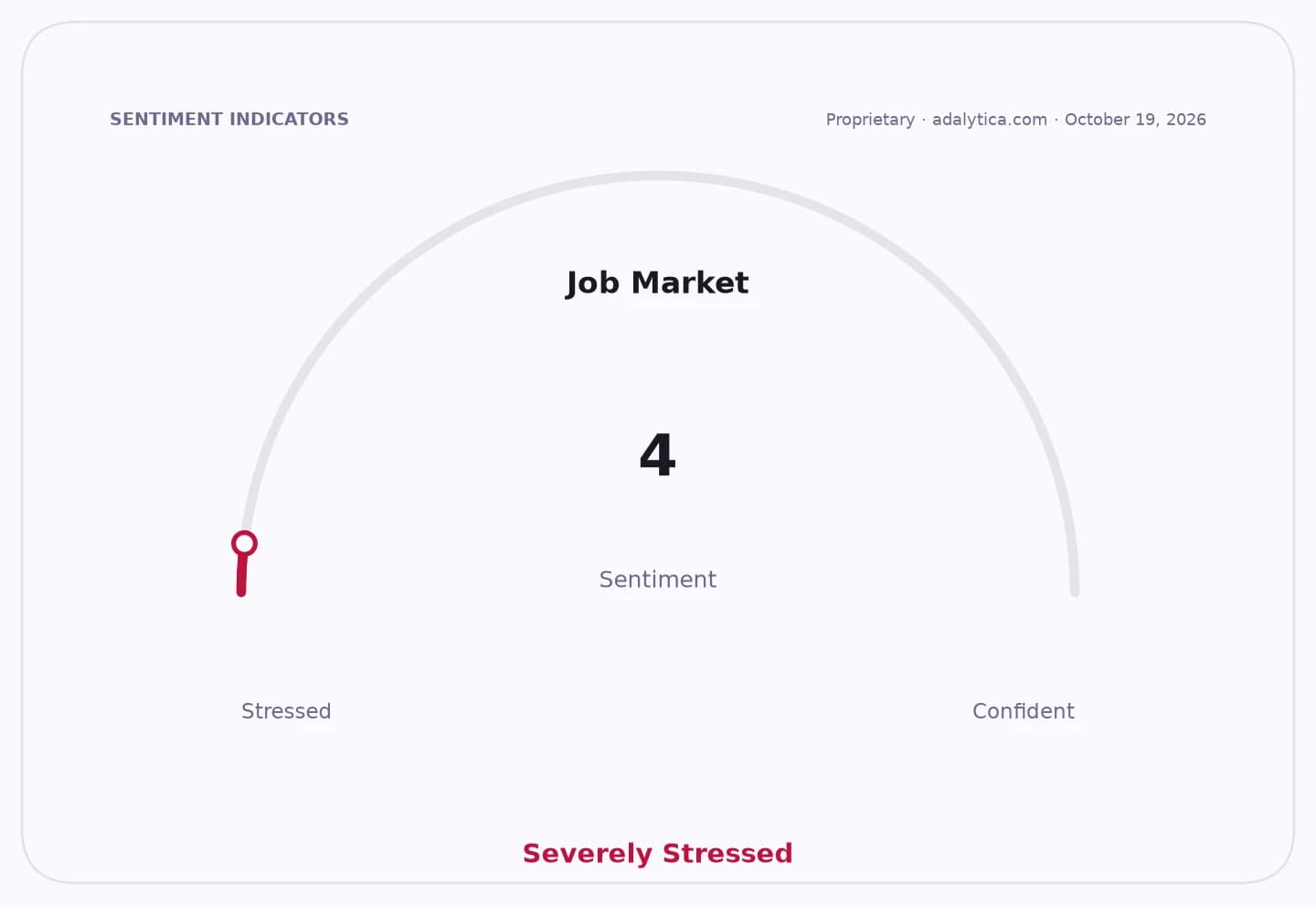
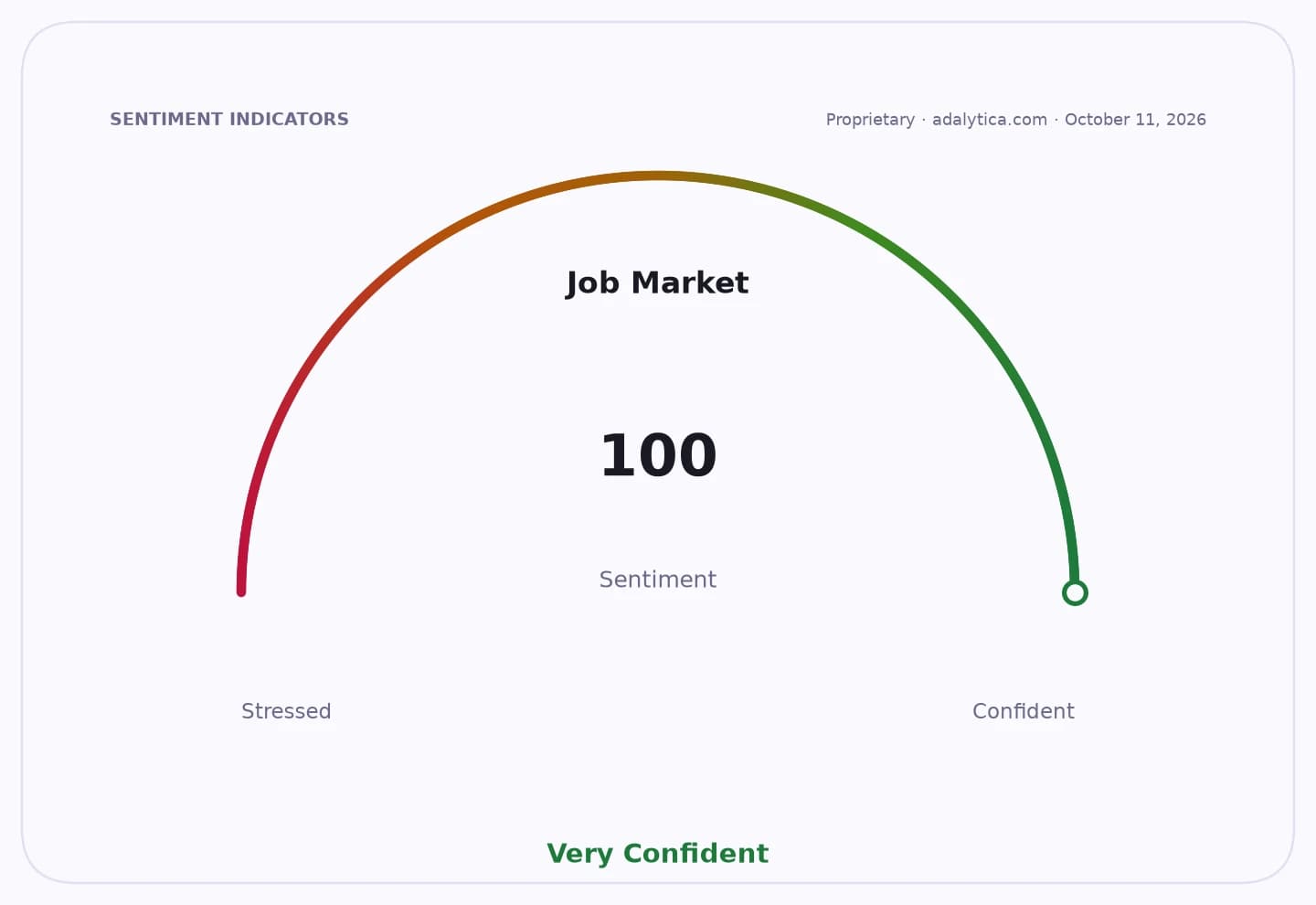
Job Market
The old model that once made a degree a reliable ticket to the middle class has broken down. For decades, government hiring, then the services boom and later the outsourcing and IT expansions gave graduates a clear path into white-collar work. The economy is still adding jobs — India’s service sector now employs about 19 crore people — but the quality and accessibility of those jobs are increasingly uneven. Entry-level roles are being squeezed by automation, tighter hiring and rising employer standards.
That is where artificial intelligence becomes an investor issue, not just an education issue. NITI Aayog estimates AI could automate 40% to 50% of white-collar roles in services, while demand for AI and big-data specialists could rise by more than 60%. Customer service, BPO, banking support and routine office jobs — the very sectors that once absorbed large numbers of graduates — are exactly where the pressure is likely to be strongest. If companies can do more with fewer people, wage growth and broad-based job creation will both slow.
The market implications go beyond payrolls. A workforce that cannot convert schooling into earnings is less able to support durable consumer demand, from discretionary spending to housing and durables. It also helps explain why investors keep watching whether India can build a manufacturing base large enough to absorb millions of workers who will not find a place in software, finance or formal office jobs. Without that shift, the economy risks growing in output but not in employment quality.
| Entity | Gains | Losses |
|---|---|---|
| Skilled workers | ▲Better wages and mobility | ▼Less if training lags |
| Employers | ▲Larger talent pool with practical skills | ▼Higher training burdens |
| Indian economy | ▲Higher productivity and consumption | ▼If unemployment stays elevated |
| Unemployable graduates | ▲More relevance in labor market | ▼Degree premium keeps eroding |