India’s Kharif planting has slipped 4.7% from a year earlier to 787 lakh hectares, a setback that matters because the monsoon crop drives a large share of the country’s food supply, farm incomes and rural demand.
India Kharif Sowing Slips, Food Inflation Risk Rises
The decline, led by lower acreage in paddy, pulses and cotton, suggests the weak start to the monsoon is translating into a real production risk rather than a temporary weather scare. That raises the odds of tighter supplies later in the season, especially if the acreage shortfall is not fully recovered in the remaining sowing window. For policymakers, the issue is not just crop volume but inflation: food prices remain India’s most politically sensitive macro variable, and a smaller Kharif base can feed through to consumer inflation if yields or planting mix disappoint.
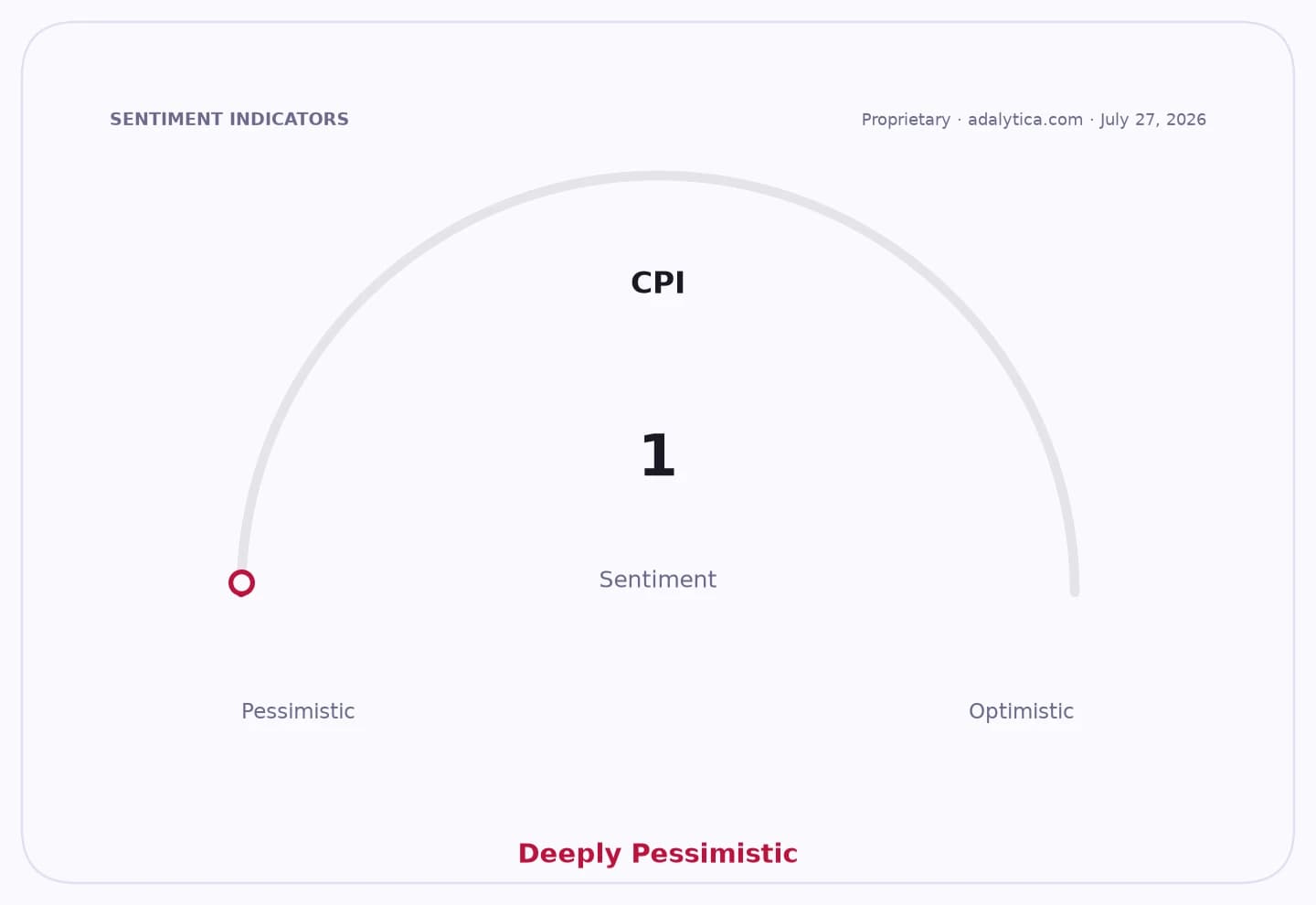
Sentiment IndicatorsⓘProprietary · adalytica.com · July 27, 2026
This is a snapshot — live sentiment, awareness and momentum for 130+ markets update continuously in the dashboard.Open AlphaPulse
The pressure point is water, not just rain. A monsoon deficit of around 32% has left irrigation infrastructure and reservoir management carrying more of the load, with farmers in parts of Andhra Pradesh and the Krishna delta already being advised to curb or skip paddy cultivation because of water shortages. That matters economically because paddy is the backbone of staple food supply, while pulses are critical for protein inflation, and cotton acreage affects the textile and export chain. Even if reservoir levels have so far softened the blow, the uneven recovery across states means the season remains vulnerable to further rainfall volatility.
There are also second-round effects for agricultural inputs and rural balance sheets. Lower sowing can temper near-term demand for seeds, fertiliser and crop chemicals, while a weaker output outlook may keep support prices and procurement policies in focus later in the year. At the same time, farmers facing delayed planting or crop substitution may shift to less water-intensive crops, changing the commodity mix rather than simply reducing total output.
Markets are already treating the crop outlook as more than a local weather story. The U.S.-listed soybean ETF has rallied sharply in recent sessions, while wheat and corn funds have also firmed, underscoring how weather-led supply concerns in major producing regions can ripple through global grain pricing. In India, the greater risk is that a thinner Kharif harvest combines with sticky food prices to complicate the Reserve Bank of India’s inflation path and keep pressure on policymakers to balance growth support against price stability.
The key question now is whether the monsoon improves enough to close the acreage gap before sowing deadlines pass. If rains recover and irrigation holds, the market impact may be limited to a mixed crop cycle. If not, the Kharif shortfall could turn into a broader food-inflation problem with implications for consumer spending, farm incomes and agricultural trade.
| Entity | Gains | Losses |
|---|---|---|
| Food inflation bulls | ▲Higher price support | ▼Consumers and policymakers |
| Water-saving crops | ▲Better relative demand | ▼Paddy growers |
| Fertiliser and seed suppliers | ▲Input demand if replanting occurs | ▼If acreage stays weak |
| Rice, pulse and cotton buyers | ▲Lower immediate procurement risk | ▼If supplies tighten later |