India’s office real estate has emerged as the dominant draw for property investors in the first half of 2026, accounting for more than 40% of total inflows, according to a report, underscoring how commercial space in the country is absorbing capital at a pace that outstrips other property segments.
India office real estate drew 40% of H1 2026 inflows
The shift matters because office assets are typically the first place global investors look when they want scale, rental visibility and exposure to India’s corporate expansion. A larger share of inflows into offices suggests capital is favoring income-producing commercial assets over riskier development bets, a sign that investors are still willing to commit money to India even as they remain selective about which part of the market gets funded.
For landlords, that is a constructive backdrop for pricing power, refinancing and new acquisitions. For developers and real estate investment trusts, it supports valuations and may improve access to equity and debt financing, especially if leasing demand stays firm from technology, financial services and outsourcing tenants that continue to anchor India’s commercial property market.
The report also points to a broader reallocation inside Indian real estate, where office buildings are increasingly competing with residential, retail and warehousing assets for institutional money. That preference often follows expectations for stable cash flows, better corporate governance and stronger dollar-linked returns when overseas investors are involved.
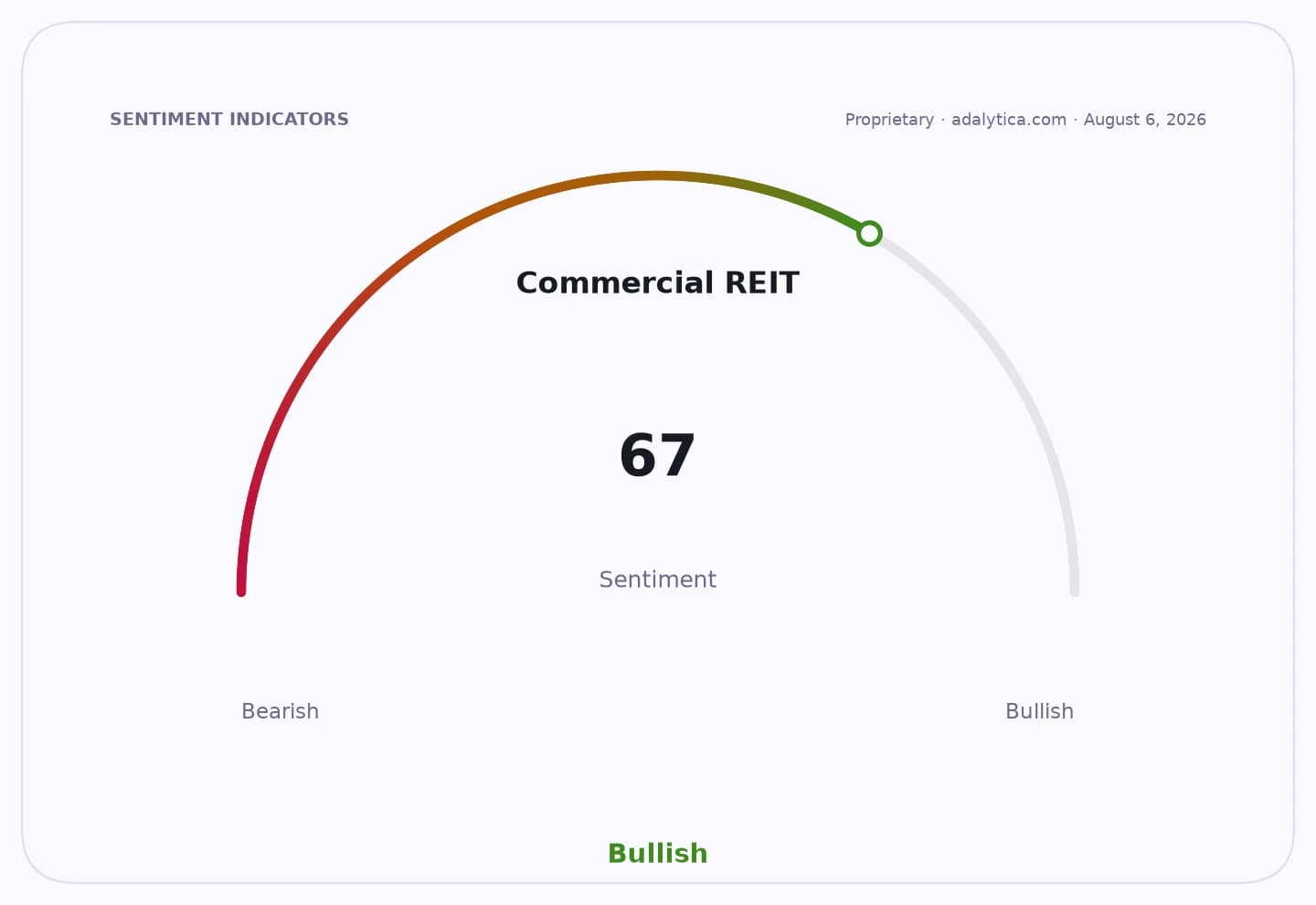
Shares linked to commercial property have reflected that resilience. VNQ, a broad real estate ETF, has traded above its 50-day and 200-day moving averages in recent sessions, while its RSI has eased from overbought levels, suggesting the sector remains supported even after a strong run. Adalytica’s Commercial REIT Sentiment snapshot also shows neutral but improving interest over the past month, pointing to steady investor attention rather than euphoric positioning.
The key question now is whether the funding wave broadens beyond offices or stays concentrated in a handful of premium markets. Upcoming leasing activity, cap-rate trends and any shift in global liquidity will determine whether India’s office sector keeps leading inflows into the second half of the year.
| Entity | Gains | Losses |
|---|---|---|
| India office landlords | ▲Higher inflows, better valuations | ▼Less pricing pressure from buyers |
| Commercial REITs | ▲Easier financing, stronger demand | ▼Weaker if leasing slows |
| Global investors | ▲Stable income exposure to India | ▼Lower yields if competition rises |
| Non-office property segments | ▲— | ▼Capital diverted to offices |