Edelweiss Mutual Fund’s launch of India’s first REIT-based index fund matters less as a product novelty than as a sign that real estate is becoming easier to own, trade and price through the capital markets.
India's First REIT Index Fund Expands Property Access

The Nifty REITs & Realty Index Fund gives retail and institutional investors a passive route into a corner of the market that has been relatively underowned and under-researched in India. That is important because listed real estate vehicles tend to draw more stable capital than direct property ownership, and more capital usually means better liquidity, tighter spreads and a lower cost of funding for issuers.
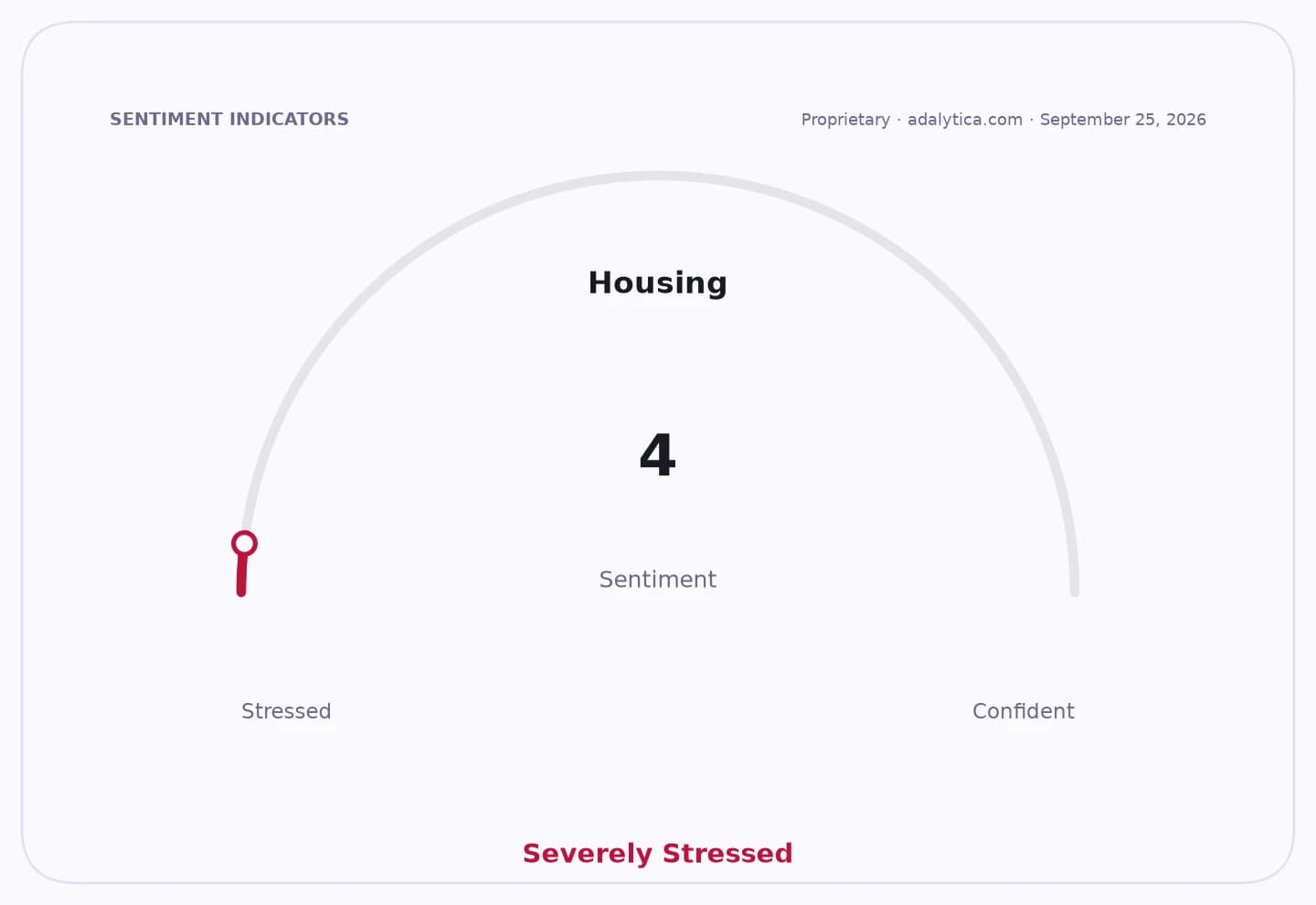
Sentiment IndicatorsⓘProprietary · adalytica.com · July 25, 2026
This is a snapshot — live sentiment, awareness and momentum for 130+ markets update continuously in the dashboard.Open AlphaPulse
For investors, the appeal is straightforward: REITs are a toll road on property cash flows. Instead of betting on a single developer or a cyclical housing trade, the fund offers diversified exposure to income-producing assets and related realty stocks in one wrapper. In a market where investors are still searching for yield and inflation protection, that can be an asymmetric setup if REIT adoption broadens from institutions into households.
The timing also fits a broader global shift. Ten-year U.S. Treasury yields are hovering around 4.75%, while the U.S. unemployment rate has eased to around 4.2%, reinforcing the view that rates may stay restrictive even as growth cools. That backdrop keeps income-generating assets relevant, because investors are still willing to pay for cash flow visibility and balance-sheet discipline. India’s listed real estate market is now trying to tap that same demand through a more scalable, index-based structure.
The market is already signaling interest in the trade. U.S. real estate ETFs such as the Vanguard Real Estate ETF, the iShares U.S. Real Estate ETF and the Schwab U.S. REIT ETF have all been firm recently, with prices pushing above their 50-day and 200-day moving averages and RSI readings showing improving momentum. Using conventional technical indicators, that suggests real estate securities remain in an upward trend as investors rotate toward income and duration-sensitive assets.
For India, the deeper implication is structural. A REIT index fund can become a distribution engine for the entire asset class, not just one fund house. If flows build, developers with stabilized assets should find it easier to recycle capital, while existing REITs gain a wider investor base and potentially better valuations. That also creates a second-order beneficiary list: brokerage platforms, passive fund distributors and property-linked financiers all stand to gain from a more liquid listed-property ecosystem.
The market underestimates how quickly financial plumbing can change once a product category becomes accessible to mainstream investors. I believe this launch is an early inflection point, not a one-off. If India’s REIT market keeps expanding and more products are launched around it, the best trade may not be the first fund itself but the next wave of listed property names, yield-focused ETFs and capital-market intermediaries that sit behind the flow.
| Entity | Gains | Losses |
|---|---|---|
| Edelweiss Mutual Fund | ▲First-mover advantage | ▼Product differentiation fades |
| Indian REITs | ▲Broader investor base | ▼Higher scrutiny on yields |
| Passive investors | ▲Easier real estate exposure | ▼Less upside than direct picks |
| Traditional developers | ▲Cheaper capital access | ▼More pressure on valuations |