India has ordered every rice and paddy holder in the country to disclose inventories weekly and doubled the volume it plans to sell through open-market auctions, a forceful supply-side intervention aimed at cooling rising retail prices and discouraging hoarding.
India orders rice stock disclosures and raises auctions
The move matters because rice is a staple for hundreds of millions of households, and even modest price spikes feed directly into food inflation and consumer sentiment. With retail rice inflation rising to 8.25% in September from 5.89% in August, New Delhi is trying to flood the market before tighter availability pushes prices higher.
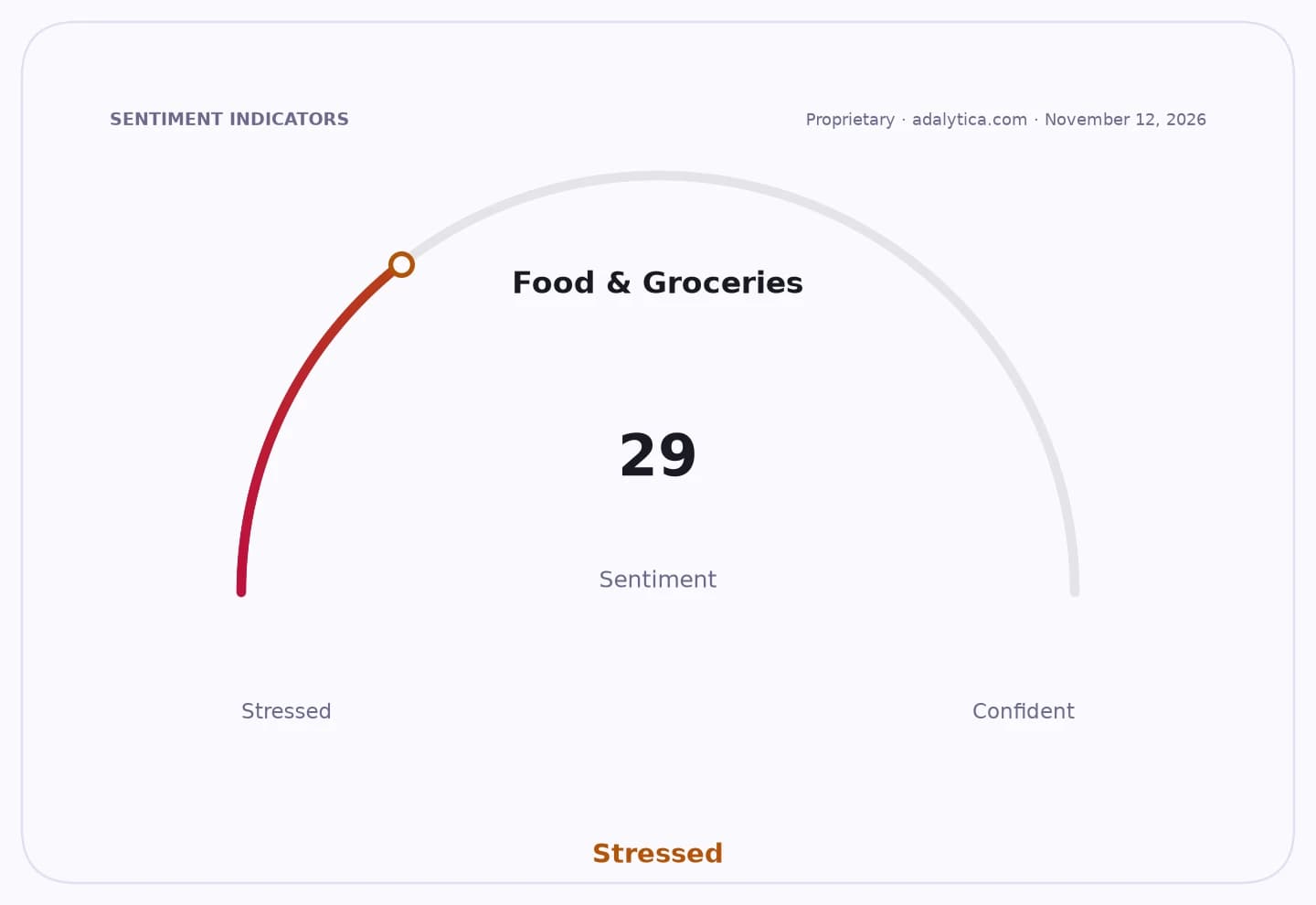
Sentiment Indicators
Under the order, traders, wholesalers, retailers, large buyers and mill owners must report stocks every Friday on the government’s foodstock portal, covering basmati, non-basmati, common rice, parboiled rice, broken rice and paddy. Violations can draw action under the Essential Commodities Act, signaling that authorities are treating the issue as both an inflation problem and an anti-hoarding crackdown.
The government also gave southern states — Tamil Nadu, Kerala, Karnataka, Andhra Pradesh and Telangana — permission to set stock limits based on local needs through Jan. 31, 2027, while directing extra Bharat Rice allocations to NAFED, NCCF and Kendriya Bhandar to widen cheap retail supply. That matters for investors because it shows the state is stepping deeper into grain distribution to cap prices, which can pressure private margins in the short term but also reduces the risk of disorderly spikes.
Most significant for the market, the open-market sale target for the 2026-27 season was raised to 50 lakh tonnes from 25 lakh tonnes, with 25 lakh tonnes already sold by Oct. 31, more than double the 11 lakh tonnes sold a year earlier in the same period. The added supply has already improved market availability, and the government is betting that higher auction volumes will keep a lid on prices heading into the next stretch of demand.
For rice-linked markets, the message is clear: India wants more grain in circulation, less stock speculation and tighter monitoring across the supply chain. The near-term risk is that enforcement or procurement changes could keep prices volatile, but the policy direction points to greater official intervention if food inflation stays elevated.
| Entity | Gains | Losses |
|---|---|---|
| Consumers | ▲Lower rice prices | ▼Less room for shortages |
| Government | ▲Inflation control | ▼More enforcement burden |
| Traders/hoarders | ▲— | ▼Stock disclosures, penalties |
| Retail supply chains | ▲More available grain | ▼Margin pressure from intervention |