India’s secondary steel producers are leaning harder on captive power and backward integration to blunt coal and electricity volatility, a shift that CRISIL says should lift operating margins to 6.6% this fiscal year.
India secondary steel margins seen rising on integration
The upgrade matters because these companies sit at the center of India’s fast-growing steel market, which is being driven by government spending on roads, railways, urban infrastructure and affordable housing. With secondary mills accounting for more than 40% of India’s steel output, even modest margin gains can have outsized effects on earnings, cash flow and credit quality across the sector.
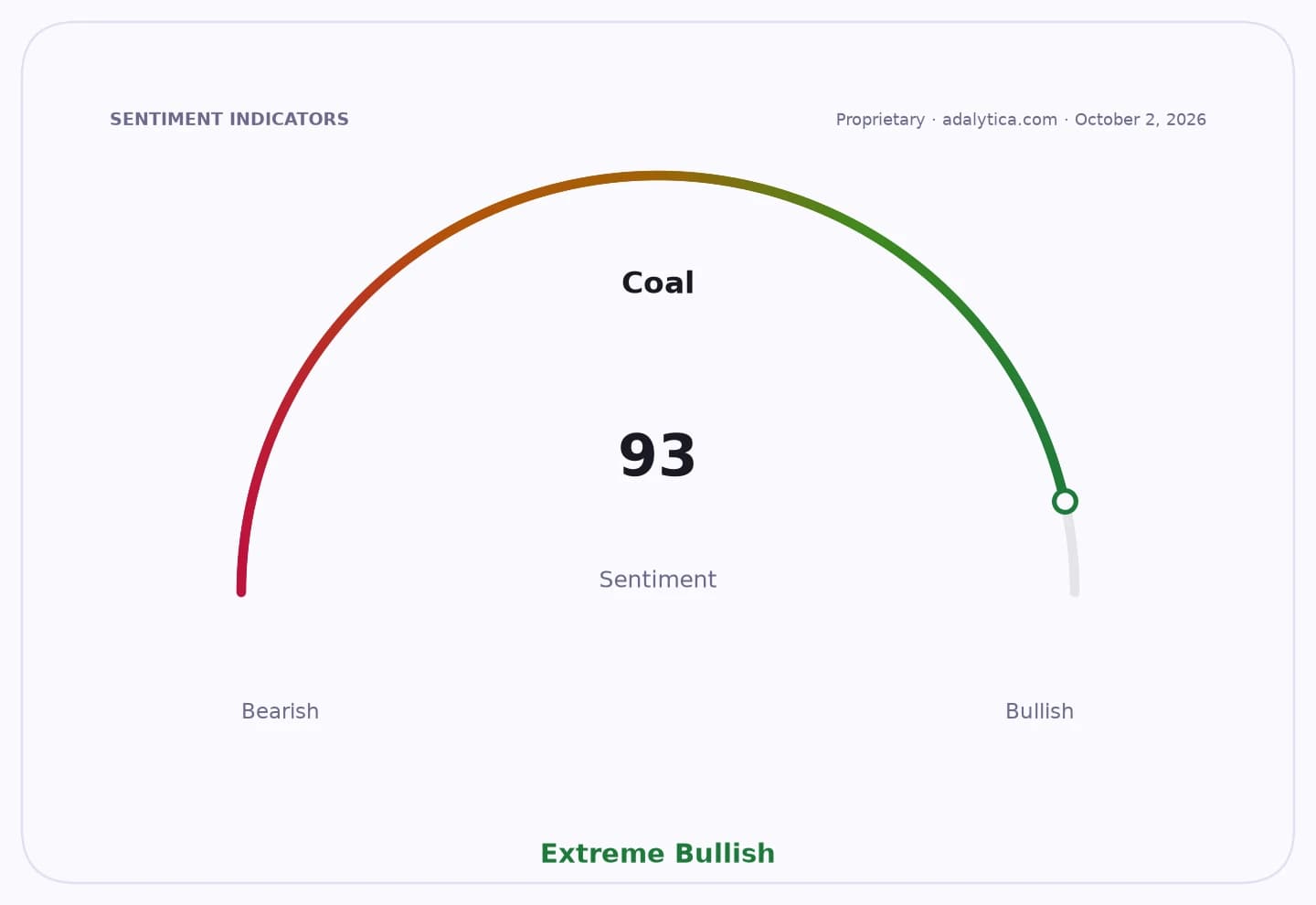
Sentiment IndicatorsⓘProprietary · adalytica.com · October 8, 2026
This is a snapshot — live sentiment, awareness and momentum for 130+ markets update continuously in the dashboard.Open AlphaPulse
CRISIL expects operating margins to improve by 50 basis points from a year earlier as cost controls outweigh raw-material and energy swings. It said integrated players are already generating an incremental EBITDA of ₹1,500 to ₹2,000 per tonne versus non-integrated peers, and that industry EBITDA can hold near ₹3,200 a tonne, above the long-term average of about ₹2,900 a tonne.
The report underscores a broader change in the sector’s capital spending priorities. Instead of chasing aggressive capacity expansion, producers are putting money into captive power, raw-material control and operating efficiency, a strategy that CRISIL said is becoming the main differentiator for profitability and credit resilience.
That trend is especially visible in eastern India, where many secondary steel players are based and where sharp power tariff increases pushed companies to take cost competitiveness more seriously. CRISIL said the share of secondary steel producers with backward integration is expected to rise to 33% this fiscal from 27% a year earlier.
For investors, the message is that earnings in the sector may be less exposed to commodity swings than in past cycles, with integrated mills better positioned to preserve margins if coal and power costs stay volatile. The next read-through will be whether the efficiency push can continue without slowing supply additions as steel demand remains strong.
| Entity | Gains | Losses |
|---|---|---|
| Integrated secondary steel makers | ▲Higher margins | ▼Less pricing pressure from peers |
| Non-integrated steel mills | ▲Relative cost burden | ▼Wider margin gap |
| Coal and power suppliers | ▲Stable demand | ▼Lower pricing leverage |
| Equity and credit investors | ▲Better earnings visibility | ▼Fewer turnaround bets |