Indian stocks opened lower on the last day of the week as a jump in oil prices and persistent foreign outflows kept pressure on a market already struggling for direction.
India Stocks Open Lower on Oil and Foreign Outflows

The Sensex fell 32.67 points at the open, while the Nifty slipped in early trade, underscoring how quickly global commodity moves and risk aversion are feeding into domestic equities. With crude costs rising, investors are again having to factor in the risk of stickier inflation, weaker corporate margins and a potential drag on India’s already-sensitive current account.
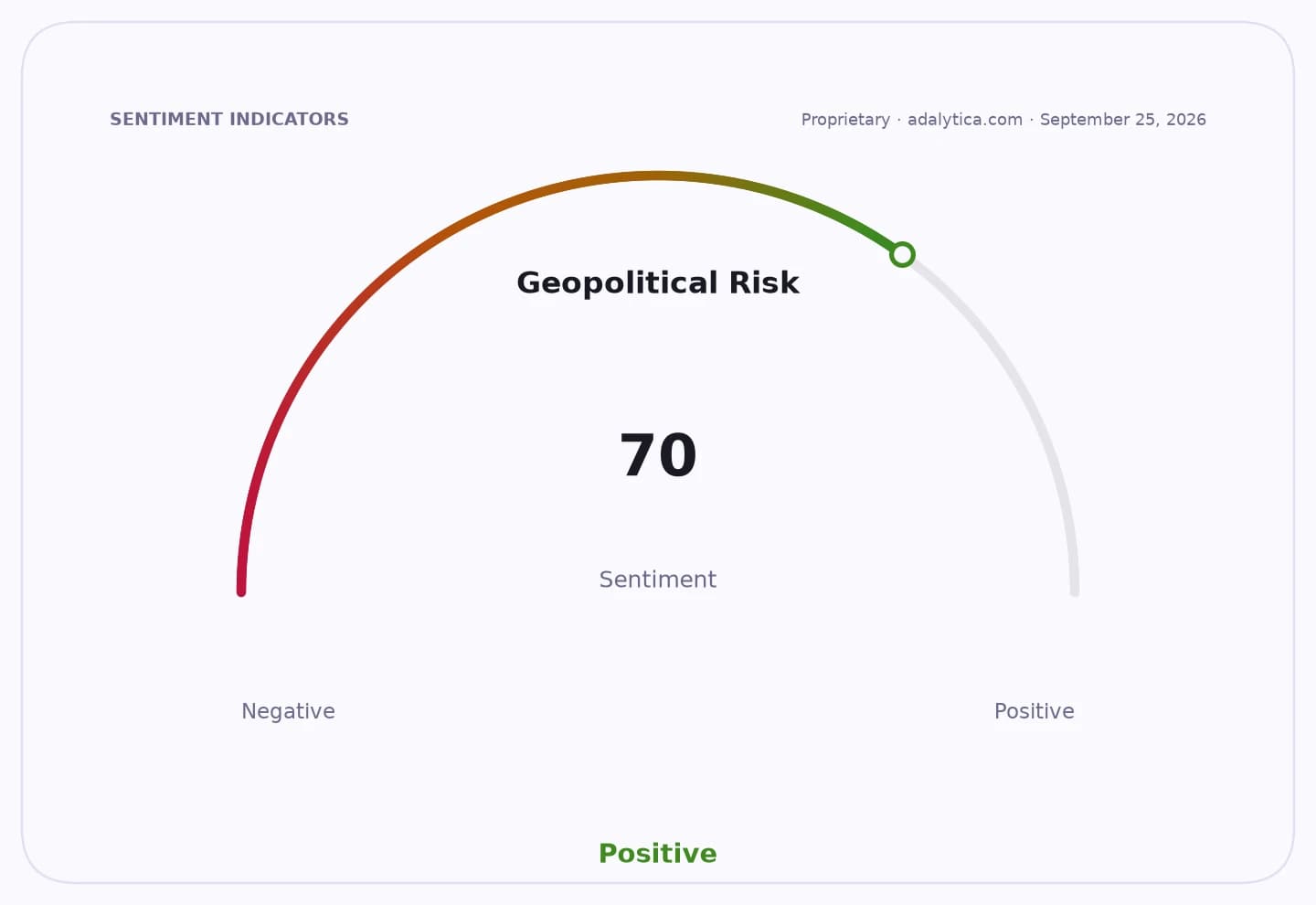
Sentiment IndicatorsⓘProprietary · adalytica.com · August 14, 2026
This is a snapshot — live sentiment, awareness and momentum for 130+ markets update continuously in the dashboard.Open AlphaPulse
The market’s tone remains fragile. Foreign investor confidence has fallen to a 14-year low, according to the news context, and that matters because overseas flows remain a major source of marginal demand for Indian equities. When global money turns defensive, high-valuation sectors such as banks, consumer discretionary and information technology can struggle even if domestic growth stays intact.
Technicals also point to a market still trying to recover from earlier weakness. The Nifty at 24,349.3 was above its 50-day moving average of 24,038.53 but still below its 200-day average of 24,759.93, while the Sensex at 77,827.9 remained under its 200-day moving average of 79,986.46. That suggests the broader index uptrend has not fully reasserted itself, even after the late-summer rebound. The Nifty’s RSI reading of 69.1 points to near-overbought conditions, but momentum indicators remain mixed, leaving room for more two-way trade if macro pressure worsens.
For investors, the key question is not whether a 30-point opening decline matters on its own — it does not — but whether it reflects a broader sensitivity to oil, global yields and foreign flow data that could cap any rally. India has been one of the stronger large emerging markets this year, but that premium can narrow fast if energy prices keep climbing and earnings estimates face margin pressure.
There are pockets of support. The market context notes selective buying interest in individual names and a still-functioning primary market, with new listings drawing attention. But the dominant narrative is caution: as long as crude remains elevated and overseas investors stay defensive, the burden of proof is on bulls to show that domestic demand can absorb the shock.
The next catalyst will be whether oil stabilizes and whether foreign flows improve after a stretch of selling. Until then, the opening weakness in Sensex and Nifty looks less like a one-off dip and more like a reminder that India’s equity market remains highly exposed to global macro stress.
| Entity | Gains | Losses |
|---|---|---|
| Oil producers | ▲Higher realized prices | ▼Demand-sensitive importers |
| Indian exporters | ▲Weaker rupee tailwind | ▼Oil-heavy sectors |
| Defensive stocks | ▲Relative inflow support | ▼Cyclical growth names |
| Foreign sellers | ▲Lower exposure risk | ▼Domestic equity bulls |