India’s expected opening to a future visit by Prime Minister Narendra Modi comes at a moment when New Delhi is trying to lock in more market access abroad while protecting itself from fresh tariff pressure, a balancing act that matters for exporters, capital flows and long-term growth.
India trade deals and tariff risks weigh on investors

Foreign Adviser remarks that a visit can happen after “building mutual trust” point to a broader economic agenda: India is deepening ties with Britain through a new free-trade deal, pursuing more agreements across Africa and Eurasia, and simultaneously challenging U.S. tariffs at the World Trade Organization. For investors, that mix is important because it suggests India is still positioning itself as a preferred destination for manufacturing, services and portfolio capital even as global trade politics get rougher.
Sentiment IndicatorsⓘProprietary · adalytica.com · August 20, 2026
This is a snapshot — live sentiment, awareness and momentum for 130+ markets update continuously in the dashboard.Open AlphaPulse

That matters economically because India’s growth story has increasingly depended on external linkages, not just domestic demand. Trade pacts can lower input costs, expand export markets and draw in investment from companies looking to diversify supply chains away from China. A warmer political relationship with a major partner can also smooth negotiations on sensitive issues such as tariffs, market access and technology transfer, all of which affect margins for Indian manufacturers and multinationals with exposure to the country.
The market backdrop helps explain why investors are paying attention. The India ETF, INDA, has held near $49.54, above its 50-day moving average but still below the 200-day moving average, a sign the market is stabilizing but not yet in a full-blown breakout. The Japan fund EWJ has been much stronger, while China-linked exposure through FXI remains far weaker, underscoring how capital is still rewarding countries perceived to offer cleaner policy and trade visibility.
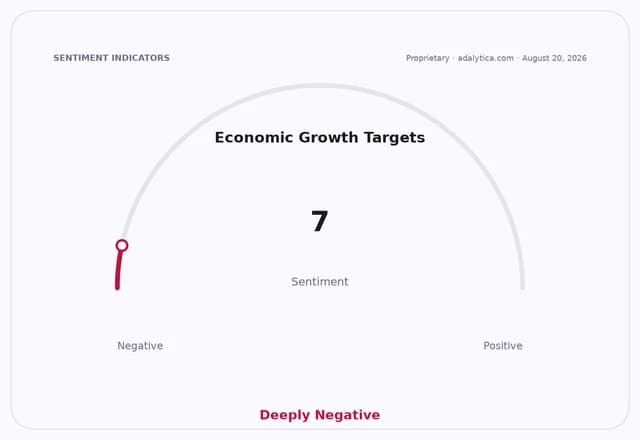
For India, that relative advantage could deepen if diplomacy translates into clearer trade terms. Adalytica’s India growth-target sentiment gauge shows extreme fear, even as awareness is high, a combination that often appears when investors are closely watching for policy follow-through rather than cheering it in advance. In other words, the market is interested, but not convinced.
The risk is that diplomacy alone does not erase tariff disputes, and India still faces the challenge of proving that its trade push can become durable earnings growth. But if New Delhi keeps converting political trust into formal agreements, the payoff could be meaningful for exporters, banks, logistics firms and the broader universe of India-focused funds. For long-term investors, that makes India worth watching closely, especially on pullbacks.
| Entity | Gains | Losses |
|---|---|---|
| India exporters | ▲Better market access | ▼Tariff uncertainty |
| Foreign investors | ▲Clearer trade visibility | ▼Policy delay risk |
| U.S. tariff-sensitive firms | ▲Potential deal relief | ▼Short-term margin pressure |
| China-linked competitors | ▲Diversification tailwind fades | ▼Supply-chain share loss |




