India is pressing for urgent reform of the United Nations Security Council, arguing that the body no longer reflects the balance of economic and geopolitical power and should give the Global South a bigger voice.
India Presses for UN Security Council Reform
The demand matters because the UNSC remains the main international forum for sanctions, conflict resolution and authorizing military action, yet its structure has barely changed since the post-World War II era. For India, the campaign for a permanent seat is also a bid to turn its economic weight and diplomatic reach into formal influence over global security decisions.
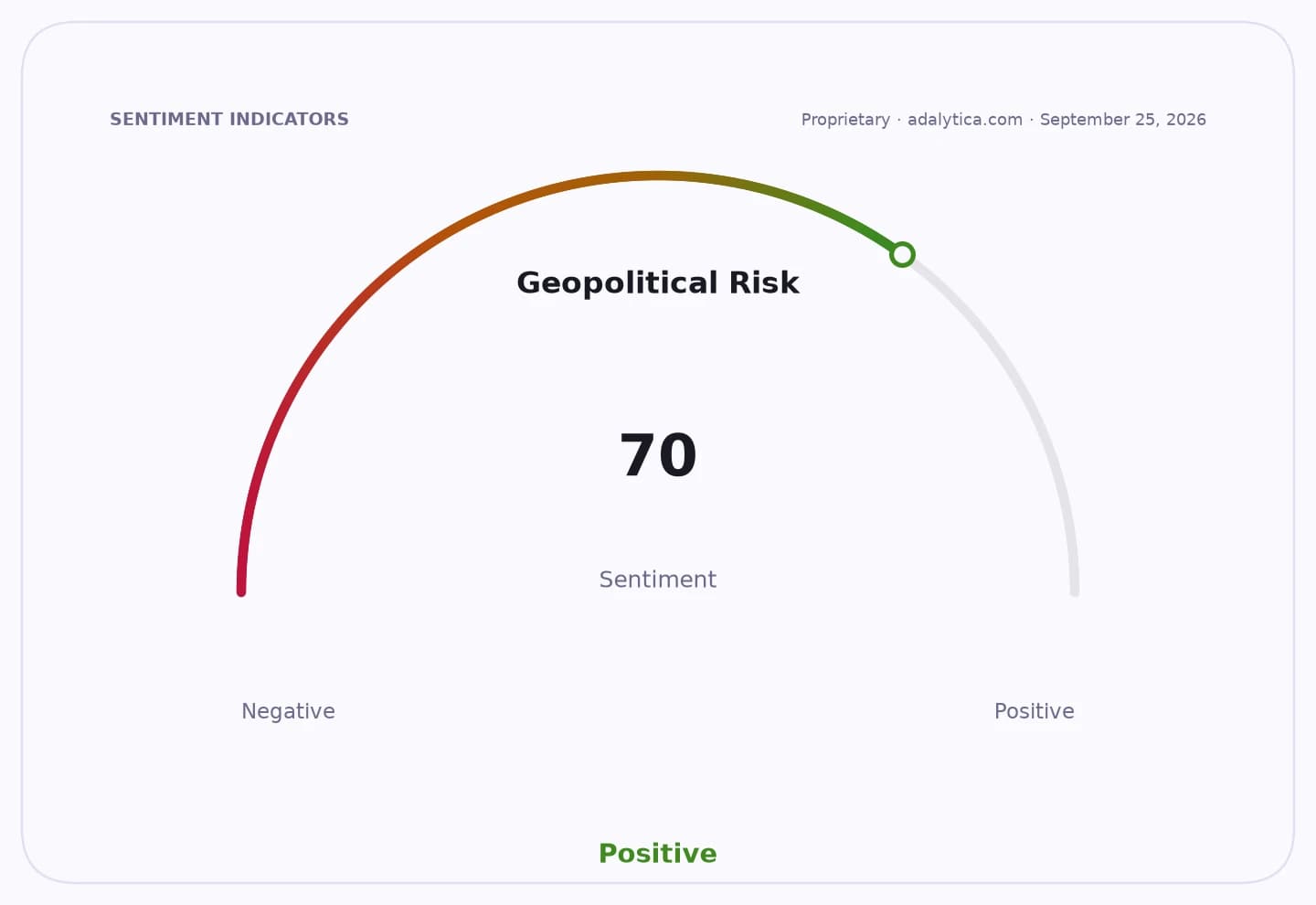
Sentiment IndicatorsⓘProprietary · adalytica.com · August 20, 2026
This is a snapshot — live sentiment, awareness and momentum for 130+ markets update continuously in the dashboard.Open AlphaPulse
The appeal comes as rivalry among major powers keeps any overhaul difficult. Pakistan continues to oppose India’s permanent-seat bid, while divisions over conflicts from the Middle East to South Asia expose how often the council is split on the same crises it is supposed to manage.
Those tensions also help explain why countries in the Global South are pushing harder for broader representation. India has framed reform as a question of legitimacy and transparency, not just status, as emerging economies seek a larger role in institutions built when much of the developing world had little say.
For investors, the story matters less for direct market impact than for what it says about the durability of the geopolitical backdrop. A more fractured multilateral system can keep sanctions risk, trade frictions and regional instability elevated, while any meaningful reform would slowly shift diplomatic power toward economies such as India that are becoming more important to global supply chains and capital allocation.
The push is unlikely to produce a quick institutional change, but it keeps pressure on a debate that will shape the tone of future UN negotiations and the broader contest over who sets the rules of the global economy.
| Entity | Gains | Losses |
|---|---|---|
| India | ▲Diplomatic leverage | ▼Limited formal influence |
| Global South states | ▲More representation | ▼Status quo underrepresentation |
| Existing UNSC powers | ▲Continuity | ▼Pressure to share authority |
| Investors in emerging markets | ▲Potentially stronger institutions | ▼Prolonged geopolitical uncertainty |