Wholesale inflation in India jumped to a record 12.29% in October, a sharp reminder that the West Asia crisis is no longer just a geopolitical headline but a direct tax on corporate margins, consumer purchasing power and the Reserve Bank of India’s policy room. The spike, measured in the new Wholesale Price Index series with 2022-23 as the base year, was driven mainly by costlier fuel and power, with non-food prices also accelerating.
India wholesale inflation hits record 12.29% in October
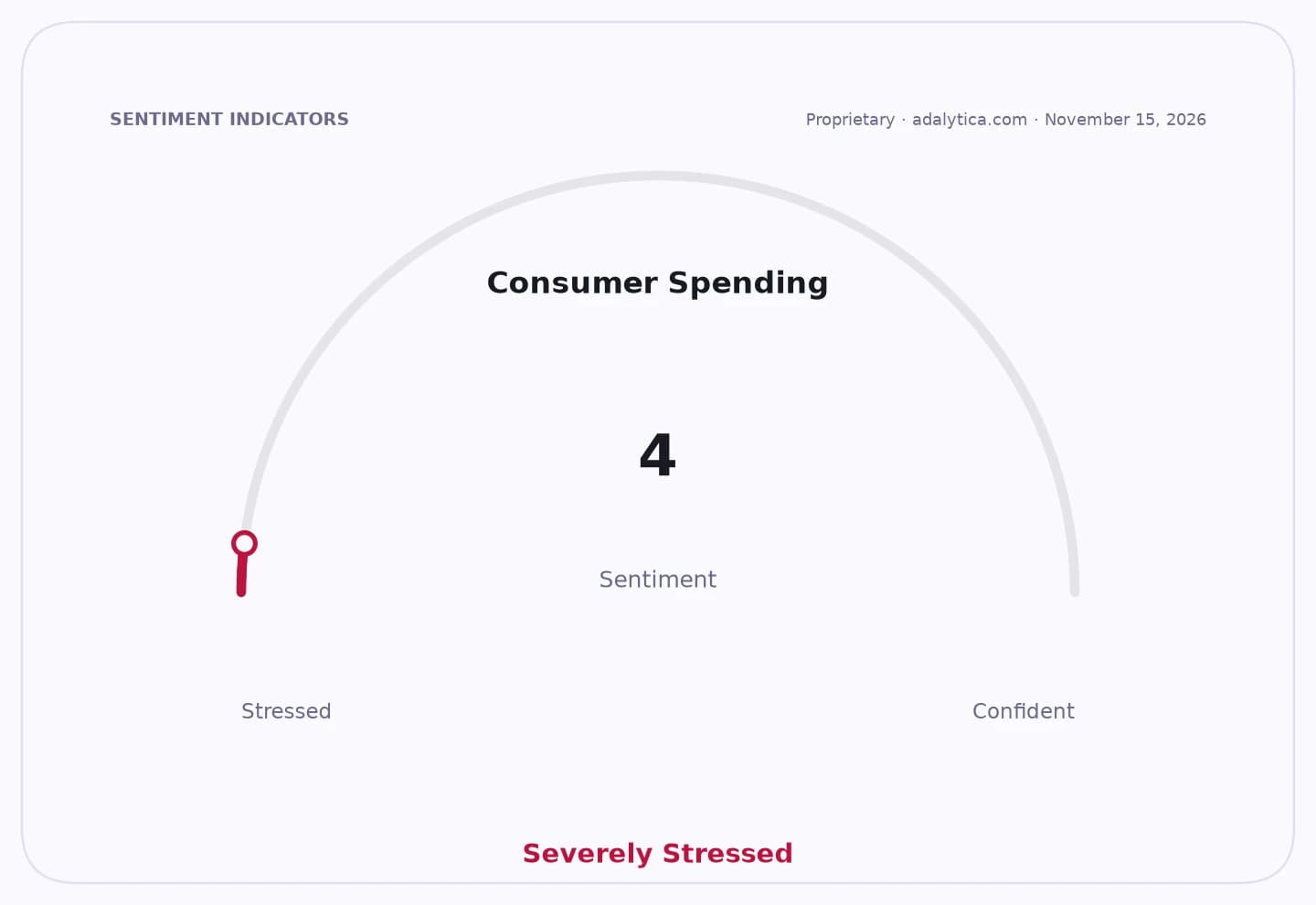
Consumer Spending
That matters because wholesale inflation often feeds through to factory-gate pricing, transport costs and eventually retail inflation if firms cannot absorb the blow. Fuel and power inflation surged to 32.84% from 25.85% in September, while mineral oils, crude petroleum and natural gas, electricity and a range of manufactured goods all pushed the index higher. The rise was broad enough to show that this is not a one-off energy print but a wider input-cost squeeze.
Sentiment Indicators
For investors, the immediate read-through is to sectors most exposed to imported energy, freight and industrial inputs. Refiners, chemicals, metals, textiles and consumer goods makers face tighter margins if they cannot pass on costs fast enough. That is the opposite of what equity markets want when valuations are already sensitive to earnings downgrades. The pressure is especially awkward for domestic cyclical stocks that depend on stable input prices and strong demand to justify premium multiples.
The data also underscores a policy dilemma. India’s wholesale price acceleration is arriving as central banks globally remain alert to sticky inflation, and it raises the odds that monetary easing stays off the table longer than bulls may have hoped. Even though manufactured inflation eased slightly to 9.54%, the hotter primary articles basket and the surge in fuel prices point to persistent cost pressure, not relief.
The market is already signalling that inflation is a cross-asset issue, not just a macro statistic. In the U.S., the latest consumer price print surprised to the upside and reinforced expectations for higher rates for longer, while bond proxies have been volatile. Standard technical indicators on the iShares 20+ Year Treasury Bond ETF, including its 50-day and 200-day moving averages, show the kind of pressure long-duration assets can face when inflation reaccelerates.
The investable takeaway is straightforward: this is a commodity and pricing-power story first, and a consumer-margin story second. Energy, upstream materials and companies with hard pricing power are better positioned than transport, discretionary retail and other import-sensitive businesses. If West Asia tensions keep oil and power elevated, the wholesale inflation print could be the opening act for a broader margin compression cycle that markets are still underestimating.
| Entity | Gains | Losses |
|---|---|---|
| Energy producers | ▲Higher realized prices | ▼Input-cost risk |
| Refineries | ▲Pass-through opportunity | ▼Margin volatility |
| Industrial firms | ▲Pricing power winners | ▼Input-cost squeeze |
| Consumers | ▲— | ▼Higher retail prices |