Rice and meat prices rising at Pandansari Balikpapan Market are sharpening worries that Indonesia’s food inflation pulse is turning less benign, even as broader supply conditions in regional rice trade remain mixed.
Indonesia Food Inflation Pressures Build
A visit by the food task force to the market points to growing official concern that price pressure is filtering down to households, where staples and protein carry outsized weight in spending and near-term inflation expectations. For consumers, the issue is immediate: higher rice and meat costs hit disposable income first and hardest. For policymakers, it is a reminder that food prices can move faster than headline inflation measures and quickly become a political problem if enforcement and supply management lag.
Sentiment IndicatorsⓘProprietary · adalytica.com · July 24, 2026
This is a snapshot — live sentiment, awareness and momentum for 130+ markets update continuously in the dashboard.Open AlphaPulse
The move matters economically because food inflation is rarely isolated. When rice and meat rise together, it suggests more than a one-off market dislocation; it can indicate supply tightness, distribution bottlenecks or stronger demand at a time when households are already sensitive to essentials. That can force local authorities to intensify inspections, release stock or lean on trade and logistics measures to keep prices contained.
The market backdrop reinforces that tension. In regional rice trading, recent price data showed modest firming in fresh rice while export markets remained comparatively steady, preserving competitiveness abroad. That split matters: stable export demand can support farmgate pricing, but it does not necessarily prevent domestic retail prices from rising if transport, storage or retail margins widen. Meat prices are even more sensitive because they feed directly into household meal budgets and restaurant costs, making them a faster channel for inflation spillover.
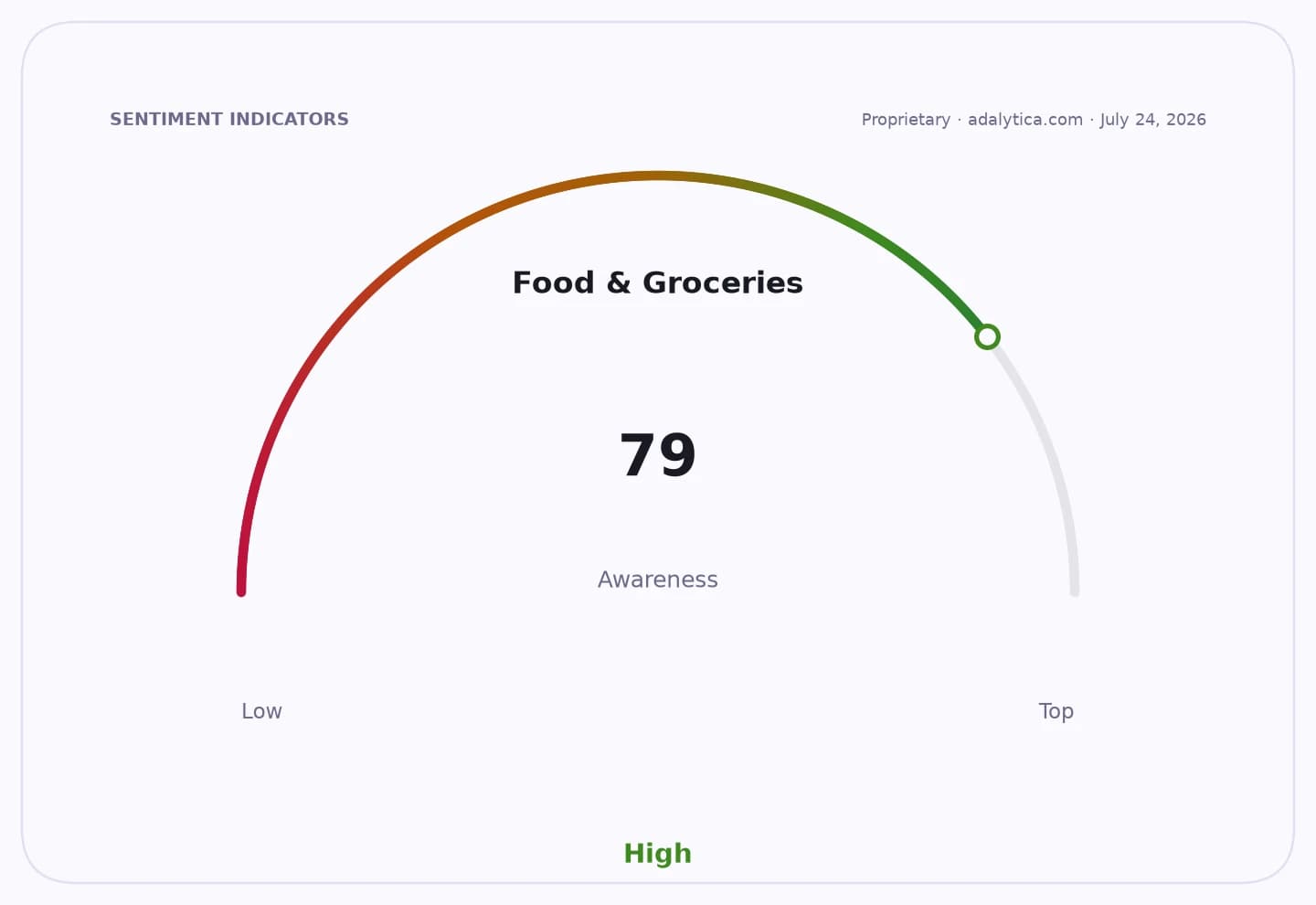
Food & Groceries — 30-day sentimentadalytica.com
Explore this data interactively — full history, time series and cross-market comparisons.Open AlphaPulse
For investors, the implication is less about a single market inspection than about the durability of food-price pressure. A persistent rise in staples can weigh on consumer sentiment, complicate central bank policy and pressure sectors tied to household spending. Retailers and packaged-food sellers may face margin squeeze if they cannot pass through costs quickly, while importers and food distributors could benefit if authorities move to ease supply constraints. Commodity-linked food and grain exposures may also draw attention if the pricing trend broadens beyond one market.
Technical signals in grain-related exchange-traded funds suggest traders are already leaning into that theme. WEAT has pushed well above its 50-day and 200-day moving averages, with RSI readings in overbought territory, while CORN has also climbed above both longer-term averages. That does not confirm a fresh macro shock, but it shows that food-price expectations and crop-market positioning remain active. If domestic Indonesian price pressure persists while regional rice markets stay firm, the gap between stable global supply and local retail inflation could widen further.
The key test now is whether the task force inspection leads to measurable action on stocking, distribution or pricing discipline. If it does, the pressure may ease quickly. If it does not, rice and meat could become the leading edge of a broader food-inflation story that matters for consumers, policymakers and investors alike.
| Entity | Gains | Losses |
|---|---|---|
| Consumers | ▲Potential relief if prices are curbed | ▼Higher staple and protein costs |
| Food task force / authorities | ▲More leverage on pricing oversight | ▼Pressure to show quick results |
| Retailers / traders | ▲Possible higher margins on tight supply | ▼Scrutiny and enforcement risk |
| Grain and food commodity bulls | ▲Support from firmer food-price expectations | ▼Risk of reversal if supply improves |